



Why OEMs who start the story sooner build momentum that lasts longer.
When B2B2C manufacturers unveil a new product or model year, it represents years of investment. Engineering, design, supply chain coordination, and dealer planning all converge in one moment: the big reveal. It’s the most visible milestone in a long development cycle and even more importantly, it’s a high-stakes moment for the brand.
But inside many OEMs, that moment doesn’t feel like a win. Even as excitement builds externally, internally the marketing team is finalizing collateral, sales enablement materials are still being developed, and dealers are learning about the product almost as fast as the public is. In recent original research, one OEM told us, “We’re still finishing brochures after the press release goes live,” and another admitted that not everyone at the dealer level has even been trained before the first customers walk in.
That pause isn’t a failure of execution. It’s actually built into the way these industries operate. Long production timelines, model-year sequencing, and seasonal buying patterns all stretch the runway between a reveal and when units actually start moving off lots. Industry data shows that it can take multiple quarters before new model-year sales reach their high point, often well after the product is technically “launched.”
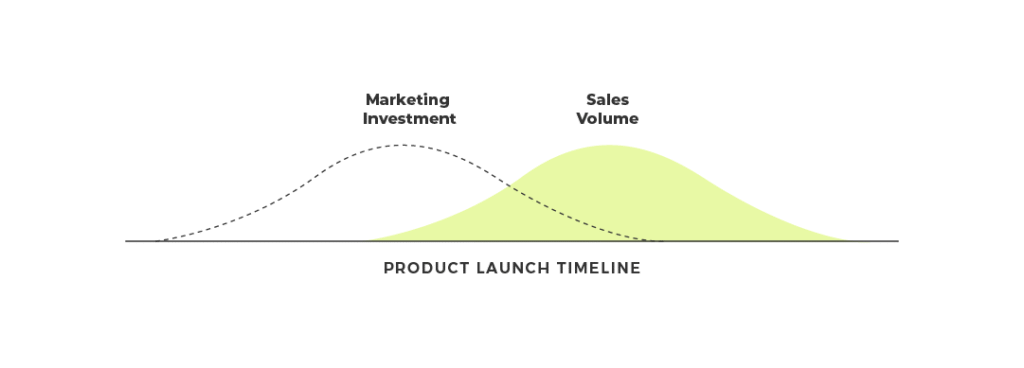
What can change, however (and what offers a practical advantage for OEMs) is when the story begins.
Marketing doesn’t have to wait for the product to be fully finalized before it starts shaping perception. Long before the first photo or locked spec sheet, there’s already a story that’s safe to tell: why this product exists in the lineup, what need it’s meant to answer in the market, and where it fits for the buyer you’re trying to reach. When manufacturers begin telling that story earlier, they build recognition and expectation before a single unit hits a lot.
To be clear, this doesn’t result in launching the product “faster.” It simply starts momentum that much sooner, turning the months between development and delivery into a competitive advantage.
How Early Storytelling Adds Real Value
Starting the story earlier isn’t just a marketing trick. Done right, it’s a way to align the entire organization around the product before the product is even shipping.
It builds familiarity before buyers ever see the product. When prospective buyers start hearing what a new product is meant to do—even before they’ve seen it—they’re already reserving a mental slot for it. So when it finally shows up in a dealer’s inventory, they’re not meeting it for the first time. They’re connecting it back to something they’ve already been told to watch for.
It captures measurable interest sooner. Simple pre-reveal touchpoints like “keep me informed” or “tell me when it’s available near me” turn curiosity into a buying signal. That signal helps shape launch messaging, helps prioritize which talking points to lean on, and gives sales teams a warm audience to activate when inventory actually arrives. For buyers who are still months away from making a decision, which is common in categories where the shopping window can stretch six months to a year, it also plants intent early.
It prepares the channel to sell more confidently. When dealers get the story before they get the unit, they can start framing conversations locally. Instead of “something new is coming, we’ll see what it ends up being,” they can say, “we’ve got something on the way that’s built for [this type of owner / this type of use].” That gives them a reason to follow up with serious buyers, not just wait quietly for stock.
This early storytelling doesn’t replace the reveal. It supports it. The launch becomes a continuation of an existing conversation instead of the first time anyone’s hearing about the product.
Why It Works: Story First, Features Second
In this world, the product you reveal is not always the product that ultimately ships.
OEMs told us that final product details are sometimes still in motion days before a reveal—and, in some cases, features continue to shift after the announcement. That means the unit people are initially shown doesn’t match up to the unit that shows up on dealer lots later.
That’s normal. It’s what happens when you’re building complex vehicles across supplier networks and dealer channels.
It’s also why leading with the “what’s new under the hood” list can actually hold marketing back. If you anchor your entire launch story in features and options that are still moving, you don’t feel comfortable going to market until every detail is locked and photographed.
But if you anchor the story in a more durable position you can start building interest while the details are still settling. Instead of features, consider the bigger picture: the use case you’re solving, the buyer you’re targeting, or the gap in the lineup this new product fills. Marketing and sales can build materials in parallel with development instead of waiting behind it. Dealers can start conversations sooner. And by the time final specs are ready, the audience isn’t just absorbing information—they’re validating something they’ve already heard.
You’re not scrambling to generate attention at the exact same moment you need orders. You’re walking into that moment with attention already warming.
The Sustainable Advantage
Here’s the other benefit to starting early: it stretches the life of the launch.
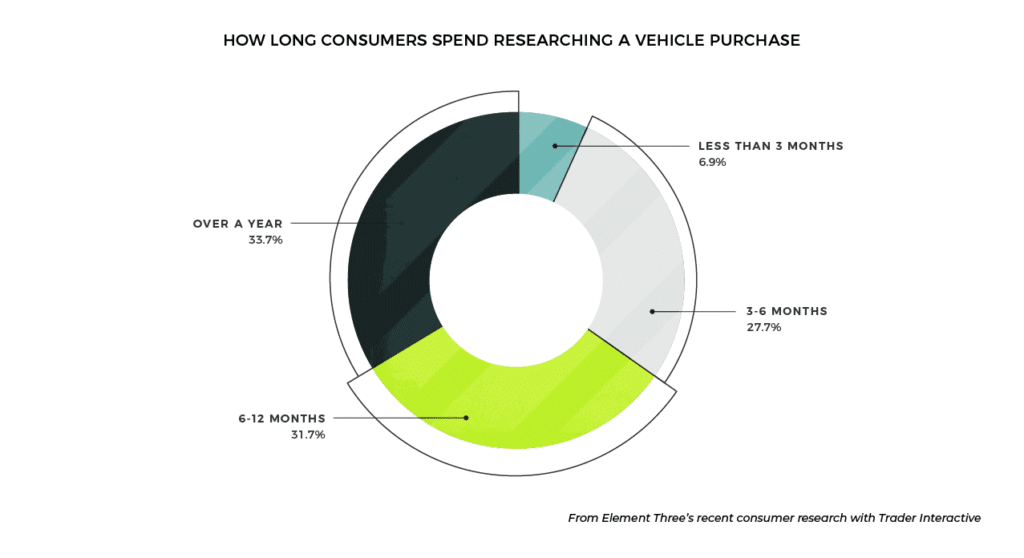
Did you pick up on that? The timing is upside down. Brands stop actively talking about a product long before many buyers are actually ready to act on it.
Starting the story earlier helps fix that timing problem. When you begin setting expectations before the reveal, you naturally end up with a longer runway: early curiosity, reveal, first availability, dealer push, seasonal push, model-year carry. You’re not asking a product to “hit” in 30 days. You’re giving it room to build.
And that matters not just for the new thing you’re launching, but for the rest of your lineup. Dealers don’t live in a clean world. They’re trying to move new units, prior model years, and even used inventory off the same lot. Without a clear arc for how a new product should build over time, the “next thing” you just launched can easily get deprioritized in favor of whatever is easiest to move today—including last year’s model. “Every time we add a product line, it just steals from another,” as one OEM leader put it.
Giving each launch more runway and keeping it visible across that runway helps protect against that cannibalization. You’re not just throwing a new product into an already crowded lot and hoping it wins. You’re giving it a plan to earn space.
Putting It Into Practice
For your next launch, consider starting to tell the story before you start showing the product. Communicate, in plain language, what this product is meant to do in the market and who it’s meant to serve. That might include:
- Beginning to tell that story 60–90 days before reveal.
- Adding simple “keep me informed” or “notify me when it’s here” signups to capture early interest.
- Putting that story in the hands of dealers early so they can start having conversations locally.
Treat the reveal as the second stage of the launch journey, not the beginning. You can’t change production timelines overnight, but you can decide when people start caring.
In Summary
The pre-reveal window is a marketing challenge, yes. But like most challenges, it’s an opportunity—in this case, to get more out of the investment you’ve already made. Manufacturers who start telling their stories earlier both make their launches more effective and make their products matter longer.
In these industries, momentum doesn’t come from one big announcement. It comes from a steady, confident drumbeat that connects what’s being built to the people it’s being built for.
Start the story sooner, and the reveal stops being the moment you begin selling—it becomes the moment your market is finally ready to listen.