

Why You Win
Robb and Dante Young of Young Boats
This Episode
Selling through dealers can create scale, but it can also create distance between you and your customer. What happens when a manufacturer chooses to own the relationship from day one?
In this episode, Kyler and John sit down with Robb Young, Founder of Young Boats, and Dante Young, Vice President, to explore what it looks like to grow a marine manufacturing company without a traditional dealer network. From selling grouper to fund their first prototype to maintaining a two-year backlog during the pandemic, the Youngs share how a factory-direct model shaped their brand, operations, and customer loyalty.
Robb and Dante discuss the tradeoffs of bypassing dealers, how direct customer feedback fueled product innovation, and why over 80% of their buyers still own a Young Boat. They also unpack how to manage service across geographies, protect margin in a volatile marine market, and build a team that treats every hull like it has a name on it.
For OEM leaders navigating B2B2X distribution, dealer relationships, and channel strategy, this episode offers a clear look at what happens when you design your go-to-market model around trust.
Key Takeaways:
- Design with the End User In The Room: Invite customers into the build process to accelerate product innovation and increase long-term loyalty.
- Treat Every Unit Like It Has A Name: Connect production teams directly to buyers to drive quality, pride, and repeat purchases.
- Diversify Services To Weather Circumstances: Expand the business model with service, restoration, and custom lines to stabilize cash flow in volatile OEM markets.
Episode Transcript
This transcript was generated with the help of AI and may contain some errors.
Dante Young (00:00):
Knowing that as we build the boat, the motivation behind it for us is the memories they’re going to make. It’s just not another product we’re moving.
Robb Young (00:10):
We bring them in and we listen to their input throughout the whole process. Listening to the customer and getting their feedback’s been key for us.
Kyler Mason (00:20):
Whether you’re going to market through dealers, distributors, or some other partner channel, the mediated sale is complex. We call it B2B to
John Gough (00:27):
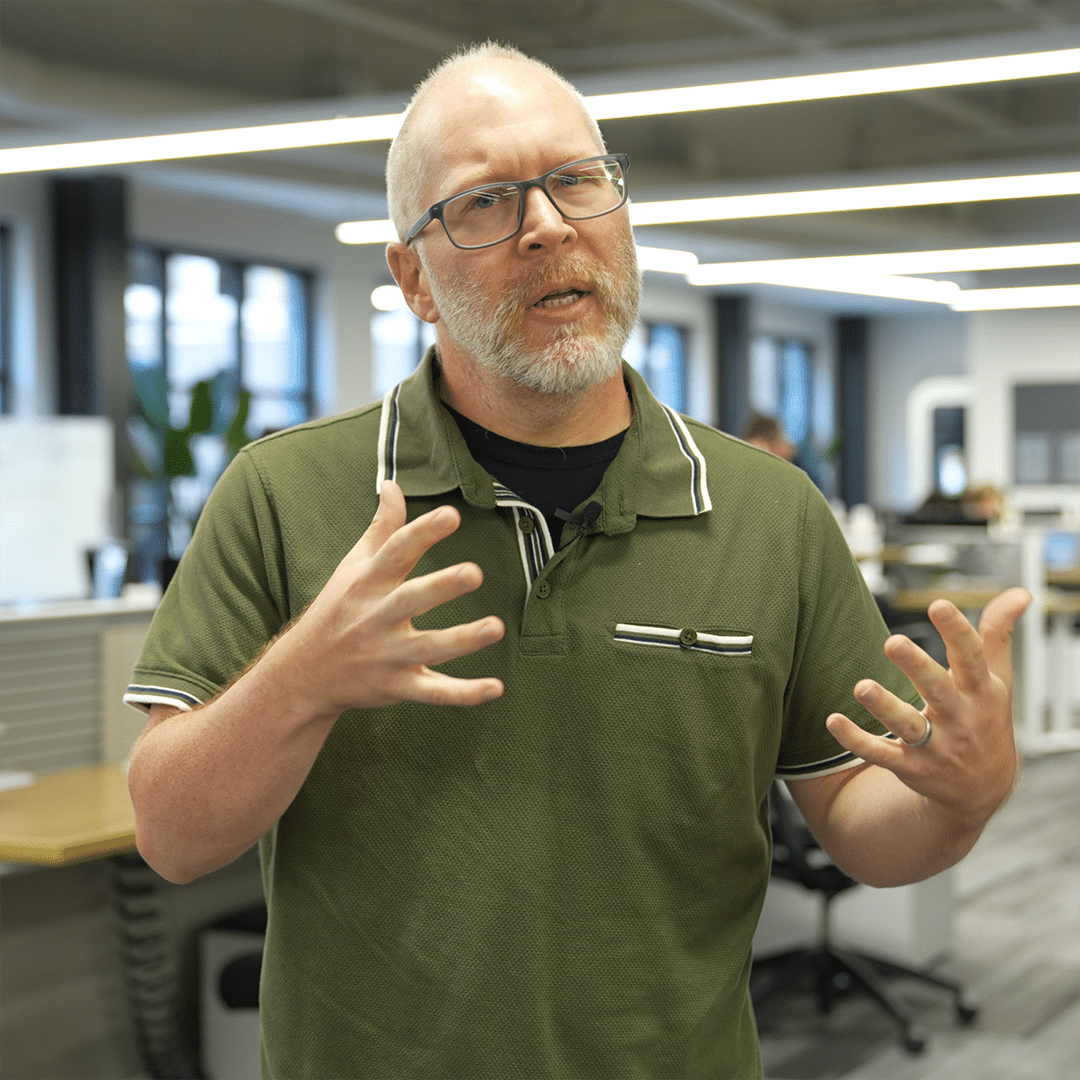
X, but the leaders in the industry are the ones who are making it look simple. I’m John Goth and I’m Kyler Mason, and this is Why You Win, presented by Element three. Our guests today are Rob and Dante Young, the founder of Young Boats. We started our conversation talking to Rob about how many fish he had to sell to start his boat company, which is just an incredible way to begin this story. And Young Boats is different than a lot of the organizations that we talk to because they are and have been through their entire history direct to consumer. And in the marine space, that’s a really rare thing. And so our conversation goes across why they made that particular choice, how getting fingertip feel for customer needs has really helped them gain market share and really develop relationships that couldn’t be matched in any other kind of environment.
(01:17):
And the trade-offs that they had to make when they decided that they weren’t going to have that dealer network that would extend service or do other things for them. In this case, they’re really positive about it. They’ve got some really cool opportunities coming up with new boats launching and a customer base that just has an incredible level of loyalty to them and to the brand. I think you’re really going to like this one. Rob, Dante, so good to have you guys on the show. Thanks for coming on.
Robb Young (01:43):
Thanks for having us. Yeah, I’m grateful for the opportunity.
John Gough (01:47):
Yeah, absolutely. So we’re excited to have you all because this show and really a lot of our work deals with manufacturers who go to market through dealers and distributors and all the complexities that are all tied up in that. And you all have a kind of a completely different angle on this industry. And I think it’s going to be really instructive for people who are listening to this to hear straight from you all. In a world where there’s over 4,000 Marine dealers across the United States, you all made this decision really early on to go direct the customer. And there’s probably been some really cool benefits from that and also some probably pretty painful struggles on the other side. And so that’s kind of what we want to get into. But let’s rewind to get that all started. Rob, can you just tell us, you’re a founder, how did it start?
Robb Young (02:43):
I grew up on the water in Clearwater. My dad had a bait and tackle shop in Clearwater. So I grew up around boats, around guys that were making a living, fishing boats. And senior year in high school, and my guidance counselor, she had me take a career placement test and said that ocean engineering was a good fit for me. I was decent in math and had a love for the water. There was a school FIT in Melbourne that I applied for, got in and was there two years and really just did general engineering. But my dad had a commercial fishing boat built about 45 minutes from our school. It was a 30-foot island hopper, and I watched that boat come together and really enjoyed seeing that whole process, the boat come together, the construction, the structure side of it, and sea trial side. And just that’s when I knew that’s what I wanted to do.
(03:40):
Graduated. I got out of school. My plan was I wanted to have a boat company. I wanted to build boats. I knew the theory. I knew the composite side of it from school, but I did not know much at all about the hands-on and the construction side. So my plan was to go work for a company and learn that production side and then start my own. But one of my thesis advisors, Charlie Morgan, had Morgan Yachts, a sailboat company. He pushed me right out of graduate school. He said, “You need to do this now.” He’s like, “You don’t have a family. You don’t have a lot of overhead. You got the time it’s going to take to do it. You know enough, I can help you. ” So he helped me build the young 20, our first model. And that was 1997, 98. My thoughts were I built an attractive boat that had good lines, ran great, and the orders would come in and that was not the case.
(04:33):
So the first year was a struggle. We took it to several boat shows. I was a 24-year-old kid with a boat company and one boat, and it was hard to break into the market. But overtime, just sold one or two the first year and got it to some key people in years two and three. And the rest, that was a long process, but that’s how we started.
Kyler Mason (04:55):
How did you fund the startup?
Robb Young (04:57):
The boat that my dad had built, that commercial fishing boat, that’s what I was using to fund the startup. So throughout college, when the weather was good, I would come home and fish commercially for one to two days and sell our catch and fund it. And I just continued to do that when I graduated. So when the weather was good, I was fishing, making money, but when it was bad, I was building that prototype and testing it and trying to get that off the ground.
Kyler Mason (05:28):
So you didn’t have to take on any debt or friends or family loans to get going?
Robb Young (05:34):
We did not. We self-funded the whole thing. We bought a small piece of property in Inglis where we are today, but my family did buy some land around me to tie up 15 acres. So I was on a couple acres. They tied up some land around me and we had it all rezoned industrial and we’ve since expanded into all the properties around us.
John Gough (06:01):
So all right, estimate how many fish it took to start your company. How many fish did
Robb Young (06:07):
You … Well, a good trip was anywhere from a thousand to 2000 pounds of grouper and snapper. And I was making two to three trips a month, so thousands, thousands of grouper.
John Gough (06:21):
Tens of thousands of pounds of grouper. And you have a boat company. All right, kids. Anyone listening?
Dante Young (06:28):
Well, there is to it.
John Gough (06:30):
No, that’s incredible. So Dante, when did you join the company?
Dante Young (06:36):
So in 2003, I started working in the office. I started running the office and working alongside of Rob. And then 2005, we got married. And then I’ve been there ever since.
John Gough (06:48):
Vice president. Hasn’t let you leave. That’s right. You’re stuck now.
Robb Young (06:51):
I think we had two employees plus myself in 2003. So we were trying to install rub rails and rod holders and answer the phone at the same time and needed somebody in the office. And Dante took over that and the rest is history.
John Gough (07:07):
That’s incredible. So you have your one boat. You’ve made one boat. You go to the boat show. It’s like act of sheer audacity to just show up with your one boat and be like, all right, well, now I can sell this thing.
Kyler Mason (07:21):
Yeah, I have tons more if you want them.
John Gough (07:24):
This one was super easy to build. What was the thought process at that moment, looking around at that first show and seeing all these other massive companies doing the same thing? How did you dare to do it?
Robb Young (07:39):
Yeah, I mean, I looked at the market at the end of college and when I was getting out of school and I saw some things in the market that the boats were missing. Our first model had a high sheer line. The flats boats were very popular when I graduated. There was a lot on the market, but they all looked the same. So my thoughts were increase the shear line, give the customer a little more freeboard, and basically make it a boat that can do a little bit more than the single purpose boat. And that’s really been our philosophy all along is the boat can do a couple things really well and gives the owner some options, some flexibility. He’s not locked into one thing. So we raised the freeboard, kept the bow low, higher cockpit. The customers, like in the Keys that were running from say Island Mirada to Flamingo, they needed a boat that can get shallow, but cross a big bay comfortably.
(08:39):
And those little changes were great for that. So the boat could do a lot of things. It rode great. I didn’t know what I didn’t know. So my thoughts were, I’d sell the first one, I’ll build a second one. And it took a while to get it into the right hands. And once we sold some to some experienced guides, some charter captains and they had credibility and I got feedback from them, that’s when it really took off better, was getting it into the guys that were on the water for 200 days a year.
John Gough (09:15):
Yeah. You mentioned before there were some key people that you sold it to. Is that who you’re talking about, these charter captains?
Robb Young (09:22):
Yeah. Charter captains primarily were who we marketed to at the beginning. Our thought was to build a boat that’s very durable. We were using the best materials for our building process wasn’t the most efficient. It was just super intentional about the stuff that would go into the build. So we did a lot of things that the normal production builder just would not take the time to do. So our boat appealed. I mean, the guy that had had three or four boats, especially the guide, our boat appealed to that guy. That’s kind of how we marketed it and it was a good way to test the boats, getting feedback from them, listening to them, we could figure out what does the boat need to make it better. And every build was just an evolution to make that boat better and better throughout the first several years.
Kyler Mason (10:17):
How were you generating a pipeline of potential customers in the early days?
Robb Young (10:22):
Back then, the early days, it was a few print ads. Social media wasn’t around. Even the website on the internet wasn’t as big as it is now. So it was some print ads. We did a lot of boat shows in my early years. We would do, I don’t know, 10 shows in the spring and 10 shows in the fall. We were hitting the pavement really hard and getting our name out there. It was a lot of word of mouth and then a lot of boat shows, but it didn’t take us many. The overhead was low. I had a small building that was just big enough to put together one boat in. So if we could build and deliver a boat every other month, we’re getting by.
John Gough (11:06):
So you’ve mentioned a couple of things that if somebody’s not familiar with the marine industry and categories, they might think like, “Oh, okay, a boat’s kind of a boat.” And it’s not even close to true. Even just the few that you’ve already talked about, pretty substantial differences in who’s buying these boats, how they’re using these boats, a wake boat versus a cruiser versus a fishing boat. And is it a day thing? Is it an overnight kind of thing? There’s just lots and lots of nuance. And one of the things that manufacturers sometimes struggle with and that to pick up on this thread of why dealer or why not dealer, when you all started, it was just absolutely hand to hand. Every little bit of feedback was going direct to the manufacturer to say, “This is good, this isn’t good. I like this particular feature. I don’t like that particular feature.” And when there’s a dealer intermediary, sometimes that just doesn’t make it all the way back to the people who are building the product, right?
Robb Young (12:08):
Absolutely. That was the big advantage to us being factory direct at the beginning. There was no middle layer that was filtering the good stuff, the bad stuff. So we had the customer involved from the very beginning. So they’re coming by the shop, watching the boat come out of the mold, they’re watching the structure, they’re seeing that whole boat come together, and then we’re staying in touch with them when they’re in the boat and using it. So we’re getting feedback throughout the whole process. And for us, that’s been key, staying factory direct. It’s not the easiest model at all, but it’s the best fit for us in what we do. We get to generate that relationship with the customer, and it’s a long-term relationship most of the time, and we’re very relationship driven. So that’s kind of our niche now is to bring that customer in and that’s what they want.
(13:06):
Our customer has had several boats, so he wants to be involved in the process. So he wants to see that Stringer system built. He wants to see how everything is plumbed. He wants to see electrical schematics. So we bring them in and we listen to their input throughout the whole process. And I tell you, we’ve gotten some of our best options from customer ideas. They’ll tell us something like, “This works a little bit better if it was adjusted a little bit and we’ll make the change or the next model year we’ll include that as a standard feature.” So that’s listening to the customer and getting their feedback’s been key for us.
Kyler Mason (13:48):
Tell us what’s the hardest part about that choice going direct?
Robb Young (13:53):
I’d say the biggest challenge is everything falls on us, our team, the sales, the production, the ordering parts, the service. So everything good and bad, it comes to our desk. And so you have to have systems and processes in place for all phases of that, which is good. I mean, there’s nothing better for the customer if he’s got questions to call and talk to the people that built it. We’re going to know. We’re going to know the ins and outs of that boat. I’d say that’s the biggest challenge is just the load that we carry for the whole process. The service side can be a challenge as we grow. When we started, it was mainly locally, west coast of Florida, but now with boats all up and down the southeast and all up and down the northeast coast, we’ve had to get through that challenge a little bit for servicing them.
(14:53):
And we do a lot of things in the build of our boats that we make them as maintenance free as possible. So there is little things that come up, but we don’t see a lot of major issues, so that helps. But when a guy has a bilge pump or a live well pump go out and he’s three or 400 miles away, that’s a challenge. So we work through some trusted dealers that would service their motors anyway, and they’ll handle a lot of our minor service stuff.
John Gough (15:26):
So you do have sort of an extended network that you’re capable of activating or leveraging when you need to, but they’re not young boat dealers.
Robb Young (15:35):
Right. They’re not dealers of ours, but they know our boats. If they’re an outboard company associated with that outboard and they’re servicing that outboard, we would use them to service a pump or something minor like that.
John Gough (15:50):
Yeah, makes sense. Dante, thinking back to early days and now, and you compare the two, has it just felt like gradual growth or was there a moment where from your perspective, we made a big choice and everything changed?
Dante Young (16:06):
Yeah, so I think it felt very gradual for a while. For many years, it felt gradual. And then I think when we came out with the young 27, I think that was a very big choice that Rob made just reading the market and seeing. So we had the 20 and then we came out with the young 24 because the demand from our existing customers wanted to go a little further offshore or a little further off nearshore. And then that continued to grow as that customer base grew, the young 24s, they wanted to go further off. And so then Rob designed the 27 and it really was a big hit. People loved it. It kind of took over a piece of the market that was empty and missing, and he just did it so well. And so I think that that was kind of a big turning point for us.
(16:57):
And then COVID was the second big turning point for us, which I think a lot of boat companies could say something similar, but just the market just blew up during COVID and there were so many families we saw that were sacrificing or had had to sacrifice so many sports that weren’t active anymore. And so their kids were available. Families had time and the only thing they could really do was get out on the water. So I think that was a big turning point too for the business.
John Gough (17:24):
Yeah, absolutely. I think there were maybe two years in there, certainly in other outdoor rec categories. It was like two, two and a half years that were just flush in a way that most people had never seen.
Kyler Mason (17:36):
Gangbusters.
John Gough (17:37):
As a person who’s not intimately familiar with the difference between the 24 and the 27, you would hear that number and be like, okay, that’s like a slightly bigger boat. What’s the big difference? What did people just catch on fire about?
Robb Young (17:50):
When we came out with the 27, the Bayboat market was established. So it was started with the flats boats. Guys wanted to go a little bit further out, handle a chop a little bit more. So the bay boats were established and we came out with the 24, but the 27, it was the hybrid market. So we had these customers that were trying to take these bay boats offshore or their families got bigger, they were trying to take more people. And a lot of companies just stretched their bay boats. They would stretch their 24s to 26s or 27s, even 28s without gaining freeboard or without gaining beam where we started from scratch. So we designed a boat that could handle offshore, could handle the family, could handle a lot of seating, but still back into that shallow water. So all these boats that were on the market that were designed inshore.
(18:47):
And yeah, you could venture offshore in a nice day, but you can’t really take a whole lot more people. We had the advantage because we designed an offshore boat that could handle rough water well, but could backend and still put a troll of motor on it, still put a jackplate on it, still handle shallow water, but it had all that offshore capability. So there really wasn’t anything on the market at that time that could do all of that. So it was, like I said, it was a Swiss Army knife of a boat, could do several things well, and it gave the owner options and flexibility of what they were going to do. The sandbar day with the family and bring lots of seating or they were going to go offshore and hardcore fish or they were going to go for trout in two feet of water.
(19:28):
That boat could do all that. It checked a lot of boxes.
Kyler Mason (19:31):
That’s awesome. How did you generate demand or was it just truly avoid and word of mouth? Did you launch it well? Tell us more about why that took off.
Robb Young (19:42):
The initial takeoff was customers that had our 24, like Dante said, and were just looking for a bigger version. And then COVID hit and lifestyles changed and people were looking for a family boat and that boat fit well. And we weren’t doing anything different as far as marketing. We were going to … By that time, we had just scaled it back to maybe three or four boat shows a year. We would always do Flips and we would do Miami, but that was it. And I think it was just word of mouth. A family would get one in a neighborhood and then we would have two or three more orders from that same canal. Everybody would see it and see what they could do on that boat. And the orders came in and we couldn’t keep up. We were two years out or a little over two years out, and it was a blessing and a struggle.
Kyler Mason (20:35):
You had a two-year backlog?
Robb Young (20:37):
It was over two-year backlog for a while. And then we had the supply chain challenges and just all that came with it, but ultimately it was a blessing. We gained a good amount of market share in that time and got a lot of boats out where we probably wouldn’t have. So it was good.
Kyler Mason (20:57):
How has production capability and capacity changed for you? Take us through the chapters of what that’s looked like throughout the history.
Robb Young (21:05):
In 2007, we were building two boats a month, and we went in 2009 to building one boat every other month again. So that was a big hit. We never did repair or restoration work, fiberglass work, but in 2008, 2009, we actually got into that side of it really heavily and started advertising for it. We wanted to keep our crew. We had some guys that had been with us for a while and they were talented. And we knew how to do the work. We knew how to fix boats. We were building them. We had all the materials to do it. It was hard. It was harder work than starting from scratch and doing these big restoration projects and taking apart boats that were 25, 30 years old, older than our boats. We learned a lot. We could see what held up that we gained a lot of knowledge doing that.
(21:58):
But so we went in 08, 09, I think 2011 was probably our slowest year. I think we built five boats maybe. And then through that time, we were working on other brands and guys were bringing us these empty holes and shells and we were putting custom decks into these boats. And in 2012, we had the idea, well, let’s just do that with our line. We’ll make a different line of boats, we’ll call it a Gulf Shore, where we’ll give the owners a clean slate and they can put hatches and decks and live wells and fish boxes and coolers wherever they want, and we’ll build this Gulf Shoreline as a true custom line. So we had our young line that was all molded, finish was top of the level. And then we had our Gulf Shore line, which was still the quality was there, but it was more of a cost-effective exterior sprayed finish where a customer could really move stuff around.
(23:04):
And that line really took off. That was in 2012, and we were releasing about a model every year or every other year from 2012 to really 2020. So in 2020, we were back to building two boats a month. We had the young line, the Gulf Shoreline, and then COVID hit and we went to three boats a month, and now we’re sitting at about four boats a month now. But now we do about 15 to 20 repair and restoration boats a month. We have so many boats in the field and we’re factory direct, so all those customers are bringing their boats back to us. Some of our boats now are 20, 25 years old, so we’re upgrading those, we’re repowering those. So that’s a third of our business now is on the repair and restoration side, and we’re building three to four boats, new builds a month.
John Gough (24:03):
You have just incredible customer loyalty and longevity. I think you told us that one third of owners repurchase a young boat. Is that right?
Robb Young (24:15):
It’s actually, it’s about a little over 80% the last time we calculated this, our customers still own a young boat. So if they purchased a boat from us, 80% of them, a little over 80% still own either that boat or another model.
John Gough (24:35):
Astronomical. That’s one way to grow.
Robb Young (24:38):
Yeah. I know it’s just to that relationship-driven factory-direct model. You’re developing a long-term relationship with these customers. You tell them what you’re going to do, you follow the timeline, you follow through on what you’re going to do, they trust you, and then that relationship is started and then they’re with you. We just have to keep putting a product in front of them that they can buy. So that’s really how we have generated the models over the years is we listen to them, what boat will they buy next? And we try to have that model available for them when they’re ready to make the move.
John Gough (25:17):
As boaters, growing up, doing it your whole lives, and then just absolute experts now just have that fingertip feel for what the market’s asking for. And lots of brands have owner communities, and the brand community is really strong. There’s some brands that really get a lot of benefit and tailwind from that. One of the cool things that you guys have on your website is a list of owners with their phone numbers. You can call a young boat owner and talk to them. And what kind of brand power must you have to have an owner be like, yeah, put my name on your website and my phone number. I’ll talk to literally anybody who wants to talk about your- Where did the idea come from?
Robb Young (26:00):
Those were our dealers. It was like, all right, we’ve got a guy in Clearwater that’s got one. If you’re closer to him than us, he’ll show you his boat. And they were thrilled to do it. And most of them offer, they’re like, “Put me on your customer referral list.” I mean, that has been key for us. Not having the network out there and having all these owners that are happy and willing to help us show a guy a boat or take them out for a ride or just tell them how they set their boat up. It’s been key to any success we’ve had over the years.
John Gough (26:34):
Do you send them 500 pounds a grouper if they refer a customer?
Robb Young (26:40):
No, we should probably.
Dante Young (26:42):
No, we just create another model for them to buy.
Kyler Mason (26:45):
There you go.
John Gough (26:48):
Not a bad idea.
Kyler Mason (26:49):
What other surprise and delight customer experience or loyalty things do you guys do?
Dante Young (26:55):
Every two years we host a owner’s tournament. So we have a big, huge fishing tournament. It’s in the town that we are in, in Christo River. We set up spaces for them to stay. They bring their boats. And I think a lot of manufacturers do something like that, but it’s just a very special event for us. Everyone is so invested and loyal and kind and they come and generally the ending of it, the award ceremony is we have, it’s basically like a big party, like a big wedding reception is kind of how it feels every time. Good food, lots of fun together. And we just look forward to it every year. It’s really an exciting event and the customers love it.
Kyler Mason (27:34):
Yeah, I bet that’s a lot of fun. Do you guys bring any sponsors in or is it just what your gift to the owners?
Robb Young (27:39):
It’s pretty much our gift to the owners. We’ll have some vendors that will be there and support us and they’re there to answer questions from owners about new products, new electronics or new accessories, but it’s mainly our gift to the owners. We want to treat them well and put a good experience for them and they all bring their families. And a lot of them have come from the very first tournament. It’s something they do. It’s like a big family reunion for us.
Kyler Mason (28:08):
That’s where you make sure if their phone number changed, you get them updated there.
Dante Young (28:12):
Right. And it really is a part of the family. I mean, I think we started hosting this in 2007, I think was our first tournament. So we’ve been doing them for a long time and they’ve watched all of our kids arrive and be here and grow up. And a lot of them were here a few handful of them before Rob and I got married. So when we were engaged and got married and they’ve just watched our family grow up from nothing to where we are now and we’ve watched their families. And so it’s really just a, it’s very special.
Robb Young (28:46):
I think the reason we have it every other year was at the beginning, Dante and I would have a kid on the off year. We’d have a tournament and all the work that it did with the off year we would have a baby and then it just worked that way. We kept that rhythm. Yeah.
John Gough (29:00):
You guys are so organized. What precision?
Kyler Mason (29:04):
Oh, that’s good. So what’s on the horizon? What big stuff are you looking forward to?
Robb Young (29:10):
We have a new model coming out. We probably will release it at Flips this fall. I can’t say a whole lot about it. It’s in that 22 to 28 foot range. Again, it’s a boat that’s going to try and check a lot of boxes. We looked at the market, we looked at some things that were missing and listened to customers and tried to develop a boat that can do a lot of things well. Every boat’s a compromise, but we are trying to reduce those compromises. We’re doing some things in this model that are really innovative. There’s some things that we’re going to do that haven’t been done yet in the market, so we’re excited about that. And we’re just going to keep building to our team here. And we’ve stayed busy the last couple years with the downturn in our industry, but we have had at least a year year backlog for the last two years, we came out with a Salt River line and that model is doing phenomenal for us.
(30:08):
So we’re excited just building on that and building to our team. It seemed like first 10 years was survival, right? Just trying to stay afloat and build enough boats to get by. And then the second 10 years was more trying to prove your place in the market, just trying to show we belong. And then this last 10 years, it’s just about adding to the team and adding to our lineup.
John Gough (30:35):
Any perspective from you on what’s next?
Dante Young (30:38):
I was going to say, and Rob would never say this because he’s very humble, but earlier I was going to say he has an ability to read the market like I’ve not really ever seen from anybody else. I just think it’s a skill that he has that’s amazing and he does such a great job. And he, I think, is willing to listen to his intuition, which I’m always so impressed with even when I’m like, “Are you sure you want to do that? ” His convictions are pretty strong when he knows something that he thinks is going to go good and it’s proven that he’s very wise in that area and our customers appreciate that and know that about him and he upholds integrity that they know they can trust. So I’m just grateful for that.
Kyler Mason (31:18):
Oftentimes that’s a blessing and a curse in a company that you’re trying to grow. So the curse part of it is it could be stuck in your head. How do you train that culturally and start to scale the eye that you have, the ear that you have? Have you thought about that for future growth and future just scalability with what you’re good at?
Robb Young (31:39):
We’ve brought some employees into management at a really young age. And then these guys started working for us right out of high school and they’ve worked for us for years and we’ve moved them up to management. So we’ve kind of grown together and I talk to them regularly. We talk about new models, we talk to customers and listen to their needs. So they’re very involved with me on new models. Now they all have families and they’re helping run this company and we trust them. And that’s been important to us. Having these managers that are managing teams, but they’ve done those jobs in the past really helps. We’ve got a great team and I feel like it’s something we could transition or transfer with me calling the shots or one of my team members calling the shots.
Kyler Mason (32:36):
Do any of your kids work in the business?
Robb Young (32:38):
Not yet. When we’ve asked them that and they were like, “Oh, I know how much you guys work. I’m not sure we want to do that. ” But who knows? Our boys are 11 and 14 and they love to fish. All of our kids love to fish. You just never know. Our oldest is 19. Our girls are 19 and 17, so we would welcome that. It’s nothing we push on them, but they’re here a lot. They help out a lot. They’re doing the simple stuff now of sweeping floors and grinding fiberglass and the hard stuff. And they work boat shows. You met my older daughter at a boat show and she really enjoyed that. So you never know. I mean, it could be something one of them takes up.
Kyler Mason (33:23):
Well, that’s what I meant. Yeah, they’re in the business. You got them sweeping floors and-
John Gough (33:27):
Grinding fiberglass.
Kyler Mason (33:29):
Yeah, they’re
John Gough (33:29):
Working. I don’t know how that doesn’t count.
Kyler Mason (33:31):
What are you talking about?
John Gough (33:33):
I think all he said was they don’t pay them.
Dante Young (33:35):
It’s exactly what it was.
Kyler Mason (33:38):
Well, they can go on unlimited boat rides.
John Gough (33:41):
That’s right. There you go.
Kyler Mason (33:43):
Oh, man.
John Gough (33:43):
Well, I was just going to share that when we met, it was like 4:30 in the afternoon on boat show day and the expo floor is exhausting for everybody. And your daughter was sitting on the couch in your booth and everything had already wound down. It was this end of the day kind of stuff. And she’s scrolling her phone. And I was sitting talking to Dante for a few minutes and I was like, “This is a person that I immediately can connect with. I’ve got teenage sons and I see this teenage person who’s clearly very capable and has been engaged all day and also just ready to shut their brain down.” I was like, “Yep, I get it. ” I’m working the
Kyler Mason (34:23):
Show. I love it.
John Gough (34:24):
So my last question for you guys is, we are in the channel environment all the time and we do a lot of research and we do a lot of talking to dealers and we’re actually advocates for the model. I think there are lots of good things that make sense about it. There are lots of good ways for manufacturers and dealers to work together, extend their service capability, get trusted third parties out in the market, brand, all of those things. And so has there been a moment where you just put your head on your desk and you’re like, “Nevermind. I wish that somebody else would do the sales part of this, or I wish that there was a service center in New York or something.” Has that ever been a moment or you have just been full
Robb Young (35:07):
Commitment? Absolutely. Yeah, absolutely, John. There’s been moments where we just didn’t have the manpower or the teams in place, but to do all of that, we’re not totally against it for the right dealership. We’d be open to it. It’s just that model, the factory direct model fits us better. Having that relationship with the customer, I just feel like I would not want to lose that, but there have been times where we just couldn’t keep up with all the leads, we couldn’t keep up with production. So we’ve grown in those areas and filled in gaps. And I feel like we’ve got good teams in place now, but for the right relationship, I think we could be open to a dealer.
John Gough (35:53):
I think what I just heard you say, Rob, is that you’re going to continue to follow your gut on that one. Trust the intuition.
Kyler Mason (36:01):
Yeah. Dante, Rob isn’t a control freak, is he?
Dante Young (36:03):
Slightly. Yeah. Only in the best ways though, right? Only in the best way.
Kyler Mason (36:10):
Hey, man, it’s worked out. Yeah, it
Dante Young (36:12):
Works great.
Kyler Mason (36:13):
Good on you. Yeah, that’s good.
John Gough (36:15):
I feel like we should do more episodes where we have the guest’s wife, we’re keeping them honest. Their spouse is also invited to interrupt or we should have given you a mute button, don’t they?
Kyler Mason (36:29):
Absolutely. Oh man, that’s good.
Dante Young (36:31):
As far as the dealer side goes, I agree with Rob if there were the perfect opportunity, but man, I think if you were to ask me my favorite part of working at Youngboats and doing what we do, it would be dealing with the customers. It would be the personal side of it where we get to hear direct from them what they want to do with the boat, their families that’ll be on the boat, their friends will be on it, how they’re going to utilize it. And then knowing that as we build the boat, the motivation behind it for us is the memories they’re going to make. It’s the future. It’s not just a machine that’s going to go on the water and float. It’s the family, it’s the memories, it’s the kids that are going to grow up like our kids that are going to then remember the weekends on the boat with their parents and the fun they had and bringing all their friends on the boat and laughing and hanging out.
(37:21):
And so I think for us, it’s very motivating to have the personal side of it, the relational side of it. It’s just not another product we’re moving.
Robb Young (37:31):
Even for our employees, the boat does not have a number, like a hall number on it on our shop floor. It’s Clay’s boat or it’s John’s boat. And our employees get to know these owners during the build. So they’ve got a face and a person, as they’re building the boat, they’re saying, “Oh yeah, this is who that boat’s going to. This is how he’s going to use it. ” And we actually have our rigging team, whoever rigs that new build, that employee will go through the orientation with that owner. So that employee rigged the boat, he does the orientation with the owner, so they know that going in. So it just makes a big difference in the whole process, knowing that owner and knowing how it’s going to be used and the family behind it.
Dante Young (38:22):
For us on the manufacturing side, I do also believe that as a dealer, you can have that same relationship. And I believe that’s important, especially for a good dealer to have that same relationship and they learn their customers and they know what boat to put them in and they have all the same motivation. But as a manufacturer, you don’t generally have that if you have a dealer. So I think that would kind of be some of our motivating
John Gough (38:44):
Factors. Yeah. I think the best dealers do have those kinds of relationships and that long-term kind of trust. And that’s why customers like going to the dealership and they will go drive an extra 30 or 50 miles to go to the one that they trust and not just the one that’s closest to them. It’s not transactional. Yeah, that’s great. Anything that we didn’t cover that you all want to tell us?
Dante Young (39:08):
I don’t want it to sound like all sunshine and rainbows. Owning your own business is hard. Being in the marine industry can be very difficult. I think that’s a great community if you can tap into it, but it also can be a very tough community. And so I think that what you guys are doing is amazing trying to just in any way, bringing awareness to the marine, RV, any of that industry, the good highlights of it are great, but I would just encourage any new people that are trying to start out, just stick with it, find people you trust, find mentors that you can work with.
Robb Young (39:44):
Yeah, that’s a good point. I mean, owning your own business, boat business is not a nine to five. You live it. Even when you’re at home, and I love it that we do this together and we’re a team, but a portion of your brain is always thinking about the business. And Dante can usually tell how much my brain is unplugged, but it’s-
Dante Young (40:07):
Can look very different when you work together. Yeah.
Robb Young (40:12):
I’ll get the comment, “Oh, he’s back now.” Nope, we lost him. Nope, he’s back. We wouldn’t change a thing. We love what we do. The whole marine industry, I feel like has a lot of passion. I didn’t grow up knowing I wanted to run a boat company. I grew up fishing. I wanted to be a fisherman, and I figured out how to make a living building boats. And that’s a lot of our industry. So it’s a lot of passion-driven guys out there. And I love the building side, I love the design side, but it’s not easy. Like Dante said, it’s a hard business. It goes up and down and you have to learn and just stick with it.
John Gough (40:53):
Great summary, Rob. Dante, this has been awesome. And I’ll second, I don’t think I’ve ever talked to people in an industry who so consistently just love the industry that they’re in as when I talk to people in Marine. So you’re lucky to have a crowd like that.
Dante Young (41:11):
It’s pretty fun. People are pretty excited to come talk to us usually.
John Gough (41:14):
Yeah.
Dante Young (41:15):
They’re really excited to talk about boats.
John Gough (41:17):
Yeah, it’s fun to talk about boats.
Robb Young (41:19):
I wanted to say, John, the boat building is hard. I didn’t realize till I got into it is it’s a tough environment. You’re building a boat that lives in saltwater that is highly corrosive. You’re building a boat that runs on a surface that’s never flat. It’s plowing through hills of water and it’s taking impact and not only impact, it’s taking vibration. So everything in that boat at some point in its life is either going to get sprayed with salt or shocked or shaken loose. So it is a hard industry and materials and quality and the way that boat is built means a lot, but you can’t build a boat like you built a piece of furniture. It’s got to be built to last. And with us building the boats for the guides and Florida Fish and Wildlife and for the guys that are on the water 200 plus days a year, that tells the story right there.
Kyler Mason (42:26):
Love it. Love it. Thank you guys so much for coming on. This has been a really fun conversation.
Dante Young (42:31):
It’s been great. Thank you.
Robb Young (42:33):
It’s good talking to you guys. Thank you.
John Gough (42:35):
Why You Win is presented by Element Three, a marketing firm focused on modernizing go- to-market strategies for manufacturers that sell through complex distribution channels. We help leaders solve problems across demand generation, sales channel support, and brand development.
Kyler Mason (42:51):
If you’d like more from myself or John, connect with us on LinkedIn. And for more from Element three, visit elementthree.com. That’s elementthree.com.
Sharing Expertise
What good is learning something if you don't pass it on? You can tap into what we know right now – from dealer programs to determining brand architecture – and you don't have to give us a thing.
Understanding Mental and Physical Availability in Marketing for Manufacturers
How OEM Leaders Should View Their Marketing Plans