

Why You Win
Carl Blackwell
This Episode
Industry marketing gets complicated when the product is sold through independent dealers, built by dozens of manufacturers, and unfamiliar to most consumers.
In this episode, Kyler and John sit down with Carl Blackwell, longtime Chief Marketing Officer of the National Marine Manufacturers Association and former President of Discover Boating. Over four decades in marketing, Carl worked across restaurants, advertising, the beef industry, and eventually recreational boating.
Carl shares the story behind Discover Boating and what it took to build an industry-wide campaign from the ground up. This involved gaining the support of independent manufacturers and dealers, basing decisions on research, and addressing the real barriers that prevent first-time buyers from stepping onto a boat.
The conversation also tackles campaigns that have reshaped how boating is marketed, the role of boat clubs as a gateway for new participants, and the challenges the industry faces moving forward. From concerns about affordability to an aging customer base, Carl reflects on how marine manufacturers, dealers, and industry groups can collaborate to increase participation and strengthen the boating sector.
Key Takeaways:
- Earn Credibility With Dealers: Independent dealers respond when marketers respect their expertise and take the time to understand how their businesses actually operate.
- Use Research To Unlock Category Growth: Discover Boating succeeded because it focused on understanding the barriers that stop first-time buyers from entering the market.
- Expand The Funnel Before Selling Ownership: Boat clubs, rentals, and shared access models introduce people to the water and create future buyers.
Episode Transcript
This transcript was generated with the help of AI and may contain some errors.
Carl Blackwell (00:00):
I spent a career trying to convince people to change their way of thinking from the best two days of a boater’s life is the day you buy it and the day you sell it to Saturday and Sunday. Everything that we did was geared towards getting people out and enjoying boating all the time.
John Gough (00:18):
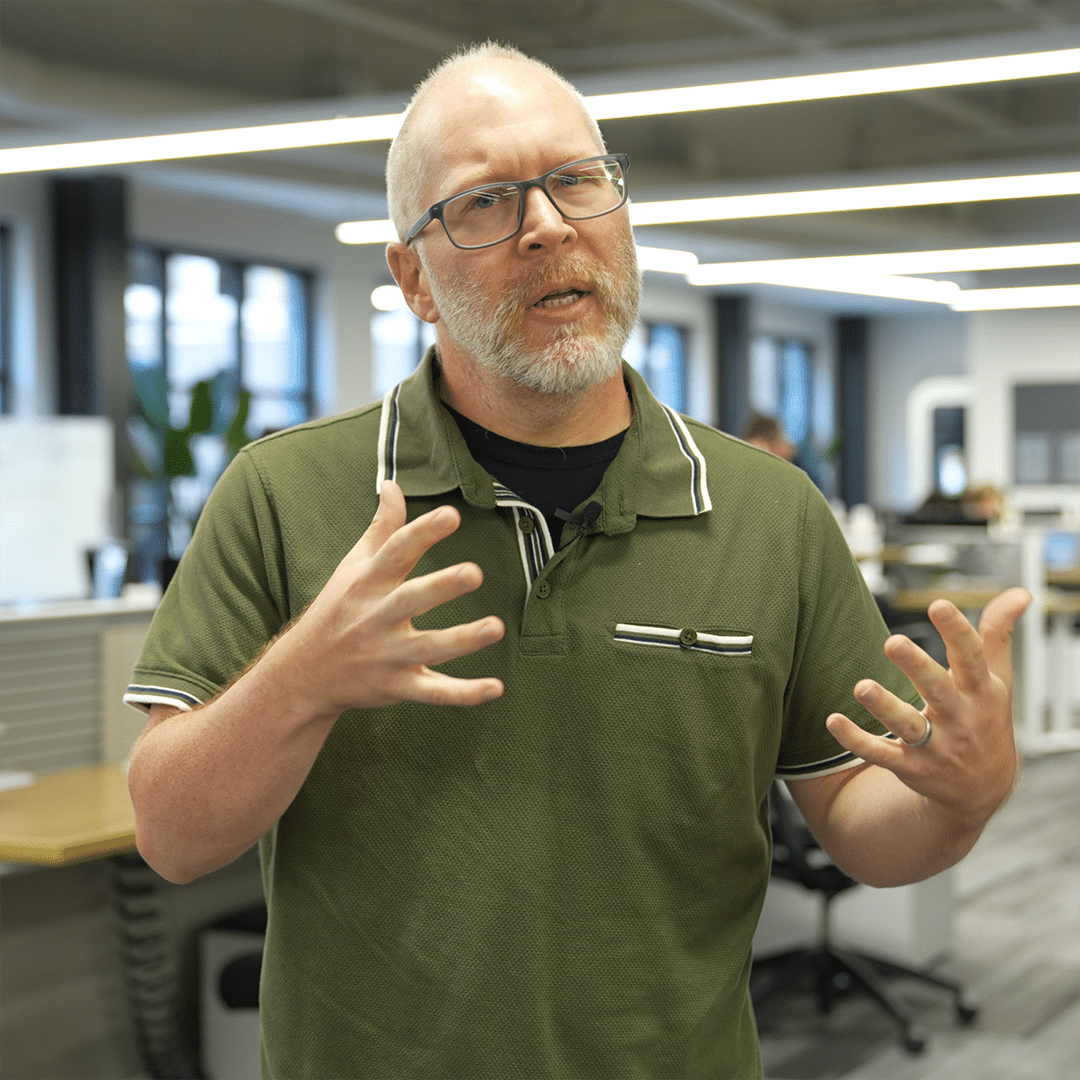
Whether you’re going to market through dealers, distributors, or some other partner channel, the mediated sale is complex. We call it B2B2X. But the leaders in the industry are the ones who are making it look simple. I’m John Gough
Kyler Mason (00:30):
and I’m Kyler Mason,
John Gough (00:32):
and this is Why You Win, presented by Element Three.
John Gough (00:35):
Our guest today is Carl Blackwell. Carl’s a retired CMO of several organizations and the past president of Discover Boating for almost 10 years. As a leader of trade associations for a lot of his career, he launched campaigns that were designed not just to grow an individual brand, but really we’re about the whole industry. And over the years, he has seen both the boom times and also economic downturns. And so he has some sharp opinions on what the boating industry can do today to continue to grow. This is a different spot in the funnel that we usually talk to people. You’re going to love this one. I hope you enjoy this episode. Carl, we’re so glad to have you today. Thanks for joining us.
Carl Blackwell (01:12):
Hey, it’s great to be here. Thanks for allowing me the opportunity to kind of dig into the marine industry a little bit
Kyler Mason (01:21):
More. You’ve had so many awesome moments in your career and obviously many, many years as CMO in the marine space and then in other associations and other industries as well. I’ve just been really looking forward to chatting with you and hearing some of your stories.
Carl Blackwell (01:36):
Yeah, I’ve got a long career. I really hate to stop and add it up, but it’s actually over 40 years now. I had a problem with over saying over 30 years, but now I have to say over 40 years.
John Gough (01:48):
You had a problem with it. Why’d you have a problem with it?
Carl Blackwell (01:50):
Well, I like to be forever young, but now I guess it’s good. You’ve got these years of wisdom. I got some gray hairs up here or silver or a little bit of both. But no, I got a lot of years and I’ve just been blessed with a great career path, but should be happy to share a little bit about it.
John Gough (02:11):
Yeah, let’s talk about the chapters a little bit. I think that’d be some good orientation.
Carl Blackwell (02:14):
So really there’s three chapters. I kind of put my career in three chapters. And the first chapter is I did a lot of multi-unit restaurant marketing. I worked for Baskin-Robbins, district manager, but also did product development there and moved on from there to Little Caesars. And Little Caesars at that time was expanding rapidly, Pizza! Pizza!. And I really worked with Inc. 500s type of franchisees. So a whole different level and more sophistication, more entrepreneurial, which was fun to work with. Went to work with an ad agency for a little while, so I can really appreciate what you guys do and how challenging it is for what you guys do. And after that stint, I moved on to the Olive Garden, and that was probably the best multi-unit situation I found myself in. First of all, it was owned by General Mills at the time. They had a lot of money.
(03:15):
They had a lot of success. They had a lot of volume and they had incredible profit margins, which afforded me at least to do a lot of marketing. So that was fun. And in that case, I worked with all company owned units. So that was the easiest in regards to getting buy-in. She pretty much went in and said, “We’re going to do this. ” And the other stops, I had to really sort of sell my concepts to the franchisees. So all that set a great foundation for the rest of my career. And the second phase was still in the food industry. And I believe in taking bridge jobs. I wanted to bridge from food to brand. And I went to work for the association that represented the beef industry. Sounds crazy, but it was still food related. And it was our claim to fame was beef. It’s what’s for dinner.
(04:13):
And the funny thing was I ended up working on everything but that national ad campaign. I worked on new product development, food service sales, retail, pretty much everything but the national ad campaign. But it was a great experience for me. And I grew up on a small farm in Southern Indiana. And one of the reasons I took it was because I wanted to give the farmers a voice. I wanted to see them be successful. And I had the opportunity to help them get more value for their hard work. So I had a chance to run a national campaign except the advertising for Beef and Swats for dinner and that was industry funded. So that bridge job led me to the boating industry. I’m sitting here and I’m working in Chicago and not realizing that the world’s largest boating trade associations about a half a mile from my front door.
(05:15):
Boated a lot in Southern Indiana, by Lake Monroe, which you guys may be familiar with. And I’m like, wow, I can take my experience as an industry funded marketer and take that onto boating. So six interviews later in a whole summer and all kinds of psychological tests, they finally realized I was crazy enough to take the job and I did. And what they really wanted me to do was to create the industry-wide campaign for boating with that experience with beef. It’s what’s for dinner. And at the time that was a big deal. So I had the chance to take a sort of a lateral move, but do it for the boating industry, which is something, again, my roots goes back to the roots too, growing up. And so Discover Boating was my first challenge. And that’s how I got into the boating industry. I could go into the beginnings of Discover Boating if you’d like to hear
Kyler Mason (06:11):
That. Yeah. And we’re going to pause for a second though, because where you’ve been so far has so much to unpack in it already because even these first two chapters from our perspective and what we think about a lot and talk about a lot is this manufacturer to the dealer, to the consumer that’s like B2B2C model or B2B to X. If you’re going to a business on the other end of that, your whole first chapter really from my perspective is it’s like right in the mix of that, this multi-location thing from the enterprise down to the retail unit, then into the customer. And one of the things you said about the corporate-owned stores versus the franchise stores has got to be so much in the mix of that for you, right? Who could I tell what to do? What channels do I own versus which ones do I have to convince and sell and finagle and spiff and do all that kind of stuff to make them come along for the ride?
Carl Blackwell (07:06):
One of my last chapters or verses in the chapter was with OneWater Marine. They had all company owned locations, so it was a little bit easier to work with those folks in that capacity at least. So most of my work though, the 20 some years before that, I was in working with a lot of boat dealers and that wasn’t a company-owned store. You had to go in and sell those guys one at a time. They were very independent. They had their way of doing things. Most of them though were very appreciative of the input and advice and they wanted to see the bigger picture, which we were able to bring that to them. These are the reasons why we do what we do. And if you really take the time, stop and do that, it makes your life a little bit easier.
Kyler Mason (07:55):
Were there themes that came from that first chapter that just unlocked you in later years that maybe people around you didn’t recognize or see because they hadn’t been in that hand-to-hand world before?
Carl Blackwell (08:06):
Because you had to be in the trenches with them. You had to earn their respect. You couldn’t come in from a corporate world and come down and talk down to them. You had a belly up to the bar, if I could say that, with them, and rub elbows with them and work a few hours at a boat show. So that’s something that really translated and that helped me make every person feel important because they are important. And you have to genuinely feel that when you go in and work with these dealers. I mean, some of these dealers are very smart people. They’re very smart business people that may not have the years of marketing expertise, but they’re really good business people. I’ve learned a lot from those folks. So you have to go in and kind of earn their respect.
John Gough (08:49):
Did you come on to start Discover Boating or had that already started?
Carl Blackwell (08:54):
There was a couple of grassroot efforts that happened before me. And when I came in, my job was to build a case for an industry-wide where everybody’s going to pitch in and support this. And it took two whole years to kind of get it built, but first of all, was get the buy-in. So I remember a big meeting and was based in the suburbs of Chicago and we brought in all the heavy hitters of the industry. We brought in some case studies, the RV industry, the beef industry, which I had some connections with in one other industry, which I don’t recall. And then we just built the case for the good of what happens when we all work together. There was no scale, there was no synergies there. Everybody was doing their own thing. And so we were missing that opportunity to build the brand of boating.
(09:45):
And there was some other challenges, access to water, making sure that we set the marinas up for success and made their world a little bit easier because if you couldn’t get to the water, didn’t help boating, building quality standards. There were no real hardcore standards that everybody bought into from building perspective. And quality is essential. You could promote the heck out of a product, but if they get to the store, the restaurant, and they get an order and it’s terrible, then all that money you’ve wasted is just money down the drain. So the same really applied to the boating industry. You’ve got to build quality products. So those were some of the foundation cornerstones that we all pulled together at the same time. And what was really important, which I was very happy to see, because we did this a lot in the beef industry, is we based everything on best facts available.
(10:39):
So we started out with, okay, all these companies, Brunswick, Yamaha, everybody pitch in their consumer research. And we’ve got a couple of researchers on our end. We’re going to take this and we’re going to synthesize it and we’re going to identify what we know and what we don’t know. What are the barriers, which is probably the most important because we don’t know what those are and now we don’t know how to solve them. And so then once we got all that research in, then we commissioned our own. And it was a fairly extensive research study and it took almost two years to complete. And by the end of the day, we had a story on what we should do and a path, and it was research based. And the boating industry’s got a lot of independent thinkers, which is challenging sometimes. And they all have the answers, but when you go in fact-based, this is no longer Carl’s opinion or at the time my boss, Tom Dombic, no longer just Tom’s opinion.
(11:40):
It’s research based founded in what consumer insights were and we got buy-in and we got funding and we launched a campaign.
John Gough (11:50):
What were you seeking to understand when you started out on the research?
Carl Blackwell (11:55):
What were keeping people from buying a boat and what were the triggers for a consumer to get them to think more about boating as a lifestyle? We had to break down the barriers. We had to make sure that people knew boating was accessible. Boating was not just for the rich and famous. There’s a lot of boating. There’s a lot of boats being built that are less than 20 feet or less than 24 feet. I think 70%, maybe it’s 71, 72% of all boats are 26 feet and smaller. So a lot of people, when they think of boats, they think of the big yachts or the big sailboats. No, that’s not the case. It’s all these pontoon boats that are out there, fishing boats, center console boats, ski boats that are out there on the lakes, in small markets like maybe it’s the Lake of the Ozarks in Missouri or all the lakes in Wisconsin and Minnesota.
(12:53):
So it was a matter of opening the eyes to a lot of people that, hey, boating’s accessible. It isn’t going to cost you a fortune. Now, can’t say that it doesn’t cost you a lot today. I think that’s one of the barriers and we can get into that later, but at the time really boating was affordable.
Kyler Mason (13:11):
Was there any of that research that went against the prevailing wisdom in the industry? I mean, I think some of those things you just said are things that you want to educate the public on about accessibility and convenience and safety and those kinds of banks. What did people believe when you were getting that kickoff that you came back to the OEMs or the dealers and said, “That’s just not the way it is.
Carl Blackwell (13:33):
” Well, a lot of it was research that we did around the first time boat buyer. A repeat buyer has a lot of those barriers knocked down already. A first time buyer who we were trying to attract, those folks had a whole different perspective. The barriers were great. “Oh my gosh, how am I going to dock this boat? How am I going to just, as they will say, park it? “So it was the difference of how a first time buyer thought versus a repeat buyer. So that was probably the biggest thing. And we actually refined that research as we went along again in around 2015, we got in even deeper than that about the differences. And if we wanted to grow the industry, it’s just look at that first time buyer, understand what’s in their mind. As marketers, you have to be a psychologist. You have to get inside people’s minds.
John Gough (14:31):
What else did you discover? I mean, you talked about docking or parking and I mean, I’m assuming maintenance and transportation. Was there an insight in there that you’re like, wow, that is not what I expected? It
Carl Blackwell (14:43):
Was a lot of the basics. When you go into the dealership, talk to the family, don’t talk to just the male dominant person. That wife is the veto vote too, or she’s the one making the decision. So you got to talk to the family. And we’re a very sales oriented industry. And it was more about, what can you do for me? Give me that sale. And we really asked people to stop and think about what were the triggers for them. And so that helped. And the other things besides the marketing were really important too. And some people, it was all about the standards boat building and it was about access to boats because around that time, getting a marina slip, I know it was really tough in the southeast. And if you couldn’t get a place to dock your boat or there weren’t enough ramps, boating wasn’t going to grow.
(15:40):
So there’s a lot to the research. It was four or five different key foundations.
Kyler Mason (15:45):
I’m going to ask you one more question from the archives and then we can zoom forward a little bit. But I had a conversation last year with a guy in power sports. He was a large power sports dealer and they were having a lot of these similar conversations now rewind 15 or so years and saying,” We’ve really got to grow the industry. We’re facing this decline in the market entirely and everybody cares about it, but we sort of see these large manufacturers and some of them seem to care a little bit less. And the attitude from this particular dealer, and I won’t say that this is true or not, but his perception was, these guys are saying, “As long as I get mine, I don’t care what else is happening to everybody else.” That felt really shortsighted to him. Were there holdouts when you were trying to get people to jump into Discover Boating?
(16:36):
You don’t have to say who it was, but who did you have to get over the hump? What happened?
Carl Blackwell (16:41):
Yeah, there were a lot of holdouts. There were segments of the industry that still don’t contribute to the industry, which is sad. I mean, I sort of see their perspectives. I don’t think it’ll ever change, but the foundation of the Discover Boating Program was built on the backs of dealers, boat manufacturers, and the consumer, really. None of the other segments in the industry participated really of any substance. And I beat my head up against the wall many years trying to convince marina operators that this was important to them. At that time, they had all the demand they could handle. And also it was on the built on the back of new boats. Now, new boats to use boat sales, it’s about 80 / 20, and it’s pretty been consistent since I’ve been there, 80% used, 20% new. And this campaign was back on the backs of the new boats.
(17:38):
So unfortunately, used boats don’t contribute and they certainly benefit more, but how do you do that fair and equitable? Then that’s been an age old problem. But yeah, there were segments of the industry that didn’t want to participate. The gutsy things that the NMMA leadership did at the time was make it mandatory for NMMA membership issue had to contribute to the grow boating, discover boating campaign. And we lost a few members for that, but we didn’t lose many, which was remarkable. And that tip of the hat to the industry leaders who said, “All right, guys.” And the industry was not complete soft, but it wasn’t roaring, but they wanted it to continue to grow when it started. So that added cost to everybody. And so there were a lot of center console manufacturers in parts of the country that didn’t want to be a part of an association.
(18:36):
They could do it on their own. They didn’t see the need or the benefits to them personally. And why would I help the manufacturer down the road? So there was a lot of holdouts there. It was hard to get the sailing industry to buy in at first, but they came around. And the sailing industry represents about three to 5% of boats in the US. And I served on some boards in the sailing segment and I saw the absolute benefit to them because they were going to get maybe 20% of the coverage of what we were going to be doing and paying 5% of the way. So finally they kind of came on reluctantly, but they put sailing first. So they tried their own Discover Sailing program, which didn’t really get off the ground ever. So that niche came along slowly, but most of the niches were all on board and it was pretty cool.
(19:35):
Bob Deputy, John Dorton, David Slickers, and David was president of Tiara Yachts, a big company. You’re not selling Tierra’s to first time boat buyers. And he was on board and supportive of it because he knew that nobody was just going to come into the market and buy a Tierra. They had to buy two or three other boats. The same with Grady-White. Nobody just walks in and buys a Grady-White. Once they get in the marketplace, they start to understand and appreciate the quality of some of these higher end boats, and then they find their way up there. But if you don’t start small, if you don’t get them in the funnel, you’re not going to get them up to the top. And there was another study that we did a little bit later on. We studied boat clubs and boat sharing, and we did that because that was a great way to sample.
(20:25):
You asked me about some of the things I learned in restaurants and food service and food is sampling. Boat sharing and boat clubs allow that sampling opportunity. The hurdle’s just not as high. I could get into boating and I can learn. I got to learn on probably a smaller boat and they’re going to teach me how to drive this boat. And so that fear factor that’s comes with … And that was another learning is there’s a great amount of fear. That barrier is massive for a first time boat buyer versus a repeat buyer. And so boat clubs really kind of helped chip away at some of those barriers there. And I’m a big fan of boat clubs. And believe it or not, when they first came into the marketplace, there were boat shows that wouldn’t allow them to display at their shows. There were manufacturers who wouldn’t sell to a boat club who were absolutely against it because they thought it was going to cannibalize their business.
(21:25):
And one of the reasons we did the research studies to prove it was not going to cannibalize it, but it was going to add to it. And that research study came through. And I think it was a pretty big moment in the boat club world and kind of helped them get better firmer grounding in our industry.
Kyler Mason (21:43):
One of the themes right there that you keep going back to is this idea of playing a long game, right? Whether it’s the manufacturer who knows that they’re the third in line or any of them who know who will believe that the Pope Club isn’t actually going to eat their business, it’s going to open up the top of the funnel more and more. I think there’s an element certainly of faith, but also just like a core marketing principle that if you’re coming at it from the angle of a marketer, you know that the top of the funnels is, you just want it to be as wide as possible. And so even above the top of the funnel that the manufacturer’s thinking of, your work in the association world and discover boating, it’s really all about that. How do I make the pie absolutely as big as possible?
(22:25):
And we had Cecil Cohen on the podcast a little while ago from Freedom Boat Club and he talked about the same things. This is an avenue in. It’s also a scoff along the way for other boat owners. You could own a boat, sell your boat, join the boat club, experiment with them with other types and kinds, and then go back and be a buyer again. It’s not nearly as linear as people think it is.
Carl Blackwell (22:48):
Yeah. And that was one of the side benefits too. It’s like, okay, that person hits that age where they don’t want to, they don’t have the energy maybe to do it full-time. You get into boat clubs because you love boating. They’re such passion about boating and you get these people hooked in boating and they don’t want to give it up, but eventually they’re going to give it up. Maybe they get a lot of kids and they don’t have time anymore, but they want to introduce their kids to that livestock. But yeah, that’s the backstop. Why not get a fraction of that boater? Instead of losing them all out, keep a fraction of them, keep some of that incoming because Freedom’s going to buy a lot of boats carefree and some of these other clubs are buying a lot of boats. That’s going to become, it probably already is, a big chunk of some manufacturer’s businesses.
(23:40):
So yes, you got a great point there. Cessel did as well.
John Gough (23:44):
Tell us about some of your favorite campaigns throughout your time and where they started and the results of it. I’d love to hear about some of that.
Carl Blackwell (23:54):
I had a chance to work in a career that was also a passion of mine and I got to bring it to life, not only on a brand level, but on an industry-wide level. A lot of responsibility came with that as well. And there was some politics involved. You got to show my boat or you got to show my boat. At some of the commercials you could see, we splashed in a lot of different types of boats because it was really kind of a political checklist we had to go through. But some of the first things, first works that we did, we shot a short movie, about three and a half minutes called The Good Run. That was such a way for us to get buy-in, not only from consumers, but from our industry, because they knew that boating was passionate. And then once you got hooked in it, you were going to stay and you’re going to make a lifetime with the memories.
(24:49):
So that was a great campaign. But then we also shot some commercials of Dogs Need Weekends too. People love their pets. And if you could put two and two together and just show a dog’s having a lot of fun on boats, you’re going to get awareness. Ended up being probably one of our most favorite campaigns. And we had some celebrity dogs in that spot, which was a lot of fun to film.
Kyler Mason (25:15):
You got to pause on celebrity dogs. Oh
Carl Blackwell (25:18):
Yeah, sure.
Kyler Mason (25:19):
Who’s a celebrity dog?
Carl Blackwell (25:20):
A celebrity dog. The dog really didn’t have a name. I could just tell you by the scenes, if you remember Pirates of the Caribbean, Jack Sparrow is locked in a jail cell and he signals to the dog to get the keys and to bring them in so he gets unlocked. Well, that dog was part of our commercial.
John Gough (25:42):
What are the talent fees for famous dogs?
Carl Blackwell (25:46):
You know what? They weren’t that high. They were cheap. They didn’t have their own sets to worry about. With the dog, we just threw a couple of sticks at them. They were fun to be around. Welcome to the Water was a campaign that we started right after the Great Recession because when the Great Recession hit, obviously we did everything we could just to keep the lights on. The Discover Boating campaign pretty much shut down, but we kept the website running and we kept this crazy new thing open that happened back around 2008, 2009, 2010. It was called Facebook. And we got in there with Facebook pretty much when they just started to advertise a lot. And I’ll be darned if our million dollar ad budget, the smallest we had back then since we started, won an Addie Award or FE award, gold EFI award for the most efficient ad campaign in the country.
(26:46):
This is our invitation to voters or to non-boaters, come on out in the water, you’re welcome here. And that was a great fun, probably a fairly inexpensive production, but it was an energizer. And I did that to energize the industry, give them faith that we could pull it together as an industry as much as it was to the consumer. Our budgets got tighter and tighter. We had to go a little bit more to digital. We were one of the first in our world to test connected TV, which actually connected TV sets to your online activity, which was very effective to reach new people and very cost effective. And we really liked to be innovative in our advertising, be one of the first because we had the budget to try that. And if we failed at it, then the boating industry didn’t need to have to go down that path, but we didn’t fail at that stuff.
(27:41):
And then we also went in probably the first one to get into influencer marketing. And our first one was, the first series was with Jake Owen. You may have heard of Jake, country music singer, who was a very avid wakeboarder, and he invited us into his home and really was our spokesperson for the year, did a good media tour with us. And we sponsored his concert tour and were able to spread the word of boating through his concerts all across the country, country music and boating just kind of go hand-in-hand. And he was a great ambassador.
John Gough (28:19):
Did you have activations at his concert tour?
Carl Blackwell (28:22):
We did. It was a little challenging because who got to do that and who didn’t? So we would bring boats and there was salespeople that had a chance to sell the boat. Unfortunately, we didn’t get a ton of pickup on that because people go to the concert and drink some beers and have a great time. So the window was pretty short for a dealer to introduce people, but we had them on display.
John Gough (28:47):
Question for you. There’s a saying out there, “The best day of a boater’s life is when you buy it and when you sell it. ” And that’s pretty common saying. Have you guys had a concept or a campaign that you’ve done research on to try to fight against that?
Carl Blackwell (29:02):
I mean, that was my motto, my whole career. I spent a career trying to convince people to change their way of thinking from the best two days of a boater’s life is the day you buy it and the day you sell it to Saturday and Sunday. And so I’m not sure we necessarily … We probably put that in some messaging in our social media. I don’t think we had a whole campaign go around it necessarily, but really everything that we did was geared towards getting people out and enjoying boating all the time. We had some research going back to being grounded in research is if a boater didn’t boat 12 times a year, he was more apt to get out of boating. So we needed to keep boaters into boating as well. And manufacturers did a great job. They really took the lead on that and the dealers took a lead on that, but you got to keep people boating.
(29:56):
But yes, every Saturday and Sunday was a motto and You know, I still believe that the best two days of the Boazer’s life, I’ll still say it to friends that ask. Because when they asked me when I sold my boat, “Well, was that the second best day of your life?” I said, “No, I’m not done.”
John Gough (30:12):
There’s a campaign in there. You got to have the guts to do it.
Carl Blackwell (30:15):
Yeah. Well, you guys could do it. I’ve got to find somebody to willing to pay for it.
John Gough (30:22):
That’s right. Well, you’re a good fundraiser, so maybe we bring you along.
Carl Blackwell (30:25):
Happy to get back in the club there.
Kyler Mason (30:28):
I had to unretire again. We’ll drag you back on. When you were talking about agency life, your two years in agency side, I was just thinking, I just call those dog years, man. You can learn anything in two years in an agency. Holy cow.
Carl Blackwell (30:43):
Boy, I learned a lot. It was fun. I really enjoyed my time there. And you had to sell yourself. You had to think on your feet. I took acting classes and I took improv classes to make myself better in the agency world because I had to think on my feet. You guys have to do that every day because you’re going to get questions. You don’t know where they’re coming from. And so you have to think on your feet. And it was fun too. And it kept the creative juices going.
John Gough (31:13):
What was your role in the agency?
Carl Blackwell (31:16):
I was an accountant director. And I had some very veteran creative teams. And this is where my psychology came in. I had to manage these guys to focus on the challenge at hand and not get so big picture out there that I could never get what they wanted to do, execute it. So I had to convince it was their idea. Ideas I had to convince it was theirs. And I’m like, “All right, now take this and make magic with it. ” And they did a great job at that.
John Gough (31:52):
That’s cool. I love that you took improv classes to tune up a little bit. I would be terrible at that.
Carl Blackwell (31:59):
Well, I was, I’m sure. I was terrible. You get good after a while. It’s actually, you get less nervous. Public speaking’s a big deal for people in your world and in marketing worlds. If you really can’t carry the conversation, if you come off sounding nervous, that’s not good. And especially as a leader too, you’ve got to build confidence in your followers. So those two were great skills. That and a Dale Carnegie class. I don’t even know if he exists still today, but-
John Gough (32:32):
Oh yeah, his books are right back here. Brown
Carl Blackwell (32:34):
Himself, Mike Kyle.
John Gough (32:35):
Yeah.
Carl Blackwell (32:36):
Great. I mean, what a practical way to teach people how to connect to people. Name association. Now, I still use that skill today to remember people’s names.
Kyler Mason (32:47):
I mean, those are marketing skills as much as their people skills,
John Gough (32:51):
Right?
Carl Blackwell (32:51):
Yeah.
John Gough (32:51):
I want to talk about the affordability again. You put a pin in that earlier.
Carl Blackwell (32:57):
Yeah. I mean, I definitely think there’s some challenges there. I think that’s a major headwind that … I mean, I have some ideas and thoughts on how to address that, certainly.
John Gough (33:08):
You said earlier that you wanted to get back to affordability. Tell us, what ideas do you have?
Carl Blackwell (33:14):
Well, affordability is, in my opinion, and it has been forever, I think. I’m sure it was back when I started in 2003. And I’m sure it was a problem back way when Bovie first started. Affordability’s been a challenge. And if you compound the price increases that have … And it’s not just about price, I’ll get into that, but if you compound the increases that have happened year over year, over year over year, to the point where we add it up today and we have got a product that’s really not attainable. A new boat’s not attainable to most people. My boat, I bought it used back in 2018. Just to give you an example, it cost me around 180,000. And today that boat would probably run me 700, $800,000, the same boat. Yeah. I mean, I’m not going to buy that boat. I can’t. And so that’s a headwind that the industry’s got to come to grips with.
(34:20):
And there’s a couple of ways to tackle that. It’s value, right? I mean, value is important. And if you can build enough value in that $800,000 boat where a lot of people are going to buy it, that’s great. God bless you. But the boating industry also has this challenge. Another headwind is scale. The number of boats, number of new boats were down 10% last year, and that’s following another 10%, 10% back to the COVID years where it did shoot up, and it just kind of pushed demand forward a little better. So scale’s a challenge.
(34:59):
And innovation is one of the solutions to value. How you’re going to innovate to get people to really want to buy that boat. But you run across this challenge of scale to be able to pay for the R&D that’s necessary for innovation. So there’s a lot of challenges. You got an aging demographic. I think the average age of a boater is 60 now, and that’s been increasing at least a half a year, the average. I know when I left NMMA before I started a few other jobs, it was 55, and now it’s six. It’s not stopping it fast. It seems like it’s growing faster. So that’s a challenge. Scale, it’s a challenge. We’ve got to have innovation in order to make this happen. What are we going to do to be the game changer? Because little bits of innovation every year are not going to be enough.
(35:54):
Because I think boat builders are building some pretty cool boats today. There’s a lot of hybrid boats or sort of the SUV boats that serve multiple purposes, center console boats that also are family friendly. Really important if you’re an angler and if you want the family to want to spend time with the family, you get them out on the boat and you teach them fishing. But we’ve got a lot of little hits and there’s really cool design features that are nice. The sides of a boat that fold down that kind of make up for the fact that now we’ve got a lot of outboard engines on the back boats, or we used to have a lot of inboards. So that’s taken some of the fun area, the fun zone away from a boat. So just a little innovations to make that work. And I think that was a smart thing.
(36:43):
It was a big affordability thing to convert to outboard engines, but that’s not enough. And now outboard engines are getting more and more expensive every day. So we’ve got some challenges. And so you asked me about some ideas to address that. I was in the boat monitoring business for a couple of years and I thought they had a great service that was low cost. And so that’s one, that’s not the magic silver bullet that’s going to turn things around, giving people more information about their boat. But one of the services they offered were if you were on the water and your boat broke down and you didn’t have that friend with a boat to call, you could call up one of their mechanics and they could kind of walk you through steps to kind of help you get back up and running. And that gave a consumer peace of mind.
(37:38):
So I thought that was kind of cool to do. And then they even went a step further and never really got widely accepted yet, but they would tow you back in. So you could work with the towing companies and get you towed back in. So one service, one stop, and a boat manufacturer or dealership could do something along these lines. We’ve said this already, boat clubs. Boat clubs are a big solution for the industry because I like the sampling opportunity. And there’s other concepts that are other than boat clubs. Certainly the boat sharing has a niche. There’s fractional ownership. There’s a lot of little things like that I think are going to grow and going to continue to grow. Maybe not fast enough, but that has got to continue to grow in order to get more people introduced to boating. And that’s a way to cut your costs down.
(38:30):
I know what I spent a year on my boat, and it’s going to be a fraction of what I’m going to spend the boat club. So you’ve got to find ways to get the introductory costs down. Here’s a really crazy idea. And my friends at Discover Boating might not be fans of this, but the industry need to come together and all of these smaller companies don’t have the R&D dollars to make giant steps, breakthroughs. I don’t know what these breakthroughs are. If I did, I’d probably be back into the end working again. But if they were to take a pool of dollars and put it towards R&D, that helped macro problems, not micro problems, because brands are going to do that on their own. But if there were macro problems like solving how to make holes less expensive or whatever else the problem might be, if the industry would come together with solutions like that and then share it with everybody, there’s got to be some things out there that the industry could do together just like marketing, marketing challenge and just like water access.
(39:42):
So R&D and innovation could be an area. So if there’s things like that could be done, I’d love to sit on a brainstorming session to see what that might be, but that could be a way to tackle some of this value affordability because we got a problem and it has to be addressed. We’re going to see 10% losses for a while. Now the good news is that there’s a lot of lakefront properties out there and there’s bigger and bad or marinas out there and people love fishing and you’re not going to keep people off the water fishing, whether it’s salt water or freshwater. You’re not going to keep them off a pontoon boat if you have a lake front house. You’re not going to keep them from wakeboarding or sailing. So fortunately, we’ve got that going for us, but how can we get more people introduced to that?
(40:28):
And marketing certainly is one of the tactics we could use.
Kyler Mason (40:32):
There’s a theme for this then, Carl, what I’m hearing is that there’s a belief about what the industry should do for you, what the brands do for themselves, where my competitive advantage comes from. Do I know something that the guy down the street doesn’t know and that’s where I’m going to get my edge, my angle. It’s about quality or about production time or about a particular thing, technology that I have that they don’t, or you could have made the same argument for an advertising technology. You mentioned connected TV earlier, right? The industry went out and figured out if, is it going to work for us? Yeah, it is. And if one guy thought that was their big competitive advantage, I could see how he might be a little frustrated that now you’re doing way a secret. Yeah,
Carl Blackwell (41:19):
Sure. And I think that’s probably why it wouldn’t work. Like I said, it’s out there concept and I don’t know what those problems are today. I wish I could think of them. But if there were things that the industry could solve, assign the industry association to do that, start an R&D team for the industry. But as the consolidation of the industry starts to become more and more of a factor, these guys have the scale to develop. So that’s probably why it’ll never happen.
Kyler Mason (41:52):
I think that you’re onto something because we were down at the boat show a couple of weeks ago and there was a panel from the NMMA at the Neptune Awards where you had CMOs from several of the big manufacturers up on the stage talking together about the panel that they’ve been working on for the last year and the kind of research that they’re doing together and the very loud, opinionated voices that are in that room together, but also they’re publishing it. They are confronted with this really real problem and I don’t think they’re shying away from figuring out how to work on at least part of it together. Then they go back to their day job on Monday and they have to compete against each other, but that’s the gig.
Carl Blackwell (42:36):
Well, and if you think about the Discover Boating team re-energized, reappointed a advisory group and it’s very qualified people. They do marketing for a lot of big companies. And what I really love, I probably wouldn’t have liked it when I was there, but I really love that they had a CFO on there because I had a lot of arguments with our CFO, but he made me accountable. And so I think it’s one of the smartest things they could do is put a CFO on a marketing committee and I’m sure there’ll be some back and forth, but that actually gives the staff and the campaign some accountability. I love also that they’ve created a set of measurability and measures, I should say, and they’re going to measure the campaign and that’s important. And it’s important to have those stakeholders that are really smart and influential in the industry to give you ground cover as staff.
(43:39):
That was one of the most important things that a board could offer me is, “All right guys, we’re going to decide this is a great idea. This is a big move. It’s not going to be super popular. I’m going to need ground cover here because I’m a staffer. I need ground cover from the industry and the group that’s in there I know are willing to do stuff like that. ” So that will be really important for them to do. Now, I think their challenge will be top of the funnel is expensive. And we talked about some of these funding challenges a little earlier. It’s expensive and that’s why the measures are so important. Can that budget, once you take out overhead, staff, agency fees, some of their boat show marketing expenses, some of the research costs they do, there’s a lot of things they have to cover.
(44:31):
And then what’s left is that what I call the working media, and that working media has to be big enough pool of money to make a difference. So they got to work out for them. I’m confident in them, but in the marketing world to change consumer behavior on a macro level, we’re talking about reaching a lot of people and getting them to go from up here to closer to that funnel where the brands will take over and the dealers will take over the owner experience, which is great. And that’s what happens, but this is expensive. So I would love the industry to join forces, the whole industry to join forces to help solve that problem. They haven’t so far, but I commend to the manufacturers and dealers for hanging in there and doing the best they can.
John Gough (45:22):
That was some good punctuation right there. Yeah, that was awesome. You weren’t expecting it. I think you just did it though. I mean, you nailed it. We’ll end the flame. We’d park the boat. We’d park the boat. It’s
Carl Blackwell (45:33):
That acting class, guys.
John Gough (45:35):
Yeah. Send me the link, man. Carl, this has been awesome. Thank you so much. Yeah, thanks for joining us. This is fun convo.
Carl Blackwell (45:43):
My pleasure. It’s fun to do, guys. Happy to help anytime. I love the industry. You can’t get the industry out of you. That’s why I can’t seem to retire.
John Gough (45:50):
Thanks, Matt. This is great.
John Gough (45:52):
Why You Win is presented by Element Three, a marketing firm focused on modernizing go- to-market strategies for manufacturers that sell through complex distribution channels. We help leaders solve problems across demand generation, sales channel support, and brand development.
John Gough (46:08):
If you’d like more from myself or John, connect with us on LinkedIn. And for more from Element Three, visit elementthree.com. That’s elementthree.com.
Sharing Expertise
What good is learning something if you don't pass it on? You can tap into what we know right now – from dealer programs to determining brand architecture – and you don't have to give us a thing.
Understanding Mental and Physical Availability in Marketing for Manufacturers
How OEM Leaders Should View Their Marketing Plans