

Why You Win
Carey Walley of Airstream
This Episode
Building demand is one challenge. Building demand for a product that customers may not purchase for years is another.
In this episode, Kyler and John sit down with Carey Walley, Director of Marketing at Airstream, to explore how one of America’s most iconic brands balances serving today’s buyers while preparing for future audiences. From managing product launches and dealer relationships to building long-term brand affinity, Carey shares how Airstream approaches marketing in a category where the customer journey often begins long before the purchase decision.
Carey discusses the role of Airstream’s Core and Explore marketing teams, how partnerships with brands like Frank Lloyd Wright and Pottery Barn help expand awareness, and why dealer relationships remain critical despite the strength of the consumer brand. She also shares lessons from launching a new website, managing a small marketing team behind a globally recognized brand, and creating demand in a market where used inventory is often one of the strongest competitors.
For OEM leaders navigating the complexities of a B2B2X model—where your success depends on empowering dealers to own the customer experience—this episode offers a blueprint for building demand, supporting channel partners, and protecting brand value.
Key Takeaways:
- Build Future Demand Before Customers Enter The Market: Invest in audiences years before they are ready to purchase to create a stronger pipeline later
- Turn Customer Behavior Into Product Innovation: Monitor how owners modify and use products to guide future development decisions
- Create Consistency Across Every Customer Touchpoint: Standardized information, training, and digital experiences improve dealer effectiveness and customer confidence
Episode Transcript
This transcript was generated with the help of AI and may contain some errors.
Carey Walley (00:00):
I think the brand’s bigger than I even knew it to be on the outside. When you’re on the inside, you realize just how iconic it really is. And when you have the type of celebrities that we have that are reaching out and the type of other big brands that want to work with you, it’s like I’m part of something special.
Kyler Mason (00:18):
Whether you’re going to market through dealers, distributors, or some other partner channel, the mediated sale is complex. We call it B2B2X.
John Gough (00:27):
But the leaders in the industry are the ones who are making it look simple. I’m John Gough
Kyler Mason (00:31):
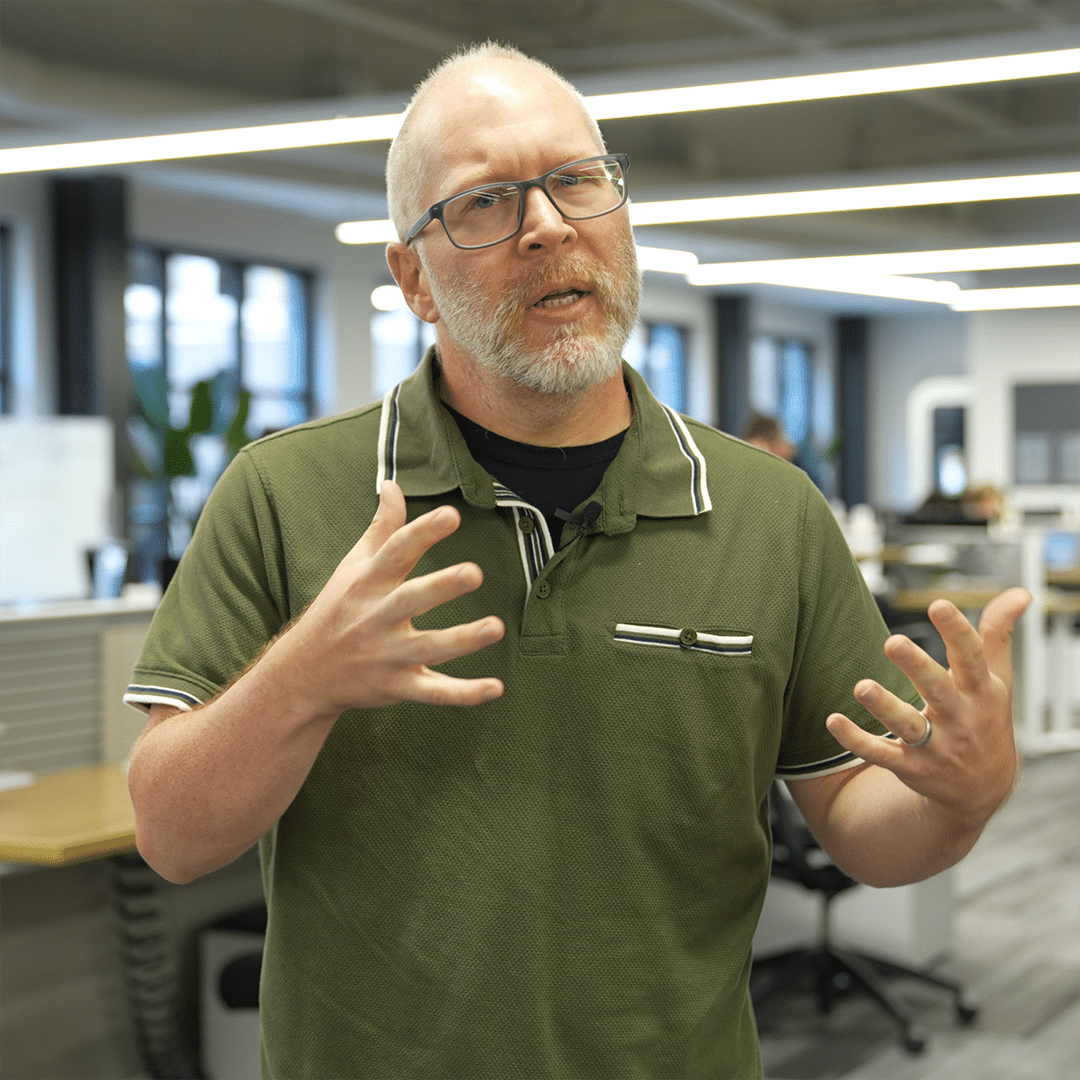
and I’m Kyler Mason and this is Why You Win, presented by Element Three.
John Gough (00:36):
Our guest today is Carey Walley, the director of marketing at Airstream. We worked with Airstream for a long time and it’s great to talk to somebody who’s leading the marketing for such a historic brand. We recorded this episode in Jackson Center at the Airstream Factory, which was really cool. And Carey talked a lot about marketing to their core consumers and positioning the brand and products for the future and also told us what her favorite product to work on that she’s been a part of. This was a great one. You’re really going to like it. Carey, thanks for having us out to the Airstream Factory here in Jackson Center. We’ve been really excited to come and this is different and unique for us to actually be on site with you.
(01:15):
And for those of you that are just listening and you can’t see this right now, you may hear rivets going in, you may hear music in the background, people are building Airstreams all around us, which is cool because that’s kind of your day to day.This is the office for you.
Carey Walley (01:30):
Yeah. Well, welcome. We’re glad to have you.
John Gough (01:32):
So what’s it like being kind of here in the middle of all of this every single day? How does that change your perspective on what you’re marketing, what you’re building?
Carey Walley (01:41):
I think it’s a really good perspective because you get to see every day the people that are working hard to build the units and it’s not a big leap to really understand the consumer that’s going to enjoy it. So it’s nice to be part of it. I’ve always worked in manufacturing environments, so this isn’t new for me to be sort of headquartered in the same space as a manufacturing environment. I like it. It gives you a lot of perspective.
Kyler Mason (02:04):
Were you in B2B or B2C beforehand?
Carey Walley (02:06):
Yes.
Kyler Mason (02:07):
Okay.
Carey Walley (02:08):
I spent about eight years in consumer products and I worked for Mead, which was like Five Star Notebooks, Cambridge. And then I spent 10 years in building materials and I worked for TimberTech, which has multi-level distribution similar to us actually. So we sold through distributors that sold to dealers, that sold to contractors, but our marketing efforts were primarily to consumers.
Kyler Mason (02:30):
That’s decks, right? Yeah. Decking?
Carey Walley (02:32):
Yeah, decking.
Kyler Mason (02:32):
Can you get me a discount?
Carey Walley (02:34):
Not anymore.
Kyler Mason (02:35):
I need a deck.
Carey Walley (02:35):
Not anymore. Not anymore,
Kyler Mason (02:37):
But I- Mine isn’t bad.
Carey Walley (02:38):
I have put down some decks myself. Yeah. And I’ve gotten this.
Kyler Mason (02:41):
Was that part of the training?
Carey Walley (02:42):
I made it part of it. Yeah.
Kyler Mason (02:43):
Let’s go.
Carey Walley (02:44):
And we always needed photography deck. So every time we moved or whatever, I always looked at the house to say, “Does this need a good deck on it because we’re going to need a good photography deck.”
Kyler Mason (02:54):
I love it.
Carey Walley (02:54):
Yeah.
Kyler Mason (02:55):
Can you tell us a little bit about your role today in Airstream and help us get a picture of what the organization expects from you and your role?
Carey Walley (03:02):
Yeah. I’m the director of marketing here. I’ve been here for seven and a half years. I’m originally from this small town area that we’re sitting at today, so it’s really nice to be kind of home. I really understand the people that work here because a lot of people that work in the factory are from this area. I work as what I call the core marketing area, so really launching products for travel trailers and touring coaches, anything related to airstream.com. I manage the Airstream Supply Company e-commerce business that we have. I have pretty wide variety of things. We divide our organization up a bit to people that support the core business and then folks that are supporting the Explore business and Explore is really looking at new markets and new audiences, people that may not buy for five to 10 years where the core is looking at consumers that are going to buy within one to three years.
Kyler Mason (03:56):
Great. You said you’re from this town. Was it a dream of yours to work at Airstream?
Carey Walley (04:04):
When I lived, I lived north of the Cincinnati area and when we were thinking about moving back to the area, because my parents are aging and all the things, this was the place. This was the only place that I could really see myself taking my marketing career to the next level and what an incredible brand to be part of. So I definitely had my sights on this particular organization. In fact, one of my coworkers, I had asked her to be a reference when I had gotten an interview and she’s like, “You did it? You’re getting in there?You were talking about this when you were talking about your move.” And so yeah, it is a place that I’ve always wanted to work. I’ve always saw the value. I don’t think people that live here understand what they have because you don’t realize what a big brand Airstream is.
(04:49):
And you’re used to it and you’re just like, it’s another manufacturing facility. We have a lot of those in the area, but knowing from the marketing standpoint what a huge brand it is and how people really want to collaborate with us, celebrities and influencers and other big brands, I mean, it’s really a marketer’s dream.
John Gough (05:05):
I mean, it’s iconic, right? It’s connected to America, it’s connected to nostalgia. It does so many things for so many people just instantly.
Carey Walley (05:14):
Yeah, I think so. I mean, we’re 95 years old this year. It’s really fun to be part of the A250 initiative and we’re a big piece of that sort of manufacturing story as we look back. I think it’s really a neat place to be.
John Gough (05:28):
What are you all doing with A250?
Carey Walley (05:29):
Well, we’ve given a trailer that they’re traveling around with and they’re inviting people to tell stories about their experience. And so we’re a part of that sort of initiative through a trailer that’s moving along different aspects of the United States.
Kyler Mason (05:45):
Going back to your comment earlier, you have core marketing and Explore, would that fall into Explore?
Carey Walley (05:52):
That fell into more of the Explore because we’re really reaching audiences that really aren’t necessarily looking to buy, but they’re also thinking, “Wow, that’s a really cool vehicle that I may want to participate in the future.” So I would consider that more of the Explore.
Kyler Mason (06:08):
Yeah. Tell us about the … I think you’re headed there, but the primary objective of Explore exists to do X, Core exists to do Y. What are those things? Yeah.
Carey Walley (06:18):
Explore exists to … If you look at the pond, Core is really fishing in six ponds that we know today. These are the type of consumers that typically buy us. Explore is really looking at consumers that are in a different pond that we don’t know yet. So their buying cycle is going to be much farther out. So it might be five to 10 years where core is like, okay, these are people that typically buy from us. We’re marketing to those people. They have a certain household income, a certain aspiration level, a certain type of interest in the outdoors and so on. So you would typically think are maybe Airstreamers. That’s the core. Explore is like future state as to who we might want to market to who may not be aware of the brand today, but we’re just sort of bringing them into the family.
(07:06):
The buying cycle for Airstream is so long. I mean sometimes on average it’s probably at least a year from the time that somebody submits their information to us to when they buy, but the journey really starts way before that. People start dreaming about it when they’re kids and start thinking about, “Hey, when I retire, I want to do that. ” Or, “At some point in my life, I’d love to own an Airstream.” So the dream starts way before that and then the buying journey does take a while too.
Kyler Mason (07:32):
From a brand perspective, that’s incredible because you’re creating long-term demand. It sounds like Explore is playing a role for you where they’re introducing Airstream to new audiences, creating demand maybe where you hadn’t done it before so that if I’m understanding correctly, that rolls into core and you’re like, “Okay, this is an audience we’ve created. Now I’m working to convert that into a sale.” Yeah,
Carey Walley (07:53):
I think it would at some point, right? Yeah. It’ll take a little while to sort of build that audience and nurture them and get them excited about the brand and then at some point they would roll into core.
John Gough (08:02):
How does the product development function differ between the two groups? Obviously you’re making products for people who are buying today and this year and next year and those are new floor plans and new models and new features and then you’re also must be imagining what’s off in the distance as well. Do you interact with that group differently than other people in the business do, do you think?
Carey Walley (08:26):
I mean, we focus a lot on the core today in terms of product development. We are obviously monitoring and seeing what the future holds. At one point we had the concept vehicle of the eStream, which was a very high power battery activated, electrified Airstream that was more of a future state that we didn’t really produce, but we’re thinking about what might be next. I think the Explore is, as opposed to producing products for them, it’s more listening to what they might want so that we’re ready and prepared for what they might be interested in and be able to pivot towards that. We’re not necessarily producing products for them at this point. Yeah.
John Gough (09:03):
But you’ve done a lot of interesting kind of product development collaboration and like most people in this business, new product is the thing that we sort of get our lifeblood from, right? We are always asking what’s next, what’s this model year going to be and do differently than the last one in a business that’s so iconic and the silver bullet people think that they know what’s inside it. How does that problem of what’s new and what’s next maybe feel different here than you imagined in other places?
Carey Walley (09:33):
I think it’s interesting because our product hasn’t changed that much. If you look back over the years, it looks very similar, but under the skin there’s been a lot of changes. So like composite flooring, which had always been an area that had sort of worn out before the exterior was the floor. So now we sort of match that to the exterior. A lot of the product development is just listening to what consumers are doing, how they’re using it, making modifications to best fit it. If you look at Trade Wind, we created a product that you could stay out longer, had a longer battery life. It also has a lift kit on it. So what we saw was a lot of people were putting lift kits on the aftermarket and then we bring that in and actually offer a product that does that so they don’t have to go to the aftermarket to do it.
(10:17):
So I think a lot of us just sort of listening and trying to figure out where things fit and don’t fit automating processes to make sure that we’re doing things the best that we can and expectations are high for Airstream because the price tag is high, right? So we really focus in on quality and building what we do have at the highest quality that we can. But there’s a longer term plan too, right? There’s short term plan of things that we’re doing, floor plan changes, new models, but then there’s some longer term activity that’s like, “Hey, what’s the future of this look like and how can we adapt to what people might want in the future or maybe hit a space that we’re not hitting today?” Those things take two to three to four to even longer years where some of the smaller things we’re on sort of a yearly cycle where we’re updating and making modifications too.
John Gough (11:01):
Right. Is that sort of the story of the travel trailer versus the touring coach? How recently did that kind of come to be in Airstream history?
Carey Walley (11:11):
Well, Airstream started touring coaches in 1974. We’ve been doing it for a long time.
Kyler Mason (11:16):
I did not realize that.
Carey Walley (11:17):
It’s different because when we originally had touring coaches, we were sort of leading in that space of this luxury model, the Airstream brand. A lot of the competitors unfortunately have kind of figured out that model. So now Airstream’s always trying to figure out how we’re going to stay one step ahead in that space. We don’t have as many competitors on the travel trailer side. Still, we do. I’m not saying we’re without any, but used market is probably our biggest competition in that space. In touring coaches, we have a lot more competition. So we’re having to stay a step ahead in that space for sure.
Kyler Mason (11:50):
How do you combat that? That sounds so hard. The used market being something you consider one of your leading competitors, what do you do?
Carey Walley (11:58):
Yeah, I mean, it is hard. I think if you find updates like the composite flooring where you’re like, “Okay, I don’t really want anything that’s pre 2022 or 2021 because it didn’t have a composite flooring.” That sort of helps somewhat, but I think it’s okay because sometimes people get into use market and that’s the foray to getting into the lifestyle. And then we always say two years, two feet because people like to trade up as they get into it more comfortable towing, more comfortable with getting into tight spaces and so on and then they realize they want a little bit more and so they trade up quite frequently.
Kyler Mason (12:30):
Okay. Two feet longer.
Carey Walley (12:31):
Two feet longer. So they may start with like a 25 and then in a couple years they’re like, “I really could use a 27.” And Jay, he works at Airstream and he has I think a 27 and he’s like, “I won’t fall for this. ” And he’s right, he’s like, “I want a 30.” So he’s already sort of fallen forward after a couple years of ownership. So he’s wanting a slightly bigger unit himself.
Kyler Mason (12:54):
I get it. That makes sense. What’s like a project over the past few years that you’ve just loved working on?
Carey Walley (12:58):
Probably my favorite all time project is the Frank Lloyd Wright unit. I love that. I love the concept of taking two iconic brands and pulling them together. I had a really cool piece of that. I sort of reached out to them initially, got the contract signed and then I was part of the initial exploration team that went out to Taliesin West to really understand what is there and how we can bring that into the
Kyler Mason (13:26):
Airstream.
Carey Walley (13:26):
That
Kyler Mason (13:27):
Was not the first attempt, right?
Carey Walley (13:28):
I think that was the first attempt. There had been some dreaming about it for a long time. Yeah, there had been some dreaming about it for a long time. In fact, Bob would talk about what type of unit he liked. There were some units that people had made modifications to that he really gravitated towards and they were in the mid-century modern style. So
Kyler Mason (13:46):
It was on the vision board? Yeah, it
Carey Walley (13:47):
Had been on the vision board, I think is probably the best way to say it. It’s definitely was something we were interested in and it just so happened that dots all connected. They’re interested in sharing Frank Lloyd Wright’s story and making sure that people understand that it’s not just looking back, that it’s still influencing things today. And so for them, this was a perfect project because it was inspired by Frank Lloyd Wright, but clearly it’s our own vision taking it into a different space. And so it really met their initiatives as well. And now Bob Wheeler, our president is on their board of directors.
Kyler Mason (14:19):
That’s cool. Were there any moments through that process where you were like, “I don’t know if we’re going to be able to pull this off,” or was it like, this just made sense and it clicked?
Carey Walley (14:28):
You know what? From the customer standpoint, it made sense because I think if you drew a Venn diagram, our customer and their customer, there’s a lot of overlap. So I felt like that always made sense. When it came to producing the product, it was challenging because there’s so many things that Frank Lloyd Wright did in his teachings that you want to bring in but you’re limited in space, you’re limited in the materials that you can use. And so how do we honor him in the space that we’re in? So there were some product moments that we were like, “Oh shit, is this going to really work or not? ” Because it was-
Kyler Mason (15:00):
A lot of opinions flying
Carey Walley (15:01):
Around. Yeah, right, right. Lots of opinions. And then even when we started manufacturing, that’s outside of what we normally do. And so the manufacturing process and the startup process for that was challenging because we challenged our manufacturing team to build something out of real hardwood that they haven’t had to do in a long time. And so it was interesting.
Kyler Mason (15:21):
That’s cool. So correct me if this is wrong in this assumption, but is that kind of how Core and Explore come together where you’re doing a collaboration and you’re in a lot of ways reaching potentially a new audience. Is that fair?
Carey Walley (15:34):
Yeah, I think that’s fair. I think we’re always looking for collaborations that make sense. So they could either make sense because they’re a new audience and we’d be getting a whole new audience. They can make sense because we have a similar audience or just two cool brands that you’re kind of unexpected bringing those two together. So collaborations can work in a lot of different ways. I think it’s a core competency of Airstream to do collaborations.
Kyler Mason (15:57):
It
Carey Walley (15:57):
Does set us apart when you think about competitors, especially in the touring coach space. Not a lot of people can do collaborations like Airstream has done in the past. Yeah, I think it’s interesting. It’s probably something we’re really good at. There’s probably a lot more on the list that we want to do, but you have to sort of take it easy and we can only do so many at a time and really make- What is the cycle? Generally speaking that we do about three years with the collaborator. If we do a special edition, which means it’s time-based, but we did a limited edition for Frank Lloyd Wright, which means we’re just going to produce a certain number of them. We did that with Pendleton as well. Frank Lloyd Wright, we’re doing 200, Pendleton, we did a hundred to celebrate the hundredth anniversary. So we could do either one.
Kyler Mason (16:40):
We love talking about the dealer relationship on this show as well. When it comes to these special editions and these collaborations, how do you handle the allocation to dealers?
Carey Walley (17:14):
We have some dealers that are exclusive, so they only sell Airstreams. So I believe the exclusive model got the first right on a lot of these, but it was sort of allocated so that I think each got some but more to the exclusive models.
John Gough (17:28):
When you’re introducing these new models, is there a different kind of product launch that goes along with this kind of exclusive tier?
Carey Walley (17:35):
Yeah. I mean, there’s some models that just are more newsworthy and so they’re just easier to sort of launch. When we launched Frank Lloyd Wright, we actually had a media event at Taliesin West. We brought in 20, maybe not 20, it was probably about 15 different media outlets. We flew them all in. We had the unit there sitting up on a hill, Taliesin West in the background, it was a perfect situation. And when we launched, the media had got the preview so they launched at the same time that we did. So we had 15 publications or more, 20 plus probably that launched at the same time all with their own spin because they’d been in it, they had seen it. They had access to Bob and myself and Jay and other people that they could ask questions to and spin their stories the way they wanted.
(18:23):
So for me, that was one of the most successful product launches we had from a media standpoint because we just had it so well curated. I think the other one that we recently did that was really successful was a world traveler when we partnered with Keep Your Daydream, which is an influencer in the space. They have just a highly engaged audience and we not only used them for some of the photography that we did, but then we allowed them to take the unit out and test it themselves and they just have such an amazing following that once they started talking about it and their initiative was really to get people into the RV space. So World Traveler being sort of a more entry level unit, they loved it and they were just a huge advocate for it. They were already Airstreamers so they understood the brand value and that was a really nice product launch for us as well.
(19:09):
Some of them that are like extensions or just models, floor plans, it’s a little harder to get sort of the momentum around that. Airstreamers love it because they want to see what’s new, but getting outside of the airstreamer, it’s a little hard to-
Kyler Mason (19:22):
That’s what makes your job hard though, because that’s literally your job and core is like, I have to create demand for all of this. And how do you do that? Well, when you’ve got something that will sell itself, tell a great story, but when you’ve got basic updates, model your turn, stuff like that, how do you do that well?
Carey Walley (19:41):
It’s challenging. I mean, we do a lot of paid advertising. You guys know that. We use you for that and that’s a good way to sort of get the message out, just hitting people where they are. And like I said, people have been dreaming about this for a long time. So when they see an ad after they might have been thinking about it and thinking, “Oh, maybe this is a sign, or maybe now’s the time to at least see what’s out there.” So I think everything kind of works together.
Kyler Mason (20:04):
What’s your favorite model?
Carey Walley (20:07):
I think I like the Pottery Barn the best. It’s just continued now because it was the three year deal and it’s no longer out there available. I think we have one left out there. Really? Yeah. There’s like one on the inventory list. Get it all outside. I know, get it outside. Did
Kyler Mason (20:19):
You put a sticky note on it and say that’s mine?
Carey Walley (20:22):
I want to. It’s also a cool story. When I first started here, they reached out via email to me and
(20:30):
Just got the ball rolling on it and the design, I feel like when you walk in, I don’t think anybody wouldn’t recognize that as sort of the Pottery Barn aesthetic. So in a small space, we were able to sort of recreate what Pottery Barn is all about and it was interesting. It was during COVID when a lot of this was coming too. So there was some back and forth and it made it a little bit challenging, but the unit itself I think is beautiful and it really sold very well, probably our number one selling collaboration that we’ve had.
Kyler Mason (20:59):
Is that from a speed standpoint of like how quickly the orders were placed?
Carey Walley (21:04):
I think just from the volume overall, over the course of the three years, I mean, we really sold a lot of them.
John Gough (21:10):
When you think about consumers moving from that dreaming moment where I think someday I might want one of these things to starting to actually explore and look at floor plans and trying to decide, do I need 21 feet or 27 feet or 30 feet? What are the moments that really matter? You’re talking about Pottery Barn and going into the unit and understanding the aesthetic of this one versus walking into another one that outside might look really similar to somebody who isn’t really in tune with the differences.
Carey Walley (21:38):
Yeah, that’s a good question. It’s really hard because it comes down to personal preference a lot and how you’re going to use it. Do you need a lot of storage? You can do weekends. Do you want twin beds or queen beds? That’s always a big decision for people. So yeah, I mean, I don’t know. It’s hard. I wish I knew what all those decision cteria were, but in the end, sometimes it’s what people have on their lot. So it’s also important that our dealers are stocking the right units because when people come in and they’re in it, they can feel it. You can see it online, but when you’re in it, you can really visualize yourself in it. That really makes a big difference. And we rely on the dealers to do that, right? The consumer can’t go in while they’re here. They can go on a plant tour, which is wonderful, but they can’t experience all the units themselves.
(22:20):
So getting involved with the dealers in that way and them managing that piece is really important.
Kyler Mason (22:26):
Of consumers that know what floor plan and model they want and they end up in that versus they go to the dealer with something in mind and they get what just fits best that’s available. What do you think that split is?
Carey Walley (22:39):
It’d just be a guess.
Kyler Mason (22:40):
Honestly,
Carey Walley (22:41):
I think during COVID it was-
Kyler Mason (22:43):
Whatever they could
Carey Walley (22:44):
Get. “Oh, get what I get. I won’t throw a fit.” It was like, I don’t know. I think now people are a little bit more deliberate about what they’re buying. They’ve thought about it for a long time. They have, I’m not going to say their heart set on one particular model, but they know they’re coming in educated. But when they get there, I still feel like the dealer can persuade them based off of what they have as well as what they know that the customer’s telling them and they’re like, “Hey, you’re looking at one thing, but what you’re saying is something else,” and kind of move them in that direction. So I think the dealer does a really good job with that, getting the right fit for that customer.
Kyler Mason (23:19):
That last step consultant where they’re hearing out like, “Okay, you say you care about this. ” What you’re asking for actually isn’t what you want.
Carey Walley (23:27):
Exactly, exactly. And they listen to those queues really well to try to get them in the right model for them. So I don’t know, maybe 50% of the people go in with one and go to a different in this day and age. I think like I said, in COVID, I think when there was a scarcity of units, they were just getting what was available.
Kyler Mason (23:46):
I’d be the one that would go and get what’s available because I would have known, I’d be like, I know I’m going to get an Airstream someday, but the moment when I would decide to do it would be sort of impulse. I’d be like, “Today’s the day.” I
Carey Walley (23:59):
Mean, how do you buy your cars? Do you go in knowing exactly what you want or do you go in and say, “Oh, I’d take white or black
Kyler Mason (24:06):
Or whatever.” I looked for inventory. I wanted an F-150 and then I was like, well, I was like, “Today’s the day.” Yeah, today is what they
Carey Walley (24:13):
Got.
Kyler Mason (24:13):
And I did. I looked at all the different lots in town and I was like, “Well, there’s this maroon one.” And I had never in my life was like, “I’m going to have a maroon F-150 and that’s what I have. “
Carey Walley (24:23):
I don’t know that Airstreamers are quite that whimsical about it because of how expensive it is, but I do think there are some differences in, I want this model or when they get there and they’re like, “Oh, the Globetrotter does this. I didn’t realize it. ” They might move over to a different model.
Kyler Mason (24:39):
There’s so much to know.
Carey Walley (24:40):
Yeah. Exclusive stores are great because there is so much for the salespeople to know. And those salespeople when you go into an exclusive store, they know their shit, right? They live and breathe this and they’re really good at it.
Kyler Mason (24:52):
Well, talk about that for a second.What is required to become an exclusive store?
Carey Walley (24:55):
Don’t sell anything else, I guess. I don’t know what the- So
Kyler Mason (24:59):
They got to be
Carey Walley (24:59):
Trained. Yeah, they got to be trained. Their livelihood is based off of their sales of Airstreams, right?
John Gough (25:04):
Fair enough.
Carey Walley (25:05):
Yeah.
John Gough (25:06):
That’s a full commitment. And so your ability to train and to maintain kind of their understanding and to not only launch to consumers, but also to launch to the dealers are big important moments, right?
Carey Walley (25:19):
Yeah.
John Gough (25:19):
How much of that responsibility rests with your team?
Carey Walley (25:22):
Actually, we have a sales training team that lives on the sales force and they do a wonderful job. So as soon as we release a model, they’ve got training materials for the dealers ready to go and the marketing team and the sales team have to stay very coordinated because we want to make sure that we’re saying it the same way because whatever the dealer hears is what they’re going to tell consumers, we want to try to stay coordinated, but they do a really fantastic job. When I was at TimberTech, the sales training lived under marketing, so I have a real appreciation for what that team does and I’m appreciating that it’s not under me, but yeah, they do a really great job.
John Gough (25:59):
That’s a shared responsibility and that decision about should this be a marketing task or should it be a sales task? I think different businesses make it in different ways. You’ve seen it on both sides. So apart from just being glad that someone else is carrying that water right now, what makes sales training or marketing training for the dealer really effective from your perspective?
Carey Walley (26:19):
Oh man, I think breaking it down to, like any kind of teaching, breaking it down to things that are easy to understand, repeatable, consistent. That’s one thing we just launched a new website and we’re using Airtable now where all of our specifications are very consistent across the board. That consistency goes right into the training as well. So when we’re saying kilowatt, we’re saying kilowatt, as opposed to maybe using a different unit of measure or maybe saying it in a different way. I think it just makes it easier for the dealers to understand, but also the consumers to compare against each other.
John Gough (26:53):
That was a big lift to get all of those things standardized and not to get technical about it, but it’s one of those things that is really easy to let get messy over time and takes a lot of effort to do that unsexy work of like, “No, we’re just going to make all the stats say the same thing everywhere.” But when you get it right, the payoff is huge.
Carey Walley (27:13):
Right. I think that’s exactly what happened to us. We launched our old website in the end of 2018 and seven and a half years later, different people have worked in it. The system wasn’t as robust as it is now so you kind of did what you could with what you had and over time things had just sort of moved away from each other. So yeah, it was a heavy lift. I think obviously being able to use AI tools to help standardize made things a lot quicker. Having Airtable, which is actually built for that type of use case made it a lot better and I’m excited. We can change it in one place. It’s going to change it in a lot of places on our site. It’s going to help us keep consistent. The training team’s using the same information so we’re all using it and saying the same thing.
Kyler Mason (27:59):
From a customer experience perspective, what are you excited about with the new website that just launched?
Carey Walley (28:05):
I think this was built mobile first and I know we’ve always built things responsive, but it’s a whole different approach. And in fact, when I look at it on my desktop, sometimes I think, did we do this justice? But then I look at it on my phone and it is so good and 68% of the people right now are using it on mobile and I think it’s even going to go up with this new version. So I think that’s probably when I step back the biggest difference. The tools are just better. You can compare across travel trailers and touring coaches. It’s in a consistent way. I love that. The configurator’s just better. It’s easier to navigate. So you can save things. You can now log in as a consumer and save things and you kind of feel like you’re welcome to come back because it’s something that you’ve been to before and with the long journey it takes you to buy.
(28:55):
It’s nice not to have to recreate everything every time you get on. You can kind of look at what you’ve configured before or the brochures that you downloaded that are all in one spot. So it’s definitely more consumer friendly for sure. And from our standpoint, it’s a hell of a lot easier to update. We had gotten to the point where it felt like you were putting some bandaids on things and just hoping that it came across the consumer. In fact, when we had the Pottery Barn launch, our site was so limiting that we actually coordinated at 3:00 AM in the morning that we all got on to
Kyler Mason (29:26):
Launch it. No way.
Carey Walley (29:26):
Yeah, because we were just so worried what might happen during prime time
Kyler Mason (29:32):
And
Carey Walley (29:32):
We were trying to coordinate with Pottery Barn and what they were doing and all things.
Kyler Mason (29:36):
Was their team
Carey Walley (29:37):
On today? No, they weren’t on with us. So it was just a limit of the system, right? So now we shouldn’t have to do those kind of things anymore. We did have a few issues when we’d have mass traffic coming where it would slow down and I think our site now is made for that, right? It’s made to be able to have people come all in at once during a new product launch. So I’m really looking forward to it. It looks great. And if It feels great. It’s really moving the brand forward too. We’ve always taken the approach of do the website and then build the brand guide based off of it. So it was always sort of the leading look on the brand guide and then we’ve built the brand guides to it. So we’re creating a new brand guide now and it’s not a departure from where we are, but it’s a little bit of a step forward, little modernization of the brand.
(30:18):
And so we’re working on that right now.
Kyler Mason (30:20):
That’s cool. That customer sign in is sweet too. I am interested to see what that does to some of the metrics you mentioned earlier. Like you have data that says, you know the average time to close. I can imagine you’re going to have to say, “Hey guys, this is a different ballgame now because people are engaging with the brand further and further and further out from when they purchase.” So it may look like our time to close is a lot longer, but actually we’re building a more engaged customer. Who knows? I think that’s
Carey Walley (30:49):
Cool. I don’t know what to expect on that, but I do know it takes a long time for people to make those decisions and it just makes sense. If it’s a several hundred thousand dollar purchase and it’s something that it’s going to take up your weekends and it’s going to be a lifestyle for you, it’s not something you jump into quickly. And so I get it. I get the long lead time. We’d like it to be shorter. It’d be easier to control if it was shorter, but Airstream’s in it for the long haul. If we get somebody, we’ll nurture you for 10 years if we need to and we’ll continue to have those conversations because we know you’re just sort of a friendly to the brand and at some point you may be an owner.
Kyler Mason (31:24):
Yeah. And you guys make great content and tell great stories and like to be engaged in the brand in a way where you’re just consuming that, that’s entertaining even if you’re 10 years out from buying a thing.
Carey Walley (31:35):
Yeah, thanks.
Kyler Mason (31:36):
Yeah. I think one of the areas we wanted to talk about was the dealer relations side. And we’ve had tons of these conversations with OEMs that work in the space of selling through the dealership and it’s challenging. The dynamic is tough because there’s oftentimes aligned incentives and priorities and sometimes not. How do you balance capturing the voice of the dealer and considering that as you think about your marketing priorities?
Carey Walley (32:04):
That’s really interesting because if you ask who our customer is, the marketing team probably says the end customer that actually buys the Airstream. But the truth is we don’t get to that person without the dealer. So they’re very important to us. I really look at them as an extension of us. Even though they’re a customer, they really are sort of an extension of our Airstream team. And so we treat them as such. When we have new products, we try to give them the information upfront and make sure that they’re well prepared. It’s interesting though and it’s hard because these are independent dealerships. We don’t own them. So we can provide best practices and suggestions and try to work with them on things, but in the end it’s their business. So that makes it a little bit challenging, I think. But for the most part, our dealers want the same thing that we want to sell units, sell products.
(32:52):
And so that makes it easy.
Kyler Mason (32:54):
Yeah. What is challenging in that? I mean, is it a varying dealer base with different sophistication and priorities? What is some of the challenging things for you?
Carey Walley (33:06):
Yeah, that is definitely a case for us where we’ve got a one-off dealership that has one location. It may not be exclusive. And then you’ve got four or five location dealership that may have come from the car world that has more sophisticated processes in place, more sophisticated marketers in place. A lot of times they really understand the value of what our marketing team is doing when they have somebody that has equal sort of experience level as us. They’ve
Kyler Mason (33:34):
Seen it.
Carey Walley (33:35):
They’ve seen it, right? And they’ve seen what works and so they value that. Other dealerships that may not have the same level of marketing expertise, because it’s a lot to have a talented marketing person on staff at all times. And if you’re a single location, you just might not have that. You might have a salesperson that’s also doing some marketing or you might, who knows what it might be. So there’s just a lot of differences there. And each dealership, there’s nuances for them as well on what works and what doesn’t work. And so it’s hard for us to create standardized programs that are also customized specifically to that dealership and what they need and their level of expertise.
Kyler Mason (34:12):
Yeah. We feel for you. We’ve been in the trenches with you on that.
Carey Walley (34:14):
Yeah,
Kyler Mason (34:14):
It’s
Carey Walley (34:15):
Tough.
Kyler Mason (34:15):
It’s tough. So it’s fun to ask you the questions, but we know how you feel.
John Gough (34:20):
Is there differences in the geography about what people sell? We see that in some cases in some different OEMs and I’m wondering if for you all as this iconic brand, does the Southeast buy differently than the Northwest?
Carey Walley (34:34):
There’s probably some nuances in it, but I don’t think overall there’s a huge difference. It might be a little bit more on the touring coach side. There might be a little bit bigger difference there. Certainly the Stetson 4.6s trailer that we just introduced
Kyler Mason (34:47):
In
Carey Walley (34:48):
December. We introduced it December. Yeah.
Kyler Mason (34:49):
Wow.
Carey Walley (34:50):
But it’s just starting to hit the marketplace now because the ramp up to manufacturer has taken a little bit of time, but it has definitely kind of a cowboy type feel, southwest feel. And so I don’t know that’s for every single state, but there’s certainly people within those states that like that aesthetic. I’ve had people here say it is absolutely, regardless of the brand collaboration, the aesthetic of it is their absolute favorite. So we try to also not build it so specific. So I think that’s a good case where it might be more heavy in the Texas kind of area that definitely appeals to that. I
John Gough (35:27):
Mean, they’re head turners, right? It’s fun to ride around and one and to go camp and experience what it’s like to pull up in an airstream touring coach and people will stop you at the rest stop on the highway and say, tell me more about that
Carey Walley (35:43):
Thing. Yeah. Our community is fantastic. You pull up at a campground and there is any other Airstreamer there, you can expect a hello, what do you need? Did you forget anything? Can I help you back in? They are just fantastic. So you’re not just buying a product with us, you’re like buying a whole network of people. And it’s hard to really even explain that to the consumer until they’re in it. I had one customer say, “You guys were saying that. ” And then once I bought and I started showing up and people started offering their help and inviting us over to their campground or whatever it might be, it really is interesting and it’s really the best community ever. The Airstream Club, we work in conjunction with them. It’s a separate entity, but they just do such a phenomenal job too. They actually have courtesy parking for, they have like a whole network of places that other Airstreamers can park as part of being part of the club.
(36:37):
I think those kind of things, they just don’t happen overnight.
Kyler Mason (36:41):
Perks, that’s awesome.
Carey Walley (36:41):
That’s the 95 years of just building community. My grandparents owned one and now I own one. It’s this whole nostalgic and people, it’s just a really great place to be.
Kyler Mason (36:52):
The hundred years going to be a banger.
Carey Walley (36:54):
It is.
Kyler Mason (36:55):
I
Carey Walley (36:55):
Actually have a meeting set aside for Thursday of this week.
Kyler Mason (36:59):
What?
Carey Walley (36:59):
I think. Or maybe start planning? Next week. To start thinking about it because start thinking about things that you might want to do that takes a long time. Yeah. You want to write a book? You don’t start that right. You don’t start that right on the heels of things. Yeah. So we’ve got some long-term plans, some big ideas and if we want those to happen, we want to start now.
Kyler Mason (37:17):
That’s really cool. Yeah. That’s really cool. You knew of Airstream for a long time, like you’re from the town and you got the job from like when you were on the outside, from then when you were on the inside was the biggest surprise.
Carey Walley (37:29):
I think the brand’s bigger than I even knew it to be on the outside. When you’re on the inside, you realize just how iconic it really is. And when you have the type of celebrities that we have that are reaching out and the type of other big brands that want to work with you, it’s like I’m part of something special. I think too, the West Coast knowing it so well and here we sit in the Midwest and you think you know what you know. And then you realize that on both coasts it’s just such a big brand as well. I think it’s bigger than I thought. I think the team is smaller than you would expect. So we have a small marketing team and we do great things with a small team.
Kyler Mason (38:12):
For me, having gotten close to the brand too, one of the surprises to me was like Airstreams are everywhere and people use them for all sorts of things in ways that I would never have noticed having not been close to the brand as parts of their businesses and for studios and all, it’s more than just camping too.
Carey Walley (38:32):
Yeah. Oh, once you start noticing them, it’s like you can’t stop, right? You’re like pointing them out. Yeah, there are definitely use cases that are outside of just camping. We often say airstreaming is a verb because it’s not really camping. It’s not just traveling, it’s airstreaming, it’s a whole experience. But we do have a commercial division too, that we’re really starting to grow and it does things like food trucks or retail trailers. And so other brands can partner with us to build a trailer for their needs and their experiences that they’re trying to build. So it’s a growing piece of our business for sure.
John Gough (39:06):
What about the international side of that? I mean, there’s a lot of American recognition, both coast you mentioned. What have you experienced from outside the US looking in?
Carey Walley (39:18):
I mean, there is definitely a market there, but it’s nuanced because each country has sort of its own regulations. I makes it a little bit difficult to sort of mass produce things that fit all markets. So it’s definitely a small piece of our overall business, but it’s still there and they understand the Airstream brand, which is cool. It’s just somewhat difficult at times to get a unit there where you don’t have the right tow vehicles, you don’t have the right space to possibly and the infrastructure built to support it. So it’s small in comparison, but it’s still relevant.
John Gough (39:54):
Fascinating. Yeah. So glad that you have had us out. Absolutely. We appreciate the invitation and-
Carey Walley (40:00):
You guys can quit bugging me about it now.
John Gough (40:02):
I know. We will find something else to bug you about.
Carey Walley (40:05):
Of course.
Kyler Mason (40:05):
We’ll just ask you for round two. I don’t
Carey Walley (40:07):
Doubt that at all.
Kyler Mason (40:08):
The setting was awesome to do this then too. Oh, great.
Carey Walley (40:10):
Yeah.
Kyler Mason (40:10):
Thanks so much for coming on.
Carey Walley (40:11):
Yeah, of course. Thanks for having me.
John Gough (40:13):
Why You Win is presented by Element Three, a marketing firm focused on modernizing go- to-market strategies for manufacturers that sell through complex distribution channels. We help leaders solve problems across demand generation, sales channel support and brand development.
Kyler Mason (40:29):
If you’d like more from myself or John, connect with us on LinkedIn. And for more from Element Three, visit elementthree.com. That’s elementthree.com.
Sharing Expertise
What good is learning something if you don't pass it on? You can tap into what we know right now – from dealer programs to determining brand architecture – and you don't have to give us a thing.
Understanding Mental and Physical Availability in Marketing for Manufacturers
How OEM Leaders Should View Their Marketing Plans