

Why You Win
Tim Wieland of Bosch in North America
This Episode
What do you do when the market wants innovation, but not all at the same pace?
In this episode, Kyler and John sit down with Tim Wieland, Director of Corporate Communications at Bosch USA, to explore how one of the world’s largest automotive suppliers approaches mobility, market readiness, and long-term innovation.
As Bosch helps OEMs navigate electrification, hybrids, software-defined vehicles, and AI, Tim discusses the challenge of communicating a cohesive strategy across a vast portfolio without losing sight of customer needs. He explains Bosch’s technology-neutral stance, why the powertrain market will continue fragmenting for years to come, and how consumer demand ultimately determines which technologies win.
For leaders in B2B2X channels managing dealer complexity or weighing decisions on electrification and AI, this episode offers practical perspective on balancing innovation with affordability, long-term vision with near-term pressure, and brand storytelling with business reality.
Key Takeaways:
- Build Around Consumer Readiness: Scale technology based on what customers value, understand, and can afford
- Use Portfolio Breadth as a Strategic Advantage: Share insights across business units to uncover product, channel, and innovation opportunities
- Pair Long-Term Vision with Timely Action: Stay patient on market shifts without losing the urgency needed to win in the moment
Episode Transcript
This transcript was generated with the help of AI and may contain some errors.
Tim Wieland (00:00):
Our belief is we provide technology that gives both our OEM customers options, but then also gives ultimately the end consumer options as well. We think our role is to provide options to help this technology be able to move forward, but it’s not our place to define this is what the market is going to be. The consumer, especially here in the US particularly, the consumer defines the market.
John Gough (00:22):
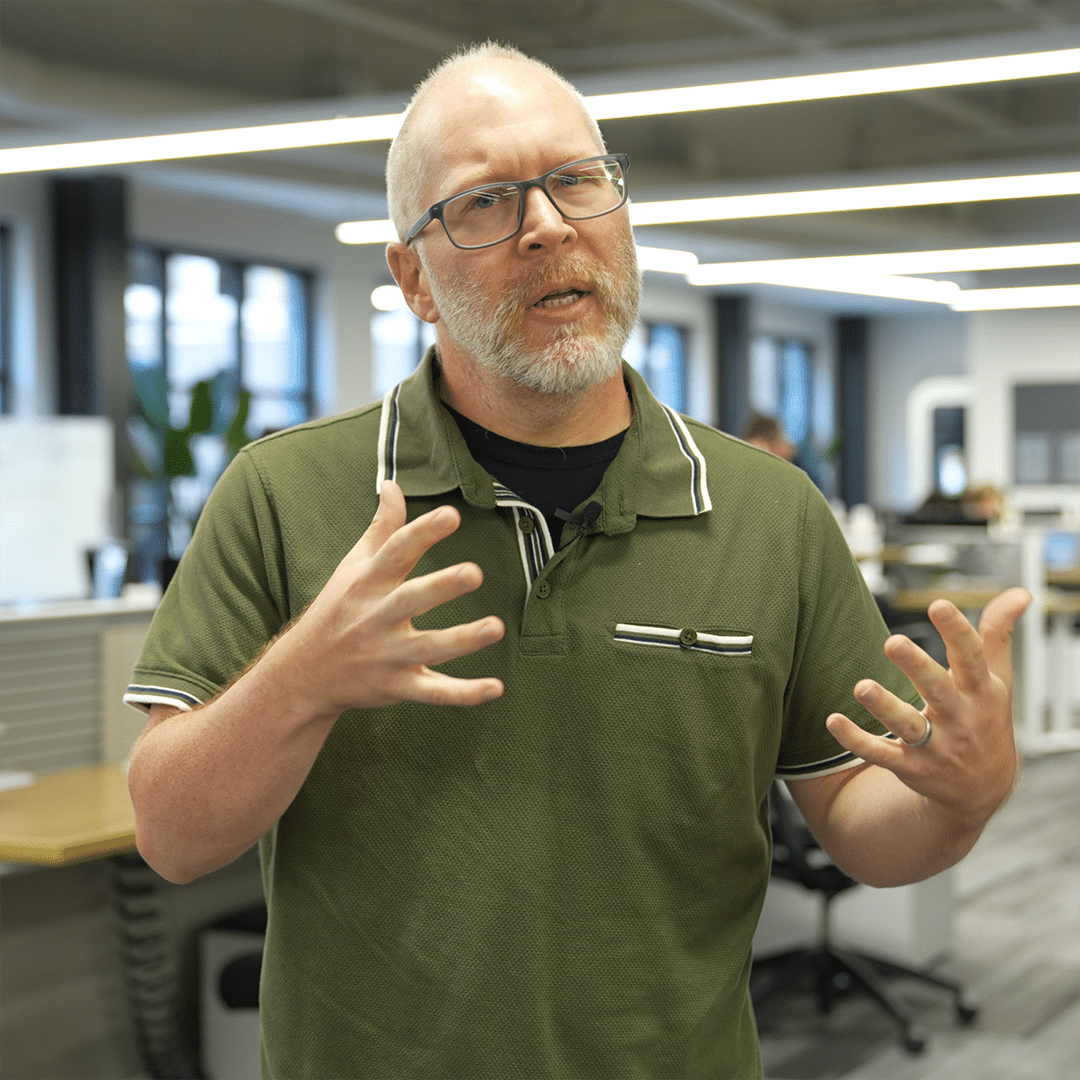
Our guest today is Tim Wheeland, the director of corporate communications for Bosch in North America. And on the heels of a really successful Super Bowl campaign that Tim has been running, he’s got perspective about how to manage corporate communications for an organization that’s incredibly large and diverse. Some parts of it have consumers at the end of it, some parts of it are business to business. And across all of it, he’s trying to tell a story about how Bosch is defining the future. You’re really going to like this one. Tim, it’s great having you on the show today. Thanks for coming on.
Tim Wieland (00:53):
Yeah, thanks for having me.
John Gough (00:55):
We’re excited to talk to you because Bosch is a little bit outside of the normal OEM wheelhouse that we talk to. You guys are suppliers to a lot of the organizations that we typically have on the show and have a different perspective about what’s coming down the pipe in the future and your mobility enterprise. Lots of great content here. Before we jump into all of that stuff, can you give us just a view of your world? What are you doing and what has the organization expected you and your role?
Tim Wieland (01:20):
Yeah. So I mean, Bosch is a huge company. Last year, our sales were about 91 billion euros, which is about a hundred billion US dollars depending on the exchange rate every day. And that is a pretty diversified portfolio. So the largest section is mobility. It’s about 60%. That’s where I spend the majority of my time. But also we have our consumer goods section, which is where home appliances and power tools sit. We have our industrial section, which is where we do a lot of work for manufacturers, but also drives and controls on interesting things like roller coasters or even bridges or canals and things like that. So a lot of interesting projects around the world. And then the last is energy and building technologies where we have our HVAC business. And then also we do a lot of system integrator work on buildings around the world.
(02:08):
So there’s always a lot that we can be doing. And my task really is to, in the US, help us tell the story of who Bosch is. My responsibility is the external side. So the portfolio includes brand and social and media relations and live events. And so we’re telling that story in a variety of different ways here in the region. And then the other side of my world is really the mobility side where we have a bunch of divisions that do their own marketing and communications, but when we communicate as one Bosch mobility, that’s our team here that’s facilitating that and working to bridge across those divisions on how we communicate as one. Because we’ve got a powertrain group or we have a group that does a lot of computing, all of that we call across domain computing solutions. We have a vehicle motion group.
(02:55):
And sometimes those things tie together very easily and other times it’s not as natural to tell those stories. And so we’re finding ways that we can connect those, whether that’s at a trade show or an event or even in press or in social media. That’s what our team is looking to do.
Kyler Mason (03:09):
Mobility is a huge category. I mean, you look at the website, there’s like 75 categories in there. To help us understand your responsibilities a little bit more, where are you focused? What are you responsible for in the mobility realm?
Tim Wieland (03:22):
Yeah. So specifically, we’re trying to tell the key parts of our strategy in North America and the Americas really, but my task is more North America and the US specifically. So we’re looking at what are the key elements of the strategy that we want to bring forward in that moment in time. So right now, one of those is hybrid technology is really growing. And there was all the focus on EV. The consumer had a little bit different of a reaction than the market had projected to EV. And so there’s some adjustment happening relative to the powertrain scenarios. And so we’re right now really focused on, hey, how do we look at the hybrid that’s the best fit for the US consumer? Because we drive a lot of SUVs and trucks here. So we’re looking at what are the, we call the trucks that work because people are using them to haul and to work and that sort of thing.
(04:13):
So you need a different topology at times to do that. A full EV towing, you use a lot of the energy right away, but a hybrid, maybe that works well. And so we’re really trying to tell the story so that our customers understand all of the expertise we bring in, not just from a component level, but also from a system level. So that’s one example of us taking a topic that’s across the portfolio and bringing it together with messages, whether that be in social, in press, in live events that would bring that forward. I’m happy to give others, but I think that gives a sense of we kind of play up at the top level of bringing everything together.
Kyler Mason (04:48):
And it sounds like you’re also dipping down into a very specific application so you can make it real. Is that fair?
Tim Wieland (04:54):
Yeah, when needed, we need to know how it all works. I mean, we have the responsibility, at least on the press side, to do the press activities on behalf of our divisions. So we need to understand how everything works. So we have extensive messaging on things like autonomous driving and ADOS, how that all works, and the same thing on even braking and steering and by wire solutions. So that’s what makes the job fun is you have to know a lot about a lot of different things, but then you have to tie them together because there’s this whole movement in mobility around the architecture of the vehicle and going from a lot of individual electronic control units to fewer, more powerful vehicle computers. And as you do that, that’s not just about the architecture and it might work well with an EV, but you might do that for an internal combustion vehicle as well.
(05:39):
But then when you combine that with the vehicle motion, that’s when the real magic starts to happen when it’s all tied together. And that’s where Bosch plays really well because we have that system level view and we say not just, here’s the component, but here’s how it all works together and here’s the things that you need to make sure from a testing and validation standpoint, the considerations that you need to have, that sort of thing. So again, that makes it fun because there’s been a bunch of things that have big movements and mobility the past few years. First there was autonomous driving, then there was the services movement, and then there was the EV movement, and then there’s the vehicle architecture movement. And all of them have not moved at the speed that the market originally projected, but they’re all still moving. And that’s interesting.
(06:20):
I was traveling recently and talking to one of the journalists that we work with, I saw him in the airport, and he had reported a lot on autonomous vehicles and all the hype back in 2016, 2017. And we said it didn’t happen as fast as people projected, but it’s still happening. And it’s the Gartner hype cycle of you go into that hype, then you get in that trough of disillusionment. And then out of that, you get real momentum. And I think that’s what’s happening now in all of these areas is, yes, it didn’t happen at the projected speed people thought, but it’s still happening and that’s exciting.
Kyler Mason (06:51):
I’m curious, what’s the internal dialogue look like with you guys as you’re talking about, what’s the challenge you’re trying to solve? The category is huge. You’re dealing with a lot of different things moving at different paces and you’re in charge of storytelling and reaching tons of audiences. Take us into the war room. Did you have an objective that you’re like, in order to win this year or in this next three years, we need to solve this challenge. Can you unpack that for us?
Tim Wieland (07:17):
I think those challenges are, there’s individual ones that are moving all the time. And one example right now is vehicle affordability. We have all this technology and it’s exciting to talk about it, but vehicle affordability in the US in particular is very challenging right now. So one thing is as we talk about technology, we want to make sure we’re thinking about the end consumer and we’re saying, let’s not just give them technology for the sake of technology. Let’s make sure they’re going to use it, that they understand it, also that it’s something that they’re going to be able to afford.
John Gough (07:44):
And so how does that bake out into your process on your side? Okay, I’ve got to go tell that story. We have this mandate from the strategy team or the product team is really seeing these features that are going to make this more affordable. How do you cross the bridge?
Tim Wieland (08:02):
Yeah. So first off, you pointed the strategy team. It’s essential that we’re working with them, right? And then we’re working together on what does that look like? The most important part of that is on the internal side. I’m responsible for external, but I work closely with our internal team. And I think the first thing is making sure that we convince our associates or we make sure they’re aware. I think sometimes it takes convincing, other times it’s just awareness of making sure they understand this is the key strategy we’re focused on. We talk about things like this is our right to win. This is what our unique selling point is, that sort of thing. And then on every single one of those also, this is the market view that means it’s not just us saying, “Hey, we need to do this for us.” We’re doing this because the market needs it, the end consumer needs it, they understand it, and it’s going to provide value.
(08:48):
I mean, I’ll get into the tagline of Bosch is invented for life, but that’s really what we do. We intend to invent technology that improves the lives of people around the world. So in every single category that we operate, we want to deliver on that brand promise of invented for life because that’s the red thread through everything. That’s always the North Star you can look towards and say, all right, is this something that’s providing value to the end customer? Is it improving people’s lives? And if so, then we want to pursue it.
John Gough (09:15):
So one of the interesting things about you all being the supplier to these OEMs is that you’re loading in the future in a lot of these cases because you’re producing the technology or the product that’s going to make it into some of these fast consumer goods, vehicles selling these that still won’t be released maybe for two or three or four years in some cases. And so we had another guy on the podcast who was a futurist at Ford, and it was his job to go around the organization and help teach teams how to think about the customer of the future, not just next year, but five and 10 years from now. And it sounds like a lot of what you all are doing too, like living into that future and to follow onto your tagline, you have to invent into that future, I think. Is that right?
Tim Wieland (10:03):
Yes, absolutely. And you have to look at, especially with the OEMs too around what parts do they need the supplier for and what parts are they doing themselves? And that’s always part of what you’re looking at too. I mentioned at the beginning, we’re a large company, but we’re privately held and we are 92% owned by a foundation. So a lot of our profits get reinvested into causes around the world, but also because we’re privately held, we can invest heavily in R&D and we do every single year. We have a group called Boss Research, which is our corporate research group. It’s around the world, and they are constantly looking at new technologies and trying to push that forward. I mean, a couple of good examples from the past that I can talk about because they’re now out is, we look at advanced driver assistance systems or automated driving.
(10:45):
I mean, radar is a big part of that. Back in the day, they were strapping a radar onto a back bumper like a big radar. Now our radar is very small and we’ve gotten it down to that size. It’s also really important that we’re able to tell that story over time and kind of go back to, this was the beginning. We have, I think, video from the ’90s of us testing an automated truck in Germany, and that was our corporate research group. That’s really interesting. And a lot of times we’re partnering with the universities here in the US, we have boss research offices in Silicon Valley and in Pittsburgh. And in both of those cases, we’re working closely with local universities in Silicon Valley, whether it’s with Stanford or in Pittsburgh with Carnegie Mellon and others. And so it’s important that we have that connection to academia.
John Gough (11:28):
I think that as a consumer, sometimes we get caught up in the day-to-day news cycle, the short-term versions of this. And we’re looking at a particular administration that loves or hates electrification, for example. And there’s a sense, if you’re not in these industries and listening to people like you and people who’ve been on the show talk about it, that the tail is going to get wagged a little bit. And the decisions that an organization like Bosch is going to make on a year-to-year basis has a lot to do with those kinds of policy controls and changes. And some of them do, of course. But we were talking to another guest about electrification and diesel and that as a paradigm for how the country, how the world moves through the way that they consume energy or the way these vehicles work. When diesel came to the United States, it was the same exact story as we’re hearing right now about electrification.
(12:32):
Well, where’s the infrastructure and how are we going to actually power these things and where are you going to get gas and blah, blah, blah. Today, it’s ubiquitous. It’s invisible. Of course, of course, there are two different kinds of pumps and you’ve got to put the right one in your truck versus your car. And the consumer sentiment versus the industry sentiment and patience and understanding of where we’re going, if you guys are doing that kind of autonomous driving 20 to 30 years ago and you’re still saying, yeah, we’re going to do electrification. It’s not a question. There might be a win kind of window that shifts a little bit, but not an if.
Tim Wieland (13:12):
Yeah. So there’s two important things there. I think one is we always take a technology neutral stance. Our belief is we provide technology that gives both our OEM customers options, but then also gives ultimately the end consumer options as well. And then we believe on the powertrain side is going to be a multi-lane highway and for some time. So that means that there will be lanes for electrification. There’ll be lanes for hybrids, which is combining electrification and internal combustion. There’s a lane for internal combustion. There’s a lane for diesel, particularly on the commercial side of things. And we believe there’s a lane for hydrogen too. I mean, that’s been a technology that’s been out there a long time and there’s been various points in time that we thought it was accelerating forward. And then like many other technology movements, it didn’t happen as fast. But the thing is, it’s still happening, right?
(14:02):
There’s trucks on the road now, class eight trucks, and there’s been passenger vehicles in California for hydrogen. And we have on our side also, our box Rexroth Division has a cryopump that helps to reduce the boil off when you’re dispensing hydrogen. So we think our role is to provide options to help this technology be able to move forward, but it’s not our place to define what the market is going to be, especially here in the US particularly. The consumer defines the market. And our president just said this last year at a powertrain conference. He said, “We need to plan based on the consumer.” And it’s not that we weren’t doing that, but it’s what you said, John, around, yeah, there are different regulatory considerations and moments in time. And I think we have to keep our eye on the fact that at the end of the day, it has to be something that the consumer wants and understands and is going to provide value to them and that they can afford and afford in that moment in time.
(14:59):
And so the goal is to scale it to the point where it’s affordable, to get the technology to the point where it’s understandable, and then ultimately give them the option so that there’s … If they say, “I would prefer to have a pure internal combustion vehicle,” there’s still option for that. And that we’re still innovating internal combustion engine.That’s one thing. As we’ve invested in electrification, we’ve continued to invest in the internal combustion side of things as well because there’s still innovation to happen there and there’s no reason not to innovate because even in the future, there’s going to be applications for internal combustion engines that might be even outside of mobility and still continuing to innovate there is going to be something that is valuable. And we see a place for internal combustion long into the future on the mobility side. So we’re going to continue to invest there.
John Gough (15:44):
So that makes me want to ask a question about the Superbowl, which is a direct tie of what you said in maybe two or three steps. Your perspective about the consumer is really relevant in some of the segments of your business. You have B2C parts of the business, but most of what we’ve been talking about is a B2B or the way we describe this B2B to X and multiple steps between you all in your pieces of technology that you’re designing to ultimately the end consumer. So you have to watch them, you have to care about them, you have to understand what they’re going to want, and then you’re going to have to supply that to the OEMs that are building on top of platforms. From your perspective, why is it important to have consumer brand preference for Bosch in a world that maybe is separate from the obvious home goods side of the business?
Tim Wieland (16:35):
Yeah. So certainly, I mean, we have a goal to grow branded wide industry in the US. Part of our 2030 strategy as a global company is to have a diversified portfolio. And that means both from the standpoint of our business sectors, but also from a global standpoint. So as part of that, we see opportunity to grow in the US. And so we have been focused on growing our brand awareness here. And then when it comes to consumer goods specifically, that’s again, an opportunity where we see a market opportunity to grow. And so we’ve been focused on doing that. Now, even in the case of consumer goods where we are a little bit more direct to the consumer, we are still relying on retail partners and channel partners. And so there’s very few cases where we’re selling something absolutely directly. So it’s similarly where you need to understand and have a strong collaboration there to deliver ultimately on the product to the consumer.
(17:30):
And I think that’s one of the strengths of Bosch is the fact that, yes, sometimes somebody looks across those different business sectors and says, “Well, how does a power tool relate to mobility?” Well, we get insights, number one, from the consumer side, but there are examples where it has actually crossed over that the battery technology from power tools helped us bring our e-bike technology to market. So because we understood batteries, particularly in that application, I mean, we understand the battery side from a vehicle certainly, but it was way more applicable from the power tool side and directly correlated to what we wanted to do on e-bike. So we see those connections sometimes across the portfolio. Another interesting one was there was actually a technology we were working on in Powertrain and knowledge that came from our home appliance group around this certain material that could be heated very high in an oven.
(18:19):
And we understood, okay, that could have an application in powertrain. So we have those little examples across the portfolio all the time that benefit why the Bosch group ultimately is valuable existing together as one. But at the same time, I mean, the businesses have a lot of autonomy to run their businesses, but then there’s those connection points where you can compare across the organization. And again, at the heart of that still is that, and I think this is the point you’re making, John, is that end consumer insight, you’re gaining insights from the consumer from different points across the portfolio, and that’s valuable for us.
Kyler Mason (18:52):
I was going to say that’s impressive to share those insights across an organization that large, that takes intention. I mean, you can very easily see the other side of the coin where those opportunities just live and die inside of that business unit. What has been designed inside of Bosch to make sure that you’re cross-functionally learning in very different categories?
Tim Wieland (19:17):
Yeah. I think part of that is certainly on the leadership level, they have meetings, whether that’s in a region or globally where the executives come together and can share, or there’s certainly corporate functions that look to find those across divisional opportunities. We’re also seeing those out of the corporate research group, which again is kind of taking a look across the portfolio. So there’s a bunch of different ways they can happen, but certainly throughout the organization, there are levers to be able to pull to maybe make it a little bit more feasible.
Kyler Mason (19:45):
So let’s go back to the Superbowl. Why Superbowl? Why pick the biggest stage? And I also want to have you go back into, how did you go through the journey of landing on the narrative and the kind of campaign construct that you ended up going with?
Tim Wieland (20:00):
Let’s talk about the strategy side of it, which was the desire to grow in the US market and seeing the business opportunity, particularly in the consumer goods, home appliance and power tool markets. And so from there, we really began to look at, okay, how do we want to approach this? We had an existing campaign built in Germany by our brand team there, like a Bosch campaign. It’s been very successful there. And so here in the US, we looked, what would the extension be? And it’s been really great to work with the brand team in Germany who’s been very involved and they’re a great partner. And then we went out and asked some advertising agencies to give us some perspectives. And we landed on this tagline of the more you Bosch, the more you feel like a Bosch, which is the idea of when you’re using Bosch products, you get a feeling or you become a better version of yourself.
(20:48):
And so we’ve done two years of that now. And I think the thing for us with the Super Bowl is that is just a kicking off point, no pun intended there. It’s a full year campaign and it’s a multi-year campaign. And so the Super Bowl provides that moment to really be part of this big cultural moment in the United States, but we have creative and we have elements that are running throughout the year. So we had our first year in 2025 and learned a lot and saw success as far as
(21:17):
Retail engagement and our brand awareness growing and things like that. And then this year head into the second year, we wanted to take it up on another notch. And so again, I think that the first time we saw the creative with Guy Fietti was, I will never forget that moment because it was just, I can’t wait to share that with people someday. I really hope we do this. I hope that we get agreement to do it because it’s such a fun concept where going to the idea of just the guy and what Guy looks like as far as without the look we’ve all become used to. And I’ve watched him from when he was on Next Food Network Star when he originally won that program. And I’m a huge Diners Drive-Ins and Dives fan. When I travel, I like to look up if there’s someplace I haven’t seen.
(21:59):
So I mean, I feel that personal connection. I think a lot of people in the US do feel that connection to him. And so was really excited to share that this year. The other reason Guy particularly worked well was the strategy was to bring together, yes, our consumer goods business is both home appliances and power tools, but they have their own unique needs, right? If you look at power tools, a lot, the demographic there is more male skewed. It’s pretty diverse as far as there’s across races and that sort of thing. And it’s usually somebody who’s on a construction site who’s the main decision maker making that decision point. Home appliances is more, it’s more of a split, fifty fifty maybe male, female, it’s individual homeowners, it’s families, that sort of thing. So there’s a lot of diversity in those audiences. There’s crossover in that they’re both selled at places like Lowe’s, where you can go in and you see a Bosch power tool in the power tool section and you see a home appliances in the home appliance section.
(22:59):
But to bring those together was a fun and unique challenge to find the right avenue to do that. And Guy did that because I think he connected with the demographic that was at the power tool level, but he also, as someone who has built such a profile in the chef community, connected with the home appliance part too, because a lot of people who are cooking are watching his shows, right? He’s on the Food Network a lot. And so that was really unique for us because the first year we had two different characters. We had Antonio Banderas and then we had this tribute to the Macho Man Randy Savage and Macho Man was more representing the power tool side and Antonio was more representing the home appliance side. And they had a really good interplay and we had some good reaction to the way they interacted together.
(23:46):
But ultimately for someone to quickly understand that, I think we saw there was more opportunity to make them be able to end consumer to more quickly grasp it right together. And that was something we looked at when we went into the second year of doing the Super Bowl, that was a real opportunity and we found that in Guy and that was really good.
Kyler Mason (24:02):
That’s awesome. I’m curious, it’s a weird question, but with something so visible and such a big deal throughout the past, let’s say year or so of you working on this, can you point back to a moment that was just so high stress as you were getting ready to put this on the big stage?
Tim Wieland (24:21):
I mean, stressed there were a lot of stressful moments, but I think that there’s two that I think about that were like just one was very pivotal and then one was sort of the what’s going to happen moment in a good way. And so the first one was the key decision point of, we all wanted to do a tease at some point around, we had this idea that Guy would show this different look and he came up with the idea actually to do the birthday post. He posted that on his birthday and said, “New your new look.” I mean, that’s part of working with someone who’s just a good entrepreneur and he really believed in the campaign and that was really good. And so I’ll always remember that point. The second one was the day that post went out. It was this idea of it went live and it was unbranded as a marketer, probably going to your clients and saying, “Hey, we want to spend money on something that doesn’t have the brand immediately behind it.
(25:09):
” It’s like that’s a hard sell. But our brand team and our leadership there, they were very bought into it, but when we put it out there, it’s like, how are people going to react? And then we kind of saw a little bit at first, what is this? And is this a joke? Is it April Fools? It seems like it’s an April Fool’s joke that’s way too early and some other reactions. And then it just took off and all of a sudden it was everywhere. We had news media reporting on it, even though we were not pushing it out proactively really at that time and just-
Kyler Mason (25:39):
There was no relationship yet to Bosch, right?
Tim Wieland (25:42):
No, no.
Kyler Mason (25:42):
So you’re just tracking the engagement with his social influence, right?
Tim Wieland (25:46):
Yes. And we’re watching how many people are covering this, right? So that was, I think we posted that on a Thursday and then it was either the next Monday or Tuesday that we delivered on that it was part of a Super Bowl ad for Bosch. And so yeah, those four days were, maybe the first day was sort of like watching, okay, how’s the market going to react to this? And then after that, watching the reaction then was like, I can’t wait to actually reveal what’s behind this. And then seeing people like, oh, okay. And then Bosch becoming part of the story was really fun.
John Gough (26:19):
I think if I’m sitting listening to this and listening to you tell the story, dissect the strategy, which is awesome and incredibly helpful to be kind of behind the scenes on that. What I’m taking away is across early the whole portfolio, this determination to be patient about the right things, like be patient about are we pushing the brand every single moment of every single day? Are we patient to connect the story to the right audiences? You’re a research group owned by this foundation, privately helped. All of these things are part of a bigger story that like culturally Bosch is going to take the time and do the right thing, like I said before, live in the future. And I think it’s really hard in some organizations and certainly small marketing teams, small budgets to feel like you can do that, feel like you have the right to do that.
(27:10):
You’re like, “Oh yeah, well, the big guys can do that. That must be nice.” But I don’t think that’s true. And you’ve been agency side and you’ve seen big and small before too. What’s your take? Do you get extra elbow room? Does it get easier now that you have all these big budgets and Super Bowl money?
Tim Wieland (27:26):
I wouldn’t say we always have big budgets. I mean, we definitely have to still be very efficient. And yes, something like Superbowl is a large budget, but day-to-day, we operate very efficiently and I’m proud of that. I mean, does it make it challenging sometimes? Sure. But I think one thing that I’ve learned is I think this idea of measuring your personal value by your budget is really dangerous, right? At the end of the day, you need to provide value and you need to be able to read where’s the business at right now. So for us, yes, we’re in growth mode, but we also are in, we’re in a lot of transformation mode. And you can look at the supplier community right now that’s out there of the challenges related to profitability and all of that. And we have not been immune to that as an organization as well.
(28:08):
And even with AI coming in, we invest very heavily in AI as a company, particularly in our research group, but also AI is changing things. So I think it’s a balance of, John, you said be patient and agree, certainly we want to be patient, but we also, when we need to, we have to win still, right? And I mean, I didn’t say that just because it’s the name of your podcast, but the idea is you still need to win the market, right? And so it’s a balance. I think where I’ve appreciated the benefit of working for an organization like Bosch is we are not necessarily being privately held, we’re not necessarily driven by quarter to quarter decisions, but there are times also where you also can’t just say, “Well, the long view is good, but you need to go and you need to lean in and be aggressive and make the right moves in the right moments.” You need to win in the moment.
(29:00):
And I think we have a right balance of that, particularly with our leadership here in the region and globally that they encourage us, “Hey, we are still a business. We need to win.” And I think the foundation part is, I’m very proud to always say that, but it’s an important note to say we take very seriously our responsibility to those profits are being utilized for causes that we believe in and we want to deliver on that, but also we need to deliver as a business to make sure that we’re able to continue to invest where we want to invest in support of our customers. So that’s always a balance. And I think for us, it’s just different than it would be for a public company maybe who’s having to make quick decisions and quarter to quarter, but there’s still intricacies about maybe they’re able to move quicker or they can get budget quicker on certain things that also has challenges with it at the same time.
(29:44):
During my agency days worked for large companies that were publicly traded, I saw some of those same things. And I’m not saying that one is right or wrong, but what I can say is for me at Bosch, I appreciate the way the company approaches it and that it’s that balance of, yes, we can take the loan Wrong view when we can be patient, but also that there’s a sense of urgency to win. And that’s the way I’m wired. So I appreciate that.
John Gough (30:08):
Speaking to our hearts.
Kyler Mason (30:09):
I think to maybe round it out a little bit, and if you can go there, are there any other bets that you’re making or places that you’re looking to win that we should be on the lookout for?
Tim Wieland (30:18):
Oh, that wasn’t a question I had anticipated. I mean, I think a big bet we certainly placed last year, we purchased the light commercial residential HVAC business of Johnson Controls. So that was the largest acquisition in the history of Bosch. And there’s
John Gough (30:33):
A
Tim Wieland (30:33):
Strong presence here in the United States. Brands like York, Coleman, that people are familiar with day-to-day, those are now part of the Bosch portfolio. And we have offerings there. I mean, our bet both is we want to grow our business in that area. In the markets where we operate, we want to be near the top. That’s our goal globally. And this allows us to really be in the top in the HVAC market. But we also see a big bet there of over time, you’re going to see the same way you’re seeing the transition to mobility, you’re going to see some technology transitions in that business. So things like a … I don’t know if you’ve ever dug in on a cold climate heat pump, but it’s very interesting technology. I would argue that the term heat pump is it’s not doing that technology any favors because it’s a heat pump that both does heating and cooling, but it’s called a heat pump.
(31:21):
And we have one that can operate now in the northeast and northwest parts of the, and even the northern, I guess, central part of the US where it gets cool because previously heat pump technology had been more of the southern part of the US. And so that’s a different way to heat and cool your home. And we have this bet that over time, by being more involved in that market, we’re going to be able to provide options to consumers the same way I talked about that in the mobility side of things. And as that technology begins to emerge more, we believe that we have a solution that is going to be something that consumers are going to really benefit from the more they understand it. So that’s another big bet, certainly, is the growth in HVAC and really this acquisition that we made delivering on all of the integration and that sort of thing of bringing a whole new organization into our large organization.
Kyler Mason (32:11):
Yeah. How do you be more like Guy with HVAC?
Tim Wieland (32:14):
Be more like Guy Fietti, you mean?
Kyler Mason (32:16):
Yeah.
Tim Wieland (32:17):
Yeah. I mean, I think that what’s interesting there is the same way I talked about how power tools and home appliances, they’re both sold in Lowe’s or retailers, that sort of thing. The HVAC side of things, you’re talking to a lot of contractors, whether that’s on the power tool side, also on the home appliance side and on the HVAC side. There’s a lot of communication that we need to do in the contractor community. And so there is synergy there that’s very natural. And there might be a cross-divisional type of selling solution that we can do that says, Hey, and I think we already have been doing that in certain cases over the course of the years, but maybe it’s, “Hey, okay, you bought your home appliances for this apartment building that you’re building out, but also we have an HVAC solution.” Or even I mentioned we have the Building Technologies Group, we also do system integrator work on whether that’s security, that sort of thing.
(33:06):
So yeah, there’s natural points that we can kind of do the tag team in where it makes sense.
Kyler Mason (33:13):
Love it. What are we not asking you that we should be covering?
Tim Wieland (33:17):
I mean, I think one of the really big things is right now how agencies and marketers are using AI. I mean, I think that’s something that we’re excited about as an organization that invests heavily in AI and thinks AI is really going places, I mean, going places that feels like an understatement of, I mean, it really is going to be transformative and already is transformative. So we have stated goals around where we see our revenue from AI and software, supporting software, but also what we’re investing in AI. And we have an organization that encourages us to lean into that. And I think that’s been really exciting. And I think on the agency side, I’ve talked to some of my friends there and the agency I worked for talked to the owner there recently, been a few years and we caught up and he had some great insights about how they were using AI.
(34:04):
And I mean, I think that’s both something that can be terrifying in a certain way, but also is exciting because there’s a lot of even the day-to-day work that we do that, whether that’s on the corporate side or on the agency side, that AI can help to augment or to free us up to do other things. Yeah, I mean, that we’re passionate about it and I think you guys are too. And I think that’s certainly something that we should continue to bravely talk about and not be afraid to say it’s a strategic opportunity. And I think that the brands and the agencies that are going to win into the future are going to be the ones that figure out how to strategically utilize AI and not necessarily overly lean on it, but also not put their head in the sand and say, “We’re going to continue to do things the way we’ve always done them.”
John Gough (34:45):
Could not put a bigger stamp of approval on that message. Feel like we’re drinking from the fire hose all the time. And sometimes that is scary and challenging. And also the coolest thing to be living through if you are willing to get up on top of a wave and feel like it’s an opportunity. I remember looking at our creative director in Fall 23 and just eyeswise saucers and such, this is going to change everything. It’s going to change everything. And it has in some of the most predictable ways and also it continues to accelerate in these incredible, unbelievable ways. I had a conversation the other day with another agency leader who was saying, oh yeah, our CTO just a week or two ago had their light bulb moment finally and they had been sort of recalcitrant AI grumbler and finally woke up to it. And that made me nervous, honestly.
(35:41):
It feels late to be a leader in a business like this and just finally coming around to, “Oh yeah, this actually could be great.” But it’s interesting to watch clients and different organizations adopt at different paces. And so to hear that, again, an organization that’s large with Bosch, it’s like leaning really hard into it is another thing that we maybe have seen the spectrum on and where some large organizations are trying to have a really IT heavy and be control first versus opportunistic, entrepreneurial, what can this thing do for us? It’s a seesaw. I get both sides. I don’t see how you can win in this environment and not have that entrepreneurial exploratory attitude about it.
Tim Wieland (36:26):
Yep, absolutely. And that entrepreneurial attitude is critical. And for an organization as large as ours, there does need to be some guidelines in place. And it’s been interesting to see even ways that the organization has given us enough guardrails to kind of keep us in the lane, but given us the freedom to explore too. And that’s really encouraging. And I think that’s something that we’re going to need to continue to do. I think change is going to be constant, right? That’s something right now that we all have to get used to. And I think the difference is going to be, can you be okay with things being different and ambiguous and ever changing right now? Is that something you’re motivated by? Does that give you excitement or is that something that’s intimidating? And that’s something we all have to look at every day and say, “Do I want to lean into it or am I going to be scared by it?
(37:14):
” And
(37:16):
I don’t master that every single day. I’m certainly days where things don’t go well. I thought that maybe I take a step back every once in a while on, but I try for the most part to lean into this entrepreneurial attitude that our organization encourages us to have. But then also having that from spending time in an agency for 12 years, you have to have that. And that’s why I’m a huge fan of people at least spending some time in an agency. I think if you’re corporate your entire life, you don’t have that perspective. I also think there’s, for me, I spent 12 years and then now I’ve spent 10 in corporate. I value the perspectives I have from both sides. And I think that it’ll be hard to predict what the next even five to 10 years are going to look like, but why be afraid of that?
(38:03):
It’s
Kyler Mason (38:04):
Going to be crazy.
Tim Wieland (38:04):
Yeah. But it’s going to be fun, right?
Kyler Mason (38:06):
Oh yeah. I think people’s attitude about it is a big deal. Ours is of that, that it’s both intimidating, but it’s going to be a wild ride. And for organizations like us, I think we’re eyes wide open to our customers are going to place value on things in such different ways. When we think about the way that we package the solutions we have and the way that we price, buying the billable hour seems like that might not be a thing in a couple years. And you got to think, how are you delivering outcomes with different speed insights? So that’s a whole nother podcast, but it’s going to be wild.
Tim Wieland (38:47):
Yeah. And I think it’s going to be fun, even if it’s a little scary and a little … There’s some of those days where you think, wow, someone on our team here, he said, this reminds of him of the early days of the internet and email and websites when there was so many things changing. And he’s like, “The AI is the same way and we need to lean into it and we need to really be excited about it because we’re going to look back in whether that’s five, 10, 15 years, and we’re going to really say that was the time when a lot of really important things happened.” And you’re going to feel like you were at this moment when you were part of it happening too. Maybe we’re not making the main thing that changes it, but we’re not just standing on the sidelines even watching it.
(39:36):
I think in a lot of ways we’re all sort of on the field with it, which is fun.
Kyler Mason (39:41):
Somebody that has spent 12 years in agency life and went to a giant organization, what advice do you have to make that sort of transition from … What my perception is, is you’re on fire all the time at an agency. You’re moving super fast, you’re jumping between brands, all that sort of stuff. And then what did you learn? How did you norm? What advice do you have?
Tim Wieland (40:04):
Yeah. I think that the biggest thing I would advise is never lose your speed mindset and your ability to easily pivot between things. I was at the airport last night coming home and I was on the shuttle bus and the guy driving was, he was saying he had retired from General Motors and he had worked on the line for years and we were talking about the value of really understanding working on the line. And he said, “Yeah, when I went into a corporate environment, I ran circles around everyone because I was used to having to really every single day deliver and that sort of thing.” And I feel like in some ways it can be like that way going from an agency into a corporate environment where you’re used to speed, you’re used to having to quickly navigate between things and don’t see it as some retirement like, “Oh, all right, now it’s going to be easy.” No, go into it with the same mindset.
(40:55):
And those are lessons you learn in an agency that are super valuable. And when you go into a large organization, you need to make sure you don’t lose that.
Kyler Mason (41:04):
You’ve been trained for years to do really high quality discovery.
Tim Wieland (41:08):
Yeah. Yep.
Kyler Mason (41:09):
Yeah. That’s great. That’s good advice. This has been tons of fun. Thanks for coming on and talking with us.
Tim Wieland (41:15):
Yeah, thanks for having me.
John Gough (41:17):
You win is presented by Element Three, a marketing firm focused on modernizing go- to-market strategies for manufacturers that sell through complex distribution channels. We help leaders solve problems across demand generation, sales channel support, and brand development. If
Kyler Mason (41:32):
You’d like more from myself or John, connect with us on LinkedIn. And for more from Element Three, visit elementthree.com. That’s elementthree.com.
Sharing Expertise
What good is learning something if you don't pass it on? You can tap into what we know right now – from dealer programs to determining brand architecture – and you don't have to give us a thing.
Understanding Mental and Physical Availability in Marketing for Manufacturers
How OEM Leaders Should View Their Marketing Plans