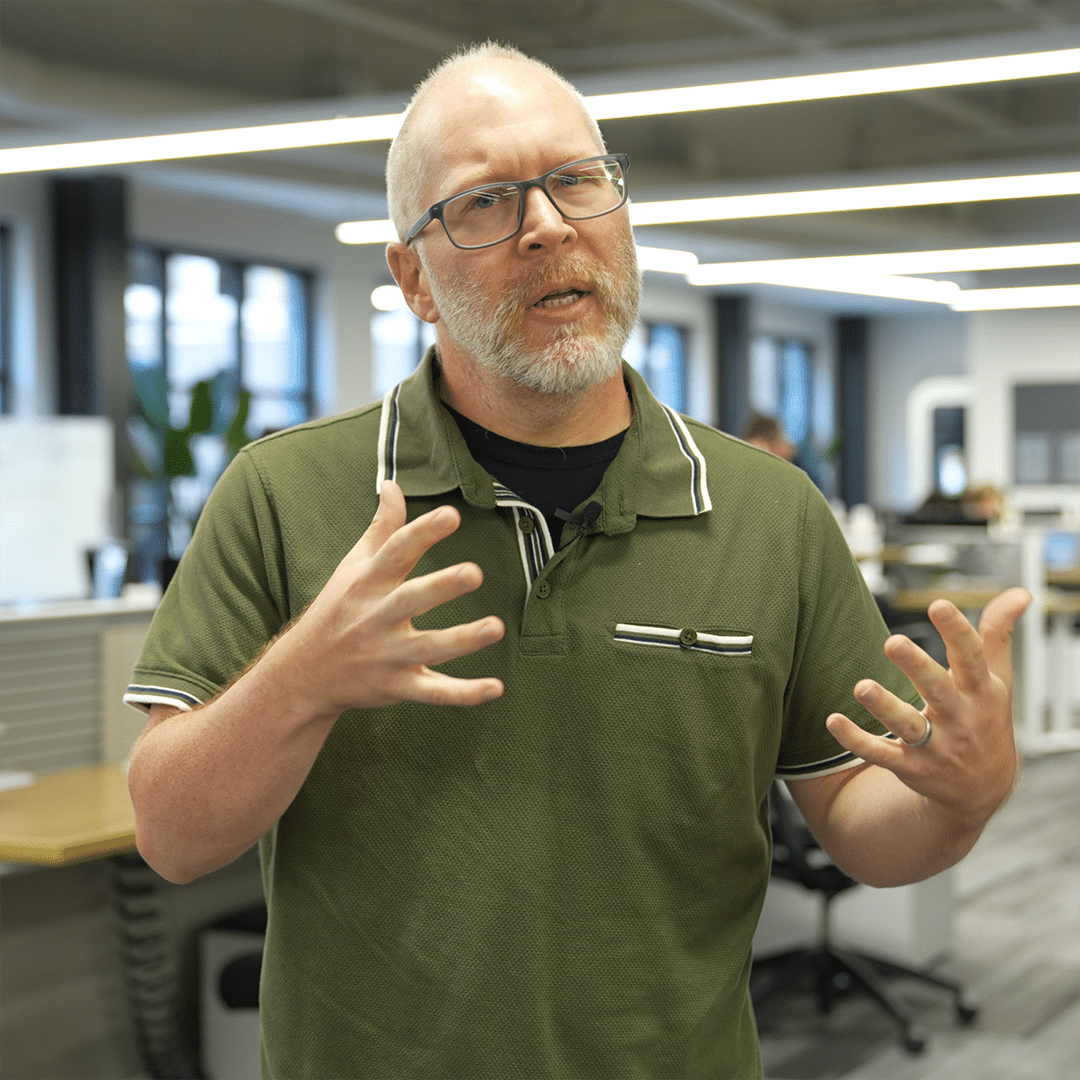


Rethinking Fleet Upfitting with Adam Keane
Why You Win
This Episode
What makes a vehicle work-ready isn’t always what you see on the surface.
In this episode, Kyler and John sit down with Adam Keane, President of Allied Body Works, Inc., and founding partner of Fourward Upfitting, about how upfitters are shaping the future of commercial fleets.
Adam shares how responding to customer needs has sparked innovation and expansion, from custom builds to patented safety products. He discusses the balance of serving fleet customers locally while maintaining consistency, and how being part manufacturer, integrator, and problem-solver drives their approach. You’ll also hear him highlight how customer insights and operational flexibility open doors in a rapidly changing market.
Key Takeaways:
- Focus on the customer: Prioritize understanding your customers’ needs and ensure your product or service directly addresses those needs.
- Embrace innovation in everyday solutions: Small, incremental improvements—like designing specialized vehicle features—can lead to big results and create new market opportunities.
- Leverage partnerships for growth: Collaborating with like-minded businesses can open doors for national expansion and better serve customers. Find ways to work together, sharing knowledge and resources, to offer consistent solutions across multiple regions.
Episode Transcript
This transcript was generated with the help of AI and may contain some errors.
Adam Keane (00:00):
We will win based on the fact that we’re focused on the customer and that end use whatever it is, our installation practices and having a good set of people here that are educated and willing to learn new things. All of those things, build that up.
John Gough (00:20):
Adam Keen is the president and owner of Allied Body and a founding partner of Fourward Upfitting Adam’s, a fourth generation owner of Allied Body, but he took a circuitous route to get there, which is really interesting and he told us about here in this podcast. But the part of this interview that I liked the most was Adam’s entrepreneurial approach to understanding customer needs and letting the business grow in interesting ways and taking advantage of opportunities as they present themselves. I hope you enjoy it. Adam, we’re so glad to have you on the show. Thanks for joining us.
Adam Keane (00:53):
Thank you guys. Appreciate being here.
John Gough (00:55):
So you’ve got a couple of different roles and a couple of different organizations. Usually we ask what the organization wants from you, but you’ve got to have to answer that question maybe twice, at least right now. What do your multiple organizations, what do they look to you for?
Adam Keane (01:09):
Oh
(01:10):
Man,
(01:10):
What do they look to me for? It’s interesting because being at Allied for so long touched a lot of different pieces of the business here at Allied, and I find myself now that I’m an owner doing completely different things. I didn’t expect that a couple of years ago when I took over the reins as full owner, I figured everything would just continue to roll as it was, and it’s a very different thing. Now. I find that they look for direction really more than anything. I tease the guys around here a little bit, but I used to be the confidant, right? As the second in command, everybody would come to me with either their gripes or their cheers and talk to me about everything going on in their lives. And the second I took ownership, my second command became me and the confidant and I became the guy that they just looked to for direction really. So there’s all the background stuff that’s going on and I hope that really what they see and what they come to me for is that culture really, that’s really important to me and us. And so I think everything that I’m doing is focused around that and I think that’s what they continue to ask of me, whether we’re correcting something we’re building towards something.
Kyler Mason (02:25):
Did you grieve that transition at all? Like talk about your feelings?
Adam Keane (02:28):
I didn’t at the start, right. I didn’t really realize it. And I’m so excited to be making the buck stops here, making that final decision, but there’s just certain things and knowing that it’s mine to screw up or correct, it was a really good powerful feeling. And then as time goes on, I still consider almost everybody that I work with a friend at some point, right? But at the same time, I definitely grieving a little bit that they don’t want to come in here and bs with me over what’s going on in their lives and whatnot. And so I really cherish that. I probably spend too much time now when they come in, it’s like an unload session for me as well to figure out how people are doing and what they’re doing and share some of my own personal stories with them to maybe help motivate them or have ’em sit beside me as I’m complaining about something, I guess. So definitely
John Gough (03:21):
Hang on to it a little too long. Yeah. What about Ford? I mean you’re experiencing this as the owner and Allied the same thing. True on the other side.
Adam Keane (03:31):
Fourward Upfitting is so interesting because the way it began, the four companies are so like-minded and similar that are partner companies. When we get together, it is extremely strategic. Just the conversations have always been, even when we’ve known each other for a long time through NTEA and are run on the NTEA board of directors. And so when we did that, we got to know each other and we would share and help each other out with different things going on. So we’ve always had those high level strategic conversations. And so that’s really what it’s about with us still. It’s almost like a friend hangout when we’re going through things because we could go from how are we going to do things and what are the processes we need to create to just a completely random topic about whiskey or a trip we took or something completely random one thing to the next and then just keep flipping back and forth.
(04:30):
But I would say of all the things with that group, I think we all feel in some ways that we’re the anchor of the group. Everybody else is smarter and better at what they do, but I think if you asked any one of us, we would give praise to all the other guys. And I think what happens with that when you’re in a group like that is it’s really refreshing. You come out of it just energized with a focus or an energy to do things better for yourself, and then also feeling like, Hey, I’m around these really smart guys and I contributed something. That’s pretty cool.
Kyler Mason (05:04):
Why does Fourward exist? What was the impetus for bringing you all together?
Adam Keane (05:08):
So I think the big key thing for us was looking at national fleets and the time to get the vehicles on the road, making them money. And we just saw sort of an issue with the current process and we felt like there’s been a lot of consolidation and vertical integration in our industry and some of that’s been good and some of it’s been bad. And we just felt like we had a story to to gain customers that each one of our companies may not have individually without figuring out a way to do things better as a group. And so with that, we decided that this idea that doing business locally for national fleets can be a viable thing. So that’s really the start of it, and it’s something that we’ve always talked about. How do we do something together? We enjoy hanging out. We don’t really have a purpose other than fun anymore, but we know that we got to do something together. And that was really the start of it. But it’s to minimize the amount of time that it takes to get a vehicle completed and a full solution ready for a national Fleet customer that is not taking advantage of. So we’re the opposite of a ship through program or a OEM freight program. It’s getting things done locally and being able to service them around the country with people that you trust with builds that are consistent and sharing processes across the group to be able to get that done correctly.
John Gough (06:37):
So the organizations that came together to form Ford, same business across different geolocations, or are you each contributing something different to the process?
Adam Keane (06:47):
That’s one of the really neat things about the group. The businesses are very similar as far as just how we go about business and ownership structure, but yet we all do a lot of the same things. But then we each have a couple of unique pieces that we do. For example, Phoenix down in California, they are an upfitter but also a manufacturer. So there’s a lot of products that they manufacture directly there in southern California. Casper’s Trucking is in Wisconsin. They really specialize in class eight heavy duty equipment. Messer truck equipment is in Maine and in Ohio. In Ohio, they specialize in van and light truck equipment. And in Maine, they’re kind of a full scope like we are here at Allied only, they have a specialty where they recertify petroleum tanker trucks. Here in Allied, we are what we call ourselves full line truck equipment distributor, but we have different segments of the business.
(07:52):
We’ve really diversified. So we have our light trucking van shop, we have our traditional truck shop where we do service bodies, flatbeds, dump trucks in the van shop. We’re doing a lot of Adria Steel interiors, but we also have a division where we build mobile dog grooming vehicles for one large national franchise. And they happen to be extremely advanced technologically with battery powered salons. And the ability for us to log in and diagnose vehicles around the country all run from a single screen inside of the van. So every function of that, which is tied into additional things that we’re doing here in that shop, we call it our ePower shop because we’re able to do different mobile workstations. And then our fourth division is, it’s a product called Walker Blocker that patented going on almost 10 years ago now that it’s a truck side underride guard for pedestrian and bicycle safety. So we put ’em on large trucks to prevent pedestrians and bicyclists from getting run over by the rear tires. So we sell those nationally. A lot of garbage trucks around the country are being mandated to have these on them. And so
Kyler Mason (09:04):
How does that work?
Adam Keane (09:05):
Yeah, it’s pretty cool. It is something where if you look at vehicles in Europe or Asia, they’ve had ’em for a long time though they’re more crude, I would say. And the reason for that is that in the rest of the world, most of the vehicles are type certified, meaning that the manufacturers of the equipment that goes on and works with the OEM and certifies that, alright, here’s our build, this is what we’re doing. So they’re putting side guards on as they’re putting this into their package. So it’s all a part of it here in the US with pass through certification. So that’s the incomplete vehicle documents that we get that show that we’ve completed the vehicle with pass through certification. What happens is we are able to say that the OEM gave us these guidelines to build the truck, and as long as we follow them, the vehicle will be certified.
(09:57):
And so that means in the US we can really custom tailor things to the individual’s needs so that they’re able to build it out so that they can do their job most efficiently. We have that benefit where they don’t in the rest of the world. And so with side guards, we had to come up with something that would work around all those different variations. So it’s not something that you can just customize every single time when you’re building the body. And then on top of that, we’ve had years and years without regulation. So as we build into the potential of this being something that is required, we had to be able to put something onto a vehicle that could retrofit onto existing vehicles. If you’re only putting on new vehicles, what’s the point? There’s so many old trucks out there. Our system is designed with enough adjustability so that we can work around hydraulics or toolboxes or tanks.
(10:49):
And so there’s been a lot of studies that U-S-D-O-T has done on recommendations of how far off the ground, how far from a tire, all those different things. And so we put this basic panel on the side of the vehicle that’s been tested to withstand a certain amount of weight. And basically what happens is if a garbage truck turns and there’s a pedestrian there, this is my silly way of explaining it, but you think about the old wild West cow catchers on the front of a train, it’s just designed to push ’em out of the way.
John Gough (11:19):
If you had gone anywhere other than cattle guard with that, I would not have understood the metaphor. I was like, it’s got to be cattle guard ’em away.
Adam Keane (11:25):
That’s the easiest way to explain it. And simple clean are awesome. And so it just pushes you out of the way because the number one cause of death by being hit by a large truck is not actually being hit by the truck. It’s being run over by the rear tires. And so many bodies that we create have got that large gap. You look at a delivery truck and there’s a huge gap between the bottom of the body and the ground and the space from the side of the vehicle to the frame. So this is designed to just take up that space and push it out of the way without adding a ton of weight and complexity to the vehicle.
John Gough (11:59):
So there’s got to be a story behind you guys deciding to invent and patent a cow catcher for garbage trucks. I got to hear it.
Adam Keane (12:07):
It’s kind of happenstance. University of Washington had a new fleet manager and we did a ton of work with them and he wanted to make a name for himself. And so New York City and the city of Boston had already started looking into what that would do because of the number of fatalities that they had from certain size vehicles and pedestrians and bicyclists, U-S-D-O-T was coming to give some kind of a presentation and we’re going to be using some of University of Washington’s vehicles for this presentation. And so he said, I really want to do this. Can you put at least side guard things on some trucks? And I’m like, well, I don’t know what side guards are. And so I started looking into it and he’s like, I’d just weld some bars on there and we’ll be good to go. And I’m like, that’s not how I do things.
(13:00):
So I researched and used some of my contacts within the industry to find out, alright, who’s making these? And the answer was nobody. It really was limited. And that’s when I started to do all the research in Europe and Asia as far as how they were being put on and what they were doing. So when that happened, I’m like, I think I have an idea. So we had another business venture, I guess you would say, where we were working with a company out of New Zealand doing glass rack, so glass handling equipment on the side of vehicles and they were utilizing a whole bunch of excursions and it was really my first, I’ve known about excursions and we use ’em in a lot of different products factions. Say more about
John Gough (13:44):
What that is for people who might not also be
Adam Keane (13:47):
Manufacturing. Yeah, yeah. So great way to explain, I’m going to try to cattle guard this, right? You can do it. A great way to explain an extrusion is the things that you get from a IKEA or a furniture manufacturer where you’re sliding something into a rail and tightening it. It’s basically something that’s preformed but in metal that you can attach something to or you can form it in a way that’s not just standard. So like steel, when they’re forming an angle, they’re able to pour this hot molten steel and informant. Well, with an extrusion, they’ve actually got to pull it through a dye as it’s hot to be able to create that. So I’m trying to think of something household.
John Gough (14:30):
It’s the mop top hair shop. You have the material in, you push it and it comes out in a certain shape, shape,
Adam Keane (14:36):
Like the old Play-Doh machine, right? Yeah, absolutely. Yeah, aluminum. That’s really the only way that you can get some of those profiles and things. And so that’s really where our experience came was in visa lumon extrusions. One of the differences too, between us and some of the others, there are other companies in the world that sell parts for this, but they don’t necessarily give you a solution that’s been tested. They’re giving you parts and you’re putting it together to meet your dimensions. Whereas we’re basically saying, you gave us your dimensions. We’re going to give you something that works within the parameters that we know will work. And so it’s a completed kit when we send that
John Gough (15:13):
Out. And you’re manufacturing it there in Seattle.
Adam Keane (15:16):
Yep.
John Gough (15:17):
That’s awesome. And you sort of downplayed it for a second, so let me play it back up for you and say, well, it’s not that big of a deal, it’s just an extrusion. Let’s actually, you guys had this really distinct single customer need and you went and made a thing and then you saw, oh, that’s not just a customer need, that’s a market need. We’re going to patent it and make it big. You’ve actually done that at least three times in this conversation already, Adam, where you’re like, yeah, we just do this one little thing. And we actually entrepreneurially and joined forces with three other organizations and then we invented a product. We do this, that, and the other dude’s an entrepreneur.
Adam Keane (15:52):
Like I said, I downplay it. I try to surround myself with some pretty smart people and different things. So when we talk about ourselves, I always look at what we could be, what we’re going towards and what we could be. So I still look at us as the small company that my great grandfather started back in 1949 here in Seattle. And we’re just doing the things we know and trying to build into things that interest us, which keeps the passion alive.
Kyler Mason (16:22):
So what is it, fourth generation? It is fourth generation.
Adam Keane (16:27):
Fourth generation, but through kind of a strange path.
Kyler Mason (16:30):
Okay, well tell us about the path and then I’ll ask
Adam Keane (16:32):
The question. Okay, I’ll make the path quick. It is, my great-grandfather started the company and he sold it to his son-in-law. My grandfather was his son-in-law. He sold it to his son, who is my uncle, the youngest of the siblings. And then my uncle sold it to me. So fourth generation, but three different last names because of the pathway that it took. And then really kind of an interesting story, it was my great grandfather grew up in the Dakotas and they had a huge dairy farm and it burned down. And then he moved out here not long before he started Allied to basically just better opportunity for work. Went to work at a company that’s still in existence here in Seattle doing van body repair work on vehicles, and then decided that he felt like he could do a good job running his own business, doing the similar work, but he knew milk and dairy really well. So the first things that Allied actually built were milk trucks, and then we got into armored cars with omi. And so they have this great relationship,
Kyler Mason (17:42):
Dairy to armor car stuff.
Adam Keane (17:44):
And so we literally had in the shop, milk trucks, armored cars, a delivery truck, van bodies, and that was the bulk of the work that we did back in the early days. And then it just kind of evolved from there. I like to say that we were forward thinking even back then because a lot of the work we were doing on the armored cars was aluminum, and so we were trying to make ’em as light as possible while still creating that armor. So there’s been a lot of forward thinking and ingenuity throughout the years just because we didn’t, there wasn’t roadmap, so we were just kind of creating what we felt would be right or how to make things work for the customer. And that’s kind of the mentality we always take.
Kyler Mason (18:25):
Interesting. So what Mark do you want to leave? Is it growth? Is it impact? What’s on your radar?
Adam Keane (18:32):
That’s a complex question. There’s a few different pieces to that. I want to start with the first one whenever anybody asks me, being an owner is not easy. There’s a lot of perks, don’t get me wrong. It’s good to be owner and it’s also really difficult. But really the thing that keeps me going about everything else is the fact that I feel like even in our small company, that I’m able to provide a career for people, for our employees and their families. And so that’s really, really important to me. The growth is for, I’d be lying if I said I didn’t want good things for myself and my family, absolutely. But I also want the people around me to have a similar experiences. So that’s number one. Number two is I think Allied Body Work, you’ve been doing cool stuff for over 75 years now, and yet we’ve always been somewhat regional.
(19:26):
And so there’s a growth aspect for me that wants to grow that family legacy to being more of a name throughout the country for the special things that we do. I think it’s also, we’re in such a busy environment and industry and a lot of it has to do with what a customer wants, what a customer needs to be able to go to work every day and to provide the things that we need to live. But sometimes innovation doesn’t come in our industry as rapidly is in others at times because it’s so important to keep things going. And so with a mobile dog grooming, is mobile dog grooming the most important thing out there? No, but to a lot of people it’s important and we’re able to provide something, a new way to do that that’s both more environmentally friendly, that’s more consistent and safe and all these different things.
(20:22):
And so those kind of key things are what keeps me going. I want to keep finding ways that even our company can push forward and create these changes within our industry and in our world are good. One of the things that I think stuck with me a ton the year that I was going in, there’s sort of that entertainment before the morning starts and the mc for the Breakfast was a poet that NTEA had hired and he came out on stage with a guitar and he told this amazing story about a guitar builder and his apprentice and how the Apprentice was going through learning how to build guitars essentially. And he wrapped it all up in a bundle and at the end compared the guitar maker and apprentice to our industry and what we do building trucks. So from the OEM down to the upfitter or equipment manufacturers, the final test was that the guitar builder asked the Apprentice, what do we make?
(21:22):
And the apprentice said, well, of course we make guitars. And he went into a long explanation of how the guitar builders were the builder of music and dreams and putting things into music from life. And that in our industry, things don’t function without the vehicles that we provide and that by our heating and our air conditioning and you name it, just about everything, requires some type of a work vehicle to get it to us as a consumer or us as just a human. And so that really stuck with me, and I use that a lot because that’s the way I feel. I feel like what we do is so important to our way of life and what we can achieve and what we can grow to. So that’s what kind of keeps me going and drives me and also gives me a little bit of comfort knowing that people will always need that sort of thing. So hopefully there will always be a company like Allied Bodyworks there to be able to provide it
Kyler Mason (22:23):
Love. It brings a purpose for sure. I want to go back to, as I was thinking this, as you were talking about it Fourward and Allied, how do you distinguish between an Allied customer and a Fourward customer? Who are you serving and how is that different?
Adam Keane (22:41):
Yeah, that might get into the secret sauce a little bit, what I can tell
Kyler Mason (22:44):
You. Alright, we’ll away from it. Just give us an ingredient.
Adam Keane (22:46):
Yeah, what I can tell you is that’s something that we look at a lot. How do we determine what that is? And I think at our core with Fourward Upfitting, we don’t care, which is kind of unique, but we don’t care whose customer that is. What we care about is how we can best serve them. So it depends on, like I mentioned before, the different companies have got different specialties that they do. Depending on that, depending on the scope of the customer themselves, freight is an issue, right? Between our six locations, we cover 53% of the country within, I think it’s a six hour drive. And so with that, if we have a customer that needs things in multiple states or multiple areas, a lot of times it’ll make sense to bring ’em into the fold. But it really just depends on where the customer originates from and who they are and what we think we can accomplish.
Kyler Mason (23:46):
So who are you competing with then as Fourward?
Adam Keane (23:50):
Everybody. I mean that’s the weird thing about our industry. I know it’s hard to talk about a visual podcast, but are you guys familiar with N t’s spaghetti chart at all?
John Gough (24:03):
I don’t think I’ve seen the spaghetti chart. I’ve drawn a spaghetti chart. Yeah,
Adam Keane (24:06):
I love a D spaghetti chart and it talks about the path to the customer. And
Kyler Mason (24:13):
I have seen this actually.
Adam Keane (24:15):
So basically there are so many different starting points for the customer. They could go through a dealership, they could go through a leasing company, they could go through an upfitter, they could go through a vehicle manufacturer or an body manufacturer doesn’t necessarily, it never takes the same path. You might touch multiple or you may have one point of contact, but that point of contact is also in contact with others. But really point of it is that it goes all over the place. And what that means is that we both are working with and working against every single one of those. So when you say competition, I think that’s, I’m not going to give you a direct answer because we’re both partners not the right word, but we’re both working with and working against every single one of those groups and different people. And so we could be competing with a different company on every level. We are doing things unique and different. And so there are people that we could consider competitors that look very different than us, or we could consider people that are kind of similar but do things slightly different.
John Gough (25:28):
Adam, I want to try something out on you and you can tell me if this reflects your world or not. So our work is all about B2B to X. We’re talking about channel sales and organizations that go to market with other businesses, partners or otherwise, often dealers, distributors. And we do a lot of work with things with wheels and engines, but also other businesses that don’t make vehicles. And so an UPFITTER is a thing that is not entirely intuitive to somebody who is not working in the commercial vehicle space. I get the manufacturer, I get the dealer, what is this other thing? And as you’ve been describing your world and your organizations that you work with and your experience, what I’m actually hearing is a parallel to a var, a value added reseller, which is in IT services. They would be a person that would do the hardware and the software integration on site. For example, a bank needs server and they also need somebody to help run that. And their internal IT team can’t put it together, so they hire a VAR to come and do the consulting and the build on that. So I haven’t used that metaphor before, but I’m trying it out here on you. Does that?
Adam Keane (26:43):
Yeah, it does. And I love that we’re going here because I think upfitting is extremely interesting. Upfit isn’t even a real word. It’s going to come up with a red squiggly line every time you write it and we write it all the time. At some point I’m going to figure out how to train my computer to actually view that as a real word, but
John Gough (27:06):
Give it a right click. You need an IT guy for value.
Adam Keane (27:11):
But I think yes, we are and we’re also different, but we don’t fit within a single category. We’re also manufacturing things. And we’re also, yes, we’re reselling, we’re also installing and we’re manufacturing. So there’s this crossover. The thing is every one of those people in the spaghetti chart thinks that they’re most important, but a chassis, while you would say, yeah, it might be the most important piece, it can’t go to work. You got nothing on the back, you got nothing you can do with that truck. Same thing goes with a leasing company. They’re going to put maybe the financials together and the service together, but we’re really the ones that make the vehicle into that specific tool that a customer can utilize to generate revenue, create jobs, service, its customers. So of course we feel like we’re the most important and everybody else would argue that they are. And I don’t blame them for that at all. But that’s what the upfitter is. We’re figuring out what the tool is and actually producing it so that there’s a work ready vehicle at the end of the day going to the customer final solution. And that’s where we get into the final stage and altered stage vehicle certification. There’s not enough credit given to that really, but that’s a really important piece of the build cycle for fitters in the us.
John Gough (28:38):
It goes back to that example you were sharing with us earlier about the mobile dog grooming. You can’t go to work. You can’t go wash a dog on a truck chassis. And your proximity to the customer’s problem, their pains, their gains, their needs, the work that they have to go do, and your deep understanding of that lets you build not only the battery tool like that, I’m going to install the outlets in this truck chassis that need to exist or the truck body that need to exist, but you’re doing software and you’re doing hardware and you’re doing a bunch of other stuff that goes above and beyond and categorically changes their work.
Kyler Mason (29:17):
Yeah,
John Gough (29:17):
That sounds really impressive. I like that. Thanks. You’re
Kyler Mason (29:21):
Awesome. You’re the greatest. That’s awesome. You mentioned that we were talking about growth and impact. You want to have Mark, you want to leave, you said we’re regional. You want to push beyond that. Are there strategic bets, decisions, ideas that you have that you think will help to push that mission that you have?
Adam Keane (29:42):
Yeah, absolutely. And like John said, I don’t necessarily give myself credit a lot, right? Walker Blocker, we’re already national to an extent. And with our mobile pet grooming vehicles, those are national. So we’re getting out, we’re getting there. But as far as sort of the growth tools to help us get there or the ideals, I guess ideas, ideals, something, some word, I think what we’re trying to do is take that approach of we’ve figured out some very specific wins for customers. How do we show that in a different arena? And like I said before, with the ePower system stuff, there’s a mobile pet grooming vehicle that we built, but we’ve also built vehicles that somebody can work inside of all day without the engine running and staying comfortable and reading water relays or meters and replacing them or a mobile ultrasound unit or getting into some of this, I can’t talk about it too much, but there is augmented reality test pilot and doing some things where they would be able to charge lithium batteries and do different things out in the field that they wouldn’t have been able to do otherwise or in the same way.
(30:58):
Those are the types of things that we want to take our expertise and really share outside. So what’s great is a lot of the larger companies that do similar, a lot of larger upfitters focus on what makes some money the most. And it is a rinse and repeat cycle. It’s that’s where you see a lot of similar vehicles on a dealer lot. I can tell you as a true upfitter, what we believe, you get a lot of those vehicles back to us that need this and this in order to make them work ready. And so we’re really focused on that end customer solution in full. And so that’s really the target is how do we share that and continue to make that accessible to everybody. And so getting that real, and we may not do it the best. There’s other guys like us around the country that do a phenomenal job with that exact thing.
(31:51):
But how do we as Allied and we as Fourward Upfitting, make that process and that end product available everywhere? And that’s really the goal for us. And a lot of education, a lot of training. I love having dealership training stuff where we’re training commercial dealers about understanding a customer’s needs, not just selling ’em a vehicle. Guy comes in and wants a dump truck. Well, there’s a million different things that they could need or want or could help make their job easier. And so it’s for them to sort of understand what those key pain points are or what the key successes are so that we can build that truck the way that the customer is going to be able to utilize it from the get go. So reduced downtime, all those things. So yeah, I answered that in a roundabout way, but really what we’re trying to do is make local service available to a broader scope of people.
John Gough (32:47):
I think that’s really interesting. And I’m thinking about an organization that we’ve done some work with that’s a fleet rental organization, and they’re also an upfitter. So I’d say rental is sort of the headline. And upfit is very much the secondary or maybe even tertiary sort of part of their business. But they in their work have invented new kinds of truck bodies to service a particular kind of organization, and therefore they can reach out into different parts of construction sites that were previously inaccessible. And I think that the news we’ll say that makes innovation feel like it’s got to be a drone that’s going to be the cool new thing, or it’s got to be autonomous or that’s going to be the cool new thing. But the way that you’re describing your work is also about innovation. It’s about customer service and it’s about this, what can be new and different and how can we reach into these new places with different technology on a truck with wheels. There’s actually probably 90% of the things that will be invented in the next five years are going to be on top of platforms that are already existing today. We don’t have to reinvent the entire world to make the world better in the ways that you’re describing. And I think going to those customer needs and pains and just improving them incrementally, five, 10% at a time can get you to a very interesting place and not too long.
Adam Keane (34:02):
Yeah, as you were saying that, it was kind of reminding me of something that I’ve had to say over and over again, different customers or relationships that we had. And one of the questions we would always get from an end customer is, well, what’s the best vehicle for me to buy? And as an upfitter, we may have our favorites at time for any particular reason, but you were sort of alluding to, it doesn’t matter. We need a vehicle with wheels and we need it to make sure that it takes the customer to the job site, gets ’em home safely at the end of the day, and that we can build the tools around that vehicle that make the customer’s job easier, more efficient, and get it done at the end of the day. So that’s a question I never answer is I don’t have a favorite vehicle. And in our fleet of vehicles, we use a lot of different OEM because of that same fact, just to prove that point that each one of them may have something better or worse, but at the end of the day, it’s what we’re using that for. If it gets us to, that’s the most important,
Kyler Mason (35:07):
I would follow up and say, what do you drive?
Adam Keane (35:09):
Oh boy, you really trying to get me in trouble and all that. I will tell you that we have a Ford, a Chevy, and a Suzu. Yeah. What else?
Kyler Mason (35:18):
You can pass the red face test with your answer. Then
Adam Keane (35:22):
We try to spread it
Kyler Mason (35:23):
Around. Not bad, but what does your wife
John Gough (35:25):
Drive
Adam Keane (35:27):
Not going there? We have a 1967 Volkswagen bug in the driveway, so that’s won’t get in trouble. I can’t get in trouble for that
John Gough (35:34):
One. No. My 15-year-old son was browsing the new Volkswagen buses the other day and he was telling me about how cool those are. I was like, they look cool, man.
Adam Keane (35:44):
My whole decision for the bug was that when my kids became driving age and with my daughter, she actually graduates from high school tomorrow. I thought I’m going to buy them an old classic vehicle so that we can learn how to work on it together. And she’s going to know everything about it and it’s going to be stick shift so that she can’t be on the phone while she’s driving. And I bought her this 67 bug. It’s beautiful. It’s fun and great, and she still hasn’t learned how to drive it. And so we ended up punting and buying her a nice, safe automatic to drive. And so dad’s the only one that drives around in the bug now. So
Kyler Mason (36:25):
That was strategic. You just got you something that you wanted.
John Gough (36:28):
Yeah, it was not a bad choice.
Kyler Mason (36:29):
Yeah.
John Gough (36:30):
All right, Adam, we know that you’re big on culture. We know you care about your people, and so I’m going to ask you a question with an asterisk that you may not answer with the word or phrase culture.
Adam Keane (36:40):
Okay.
John Gough (36:41):
Why will you win?
Adam Keane (36:42):
Why will we win? This is easy to not use that word because I think we will win based on the fact that we’re focused on the customer in that end use. We’re not focused on all of the ingredients in the final meal at the chef’s table, whatever it is, our installation practices and having a good set of people here that are educated and willing to learn new things. All of those things, build that up. But really that focus across the entire company on how is the customer going to use this and how do we make sure that it’s the best thing possible? That’s why we’re going to win. I think there were ways to make more money and push more out when vehicle chassis were shorted and we had access to different things and we could just do things, but we remain steadfast with the idea that we’ve got to be that solution for the customer, that they’re able to go to work with this thing. And so I think simple answer, that’s how we’re going to win, is we’re going to stay focused on that and continue to build our reputation. Will that mean that we grow at some rapid rate? Maybe, maybe not, but I think that we will continue to grow based on the fact that that’s our clear eye focus
John Gough (38:07):
Four generations later. You can keep being patient.
Adam Keane (38:10):
There you go.
John Gough (38:11):
Yeah,
Adam Keane (38:11):
He said it to me. That’s
John Gough (38:12):
Right, John. Yeah, there you go. Okay, Adam, it’s been great having you on. Thanks so much.
Adam Keane (38:17):
Yeah, I appreciate you guys asking me. It’s been fun to chat.
John Gough (38:21):
Yeah,
Kyler Mason (38:21):
Thanks dude.
John Gough (38:22):
Why you win? It’s presented by Element Three, a marketing firm focused on modernizing go-to-market strategies for manufacturers that sell through complex distribution channels. We help leaders solve problems across demand generation, sales channel support, and brand development.
Kyler Mason (38:38):
If you’d like more from myself or John, connect with us on LinkedIn and from more from Element Three, visit elementthree.com. That’s element T-H-R-E-E.com.
Sharing Expertise
What good is learning something if you don't pass it on? You can tap into what we know right now – from dealer programs to determining brand architecture – and you don't have to give us a thing.
Understanding Mental and Physical Availability in Marketing for Manufacturers
How OEM Leaders Should View Their Marketing Plans