
Digital, Strategy, Technology


Mollie Kuramoto
Updated June 20, 2022

It turns out only 9% of marketing departments feel they have all the marketing tools they need and fully utilize them. Which is a problem, and just one of the reasons marketing departments need to own their technology budgets. Let’s dive in.
Admittedly, when Gartner predicted in 2012 that by 2017, CMOs would spend more money than CIOs on technology, many of us chuckled in doubt. Well, it turns out that this prediction is now about to become a reality. Let’s back up a little.
Before cloud computing and software-as-a-service (SaaS), investments in technology were seen as capital expenditures as opposed to operating costs, as we view them today. This was largely due to the amount of time, resources, and services it took to implement the technology, which was the responsibility of the CIO. And even after the technology was put into action, it might still take a few years until the investment paid off.
Fast forward to the explosion of SaaS products and it’s a whole new ballgame. Implementation cycles have been cut down from years to weeks. Lengthy contracts are now monthly subscriptions. In short, everything is moving a lot faster. Companies can see the ROI of technology quicker than they’ve been able to in the past, and are becoming more and more comfortable investing in innovative solutions.
For all these reasons, it suddenly made sense to shift marketing technology budgets from IT to marketing, and from capital expenditures to operating expenditures.
Which brings us to where we are today.
Technology gives us the power to not only personalize and brand every customer touchpoint, but to also absorb data from these interactions. This has resulted in marketers taking on more responsibility, including functions that previously existed outside of the department. More data means smarter decisions, and putting that information in the hands of the people best suited to respond to it quickly and intelligently is just common sense.
It’s not just a nice idea for marketing to have a spot at the table when discussing larger technology purchases, it’s an absolute necessity. If you, as a marketing leader, aren’t involved in the conversation regarding how you’ll capture customer data, analyze behavior, and attribute results, your marketing efforts will flop.
And, as mentioned previously, with marketing responsible for things like revenue and customer experience, owning your own technology budget is critical.
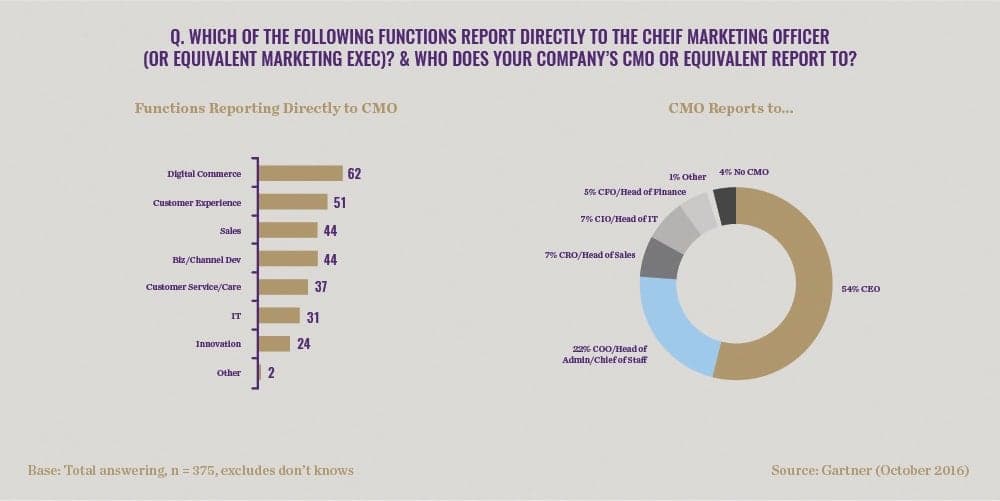
Now that we’ve covered why marketing should own its technology budget, it’s time to evaluate your current status. Does your marketing department have the proper authority over technology? Ask yourself these questions:
Did you answer no to any of those questions? If you did, bad news: your martech decision-making is set up to fail. You need access to all of the customer data you collect across your organization to make the best marketing technology purchasing decision possible. Without it, you’re only getting a sliver of the big picture — and that’s a recipe for disaster.
Odds are you’re either frustrated because you don’t yet have autonomy over your marketing technology budget, or you’re overwhelmed because you have a budget but no idea what to buy. If you fall into the latter camp, consider downloading our Marketing Technology Purchasing Guide, which goes through everything from determining a budget to things to look out for during the sales process. If you belong in the former category, your marketing technology budget will be a problem to address sooner rather than later.
And finally, if you’re feeling good about your martech stack, pat yourself on the back because you’re part of the 4% of marketers who feel their “marketing stack” was fully integrated. Kudos to you, because marketing technology is tricky. For the other 96% of you, feel free to contact us to help solve your marketing challenges.
Get the latest marketing strategy, brand insights, and industry perspectives delivered to your inbox.